
 English
 Español
 عربى
عربى русский
 中文简体
中文简体
The tube mill machine process matters because it is the single production sequence that converts low-cost flat steel strip into structurally reliable welded tube, and every quality, dimensional, and cost outcome of the finished product traces back to how well that sequence is controlled. Among the multiple stages involved — uncoiling, roll forming, high-frequency welding, bead scarfing, sizing, and cut-off — the stages that have the greatest influence on final tube quality are roll forming and high-frequency welding, because errors introduced at these two points cannot be fully corrected downstream. A tube mill operating correctly can hold outer diameter tolerances within plus or minus 0.1 mm and produce welds passing 100% eddy current inspection at speeds up to 120 meters per minute; a poorly controlled mill produces dimensional drift, weld defects, and scrap rates that can exceed 5 to 8% of production. This article examines why the tube mill machine process is structured the way it is, and which specific stages and parameters determine whether the finished tube meets specification.
Content
- 1 Why the Tube Mill Process Is Structured as a Continuous Line
- 2 Which Stages Make Up the Tube Mill Machine Process?
- 3 Why Roll Forming Is the Foundation of Tube Mill Process Quality
- 4 Why High-Frequency Welding Determines the Tube's Structural Integrity
- 5 Which Stage Has the Greatest Influence on Each Quality Characteristic?
- 6 How Sizing, Scarfing, and Cut-Off Refine the Finished Tube
- 7 How Real-Time Process Control Differs from Manual Adjustment in the Tube Mill Process
- 8 Why Product Standards Shape How the Tube Mill Process Is Set Up
- 9 Frequently Asked Questions About the Tube Mill Machine Process
- 9.1 Why can't weld defects be fixed after the welding stage?
- 9.2 Which factor most often causes tube mill scrap?
- 9.3 How does mill speed affect the tube mill machine process overall?
- 9.4 What happens if the fin pass roll tooling is worn?
- 9.5 Why do some tube mills include an annealing or normalizing stage?
- 10 Conclusion: Why Understanding Stage Dependencies Is Key to Tube Mill Success
Why the Tube Mill Process Is Structured as a Continuous Line
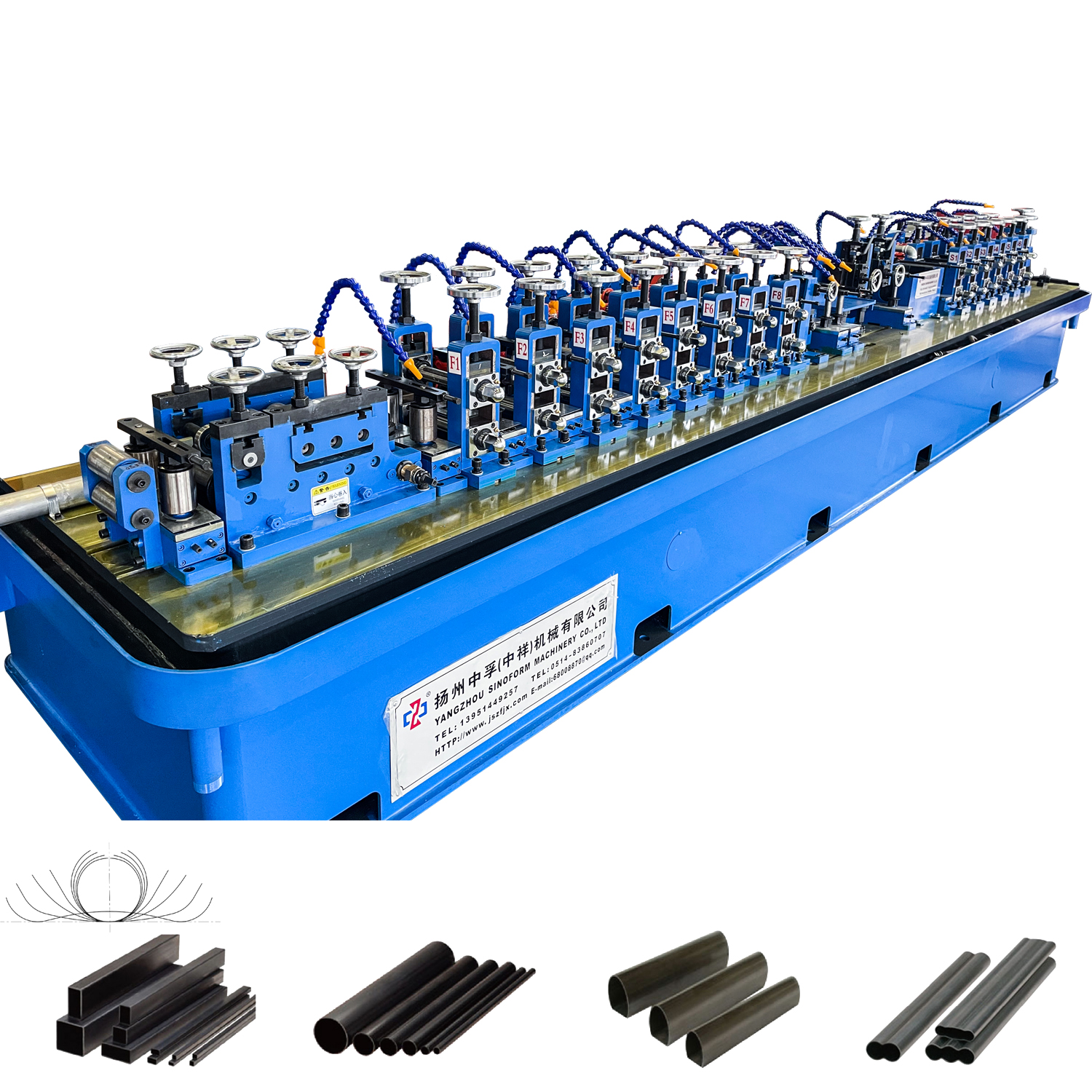
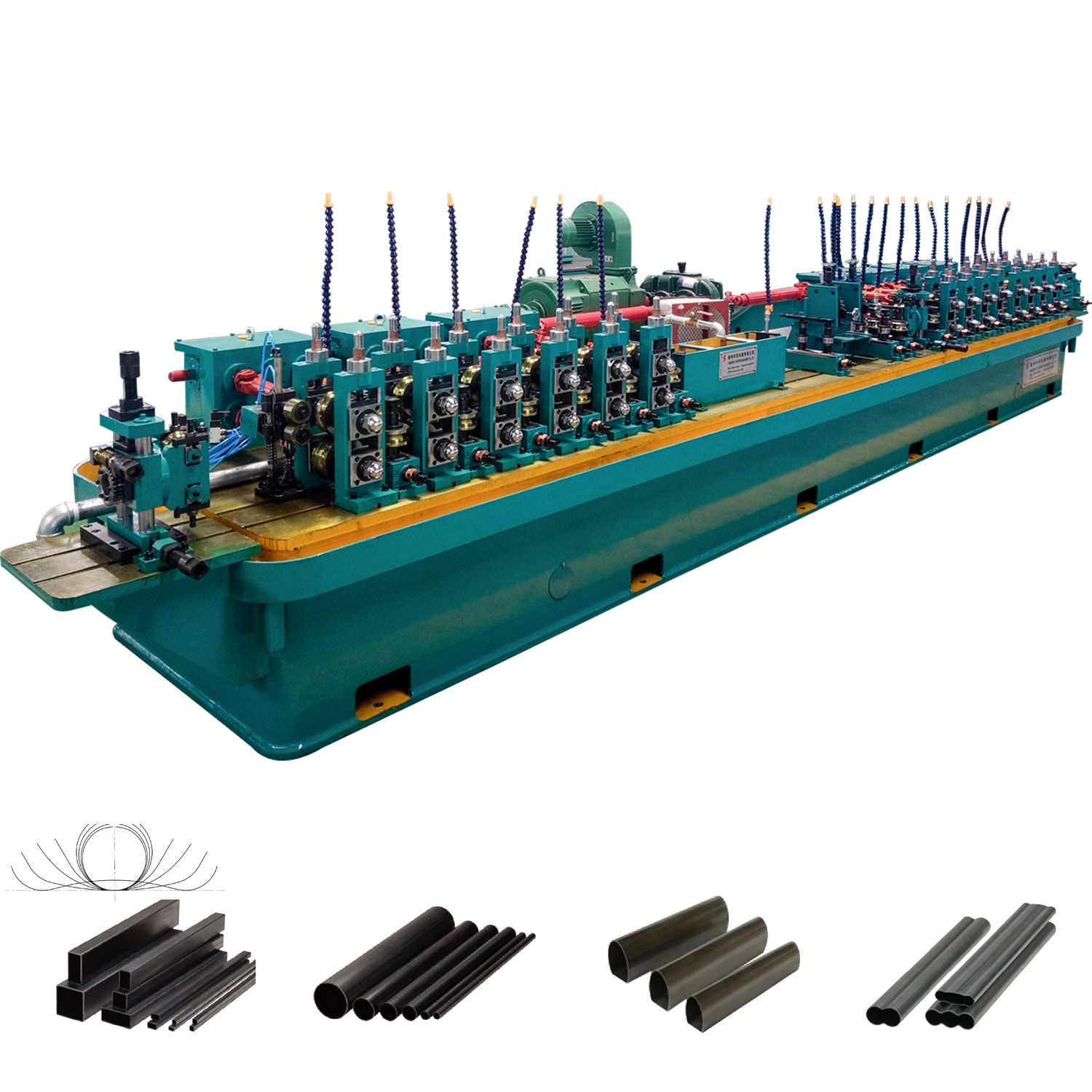
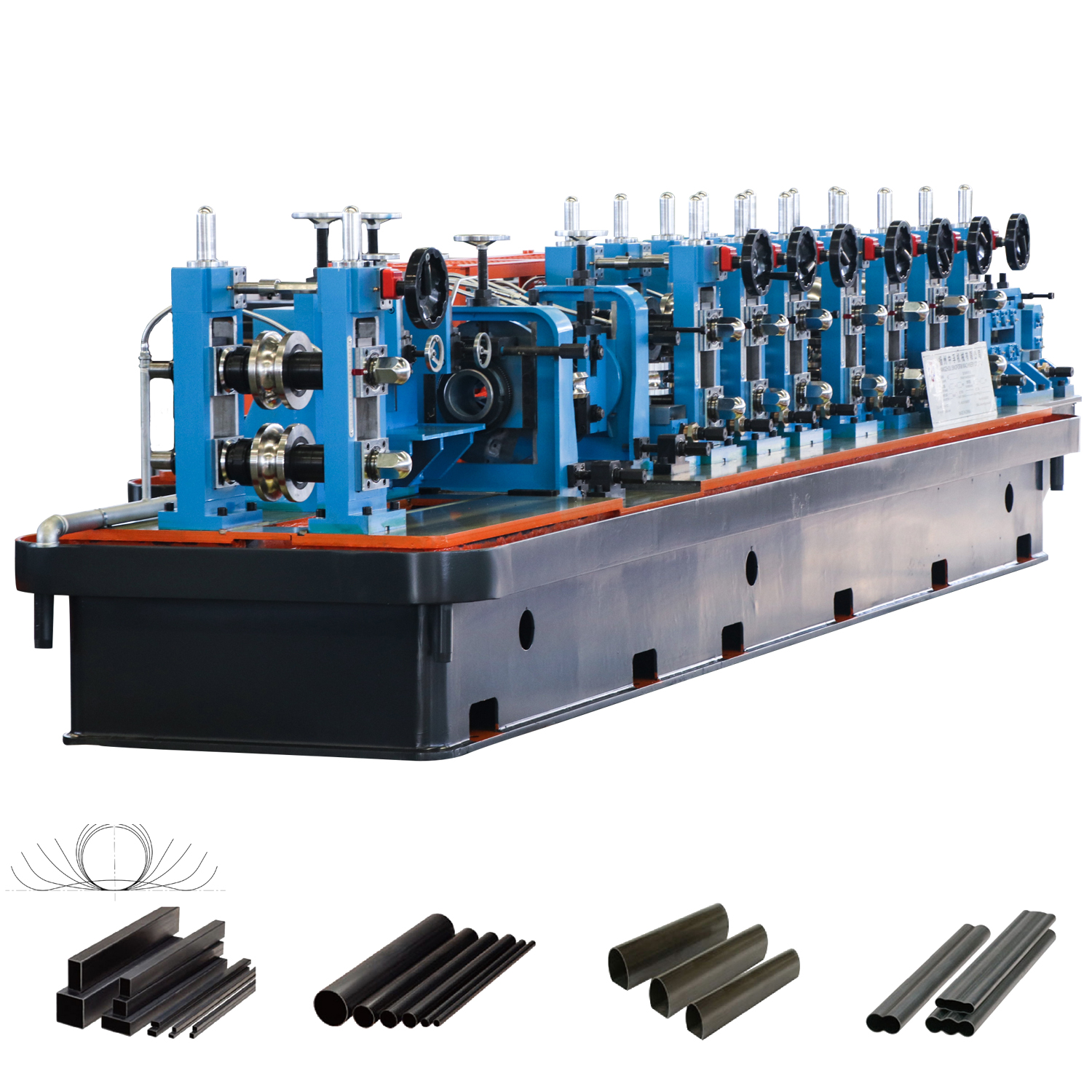
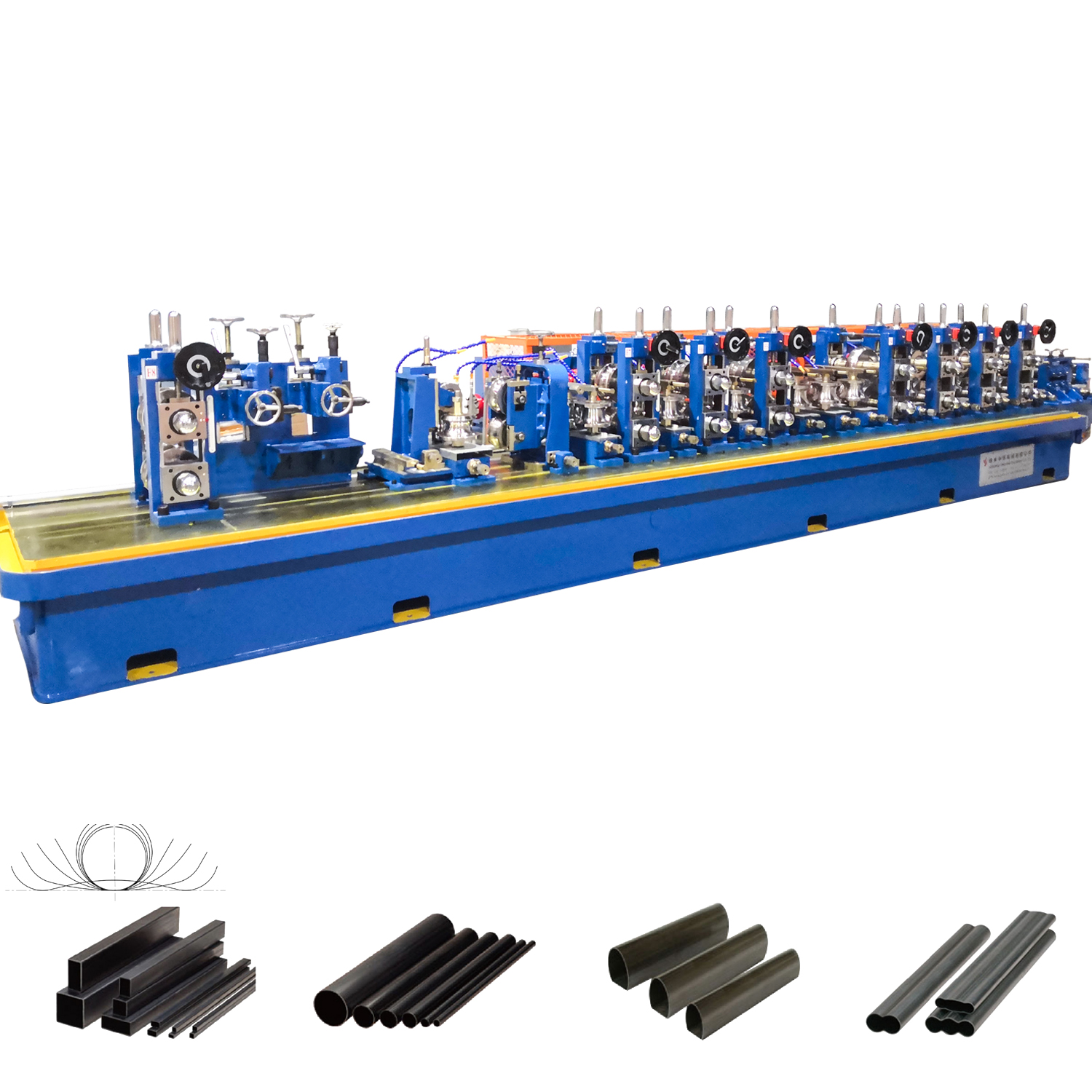
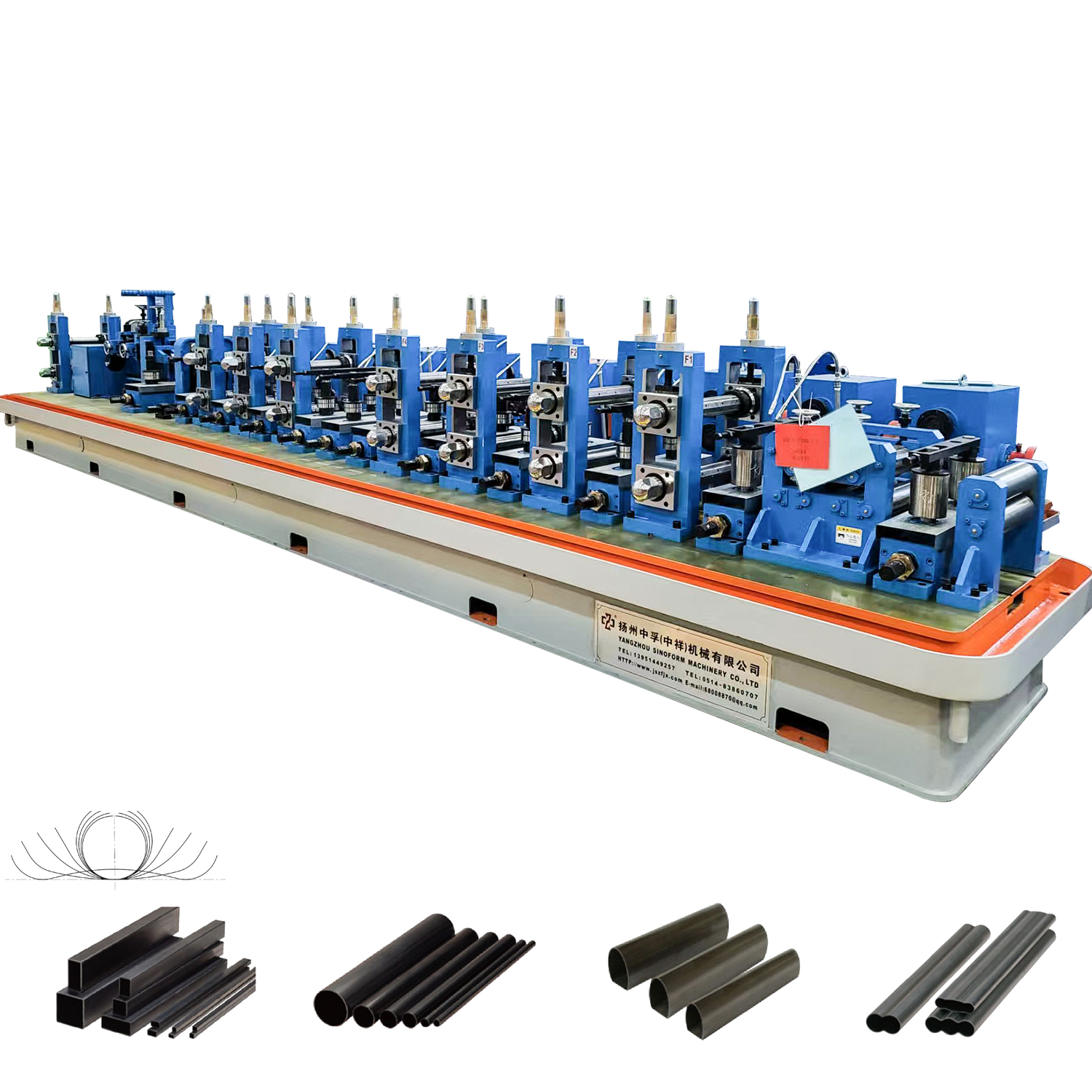
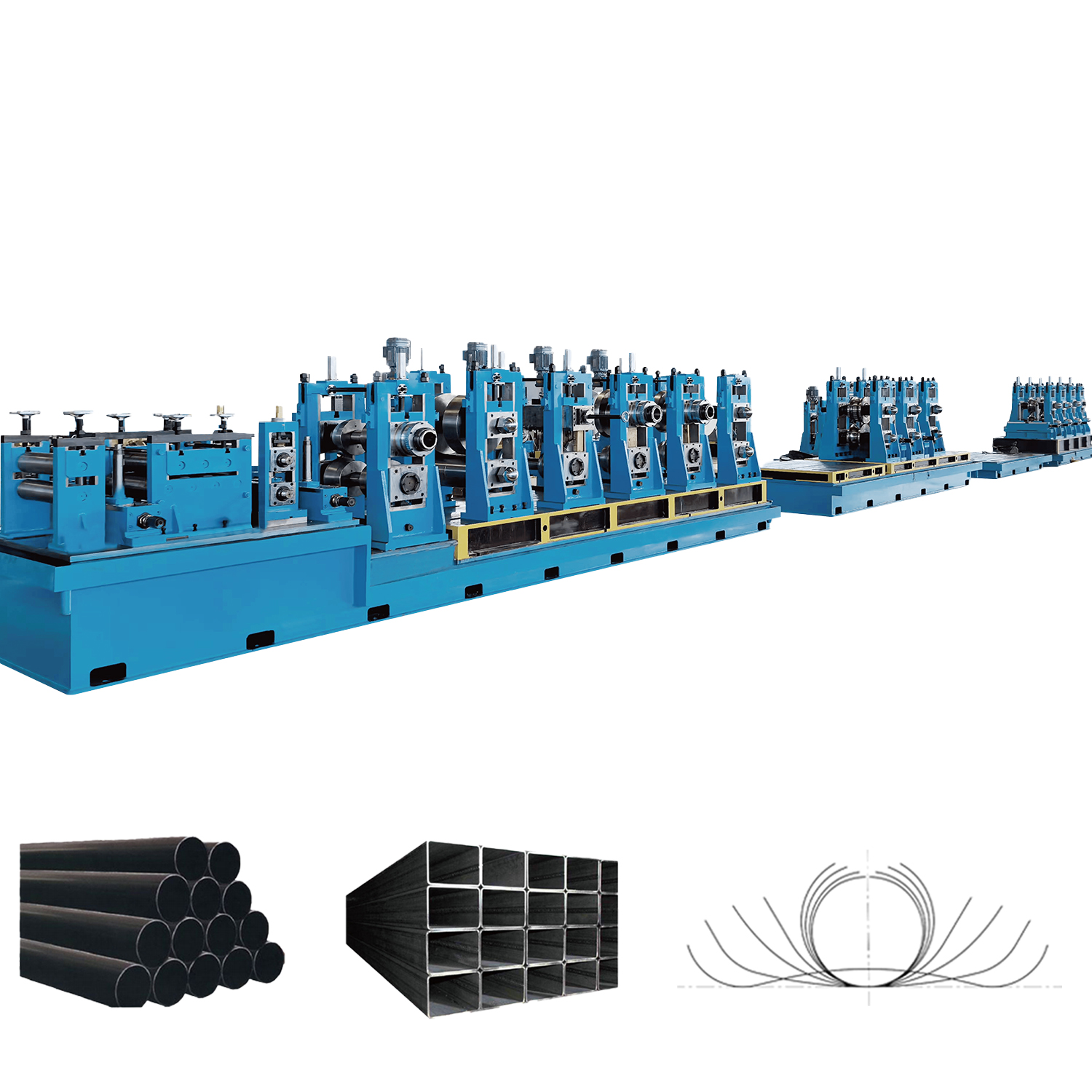
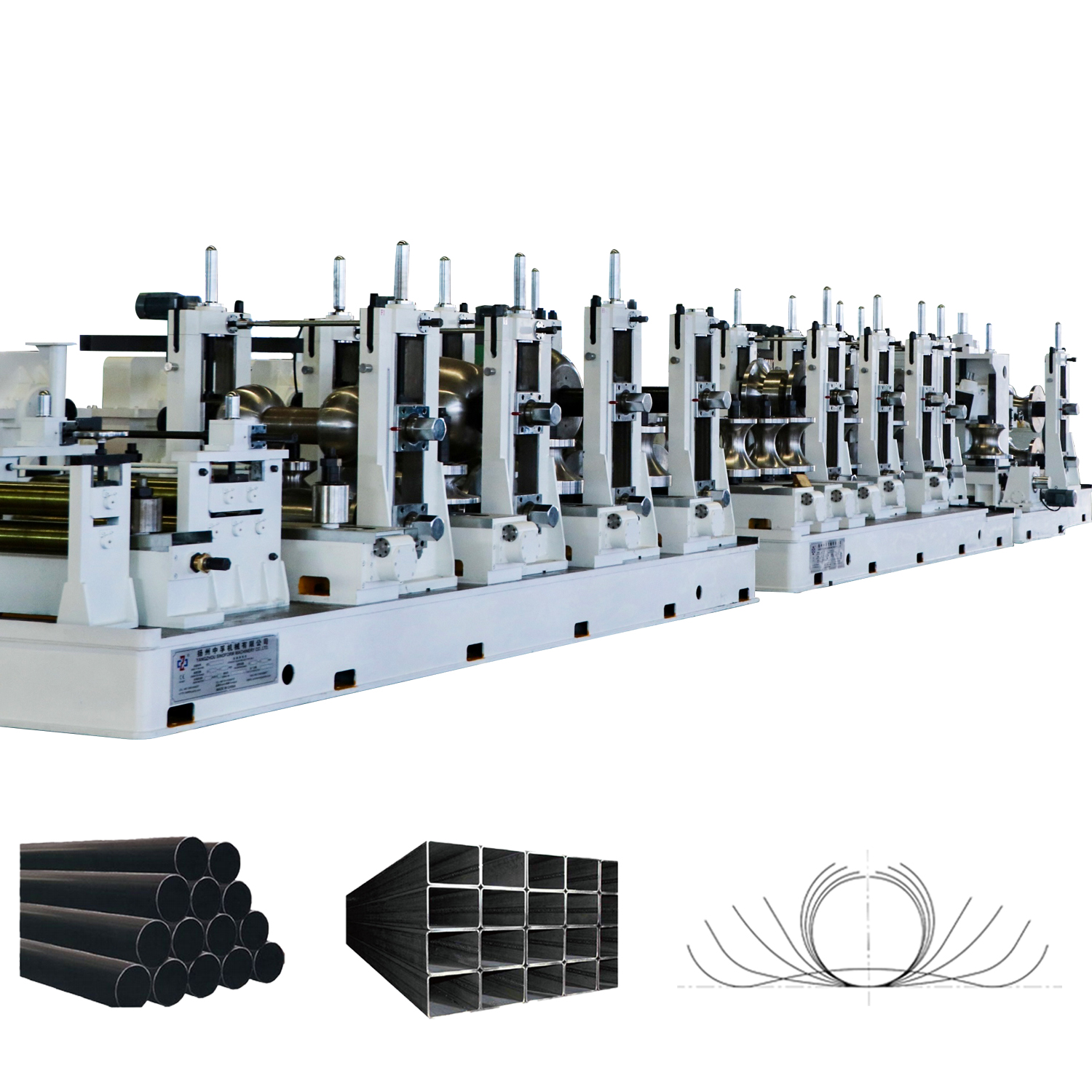
The tube mill machine process is built as a single continuous line rather than a series of separate batch operations because welded tube production is fundamentally a forming-then-joining operation that depends on maintaining a stable, moving strip geometry through the weld point. If the strip were formed in one operation and welded in a separate operation, the formed shape would relax (springback of 2 to 5 degrees is typical for cold-formed steel) before welding, making consistent edge alignment at the weld point nearly impossible. By keeping forming, welding, sizing, and cutting in a single continuous line moving at the same speed, the strip edges arrive at the weld point in a controlled, repeatable geometry every time. This is why tube mill lines are described by their overall length — a medium-diameter mill producing 50 to 168 mm OD tube typically occupies 60 to 100 meters of factory floor, with the forming section alone spanning 15 to 25 meters across its multiple roll stands.
Which Stages Make Up the Tube Mill Machine Process?
The tube mill machine process consists of six functional stages, each performing a distinct transformation on the material as it moves continuously through the line.
- Uncoiling and strip preparation — the steel coil is unwound, straightened, and edge-conditioned
- Roll forming — the flat strip is progressively curved into an open tubular profile
- High-frequency welding — the open seam edges are heated and forged together
- Bead scarfing — excess weld flash is removed from the tube surface
- Sizing and straightening — the tube is brought to final diameter and shape tolerances
- Cut-off — the continuous tube is cut to final length
Each stage depends on the output of the previous one meeting specification. A strip that enters the forming section with width variation of more than 0.1 mm, for example, will produce a weld seam gap that varies along the tube length, which the welding stage cannot fully compensate for even with real-time power control.
Why Roll Forming Is the Foundation of Tube Mill Process Quality
Roll forming matters more than any other single stage because it sets the geometric conditions under which welding must succeed. As the strip passes through 6 to 14 forming roll passes, it is progressively bent from flat to a near-complete cylinder, with the two edges converging at a controlled angle as they approach the weld point. The fin pass — the final 2 to 3 forming stands — sets the V-angle of the converging edges, typically 3 to 7 degrees, which is the single most important geometric parameter for weld quality. If this angle is too wide, the edges do not heat uniformly and a cold weld results; if too narrow, the edges over-forge and hook-type defects (small crack-like discontinuities) form in the weld root. Because the V-angle is set mechanically by roll tooling geometry and cannot be adjusted in real time during production, roll forming setup quality directly limits the best achievable weld quality for the entire production run — a poorly set fin pass cannot be corrected by adjusting welding power.
Why High-Frequency Welding Determines the Tube's Structural Integrity
High-frequency welding determines structural integrity because it is the only point in the tube mill process where the two strip edges become metallurgically joined into a single continuous structure. In high-frequency induction (HFI) welding, an induction coil heats the converging edges to 1,250 to 1,400 degC using currents at 100 to 500 kHz, and squeeze rolls then forge the heated edges together, expelling oxides and impurities outward as visible weld flash. The quality of this forge weld depends on three interacting factors: heat input (controlled by generator power, typically 50 to 1,000+ kW depending on tube size), the V-angle set during forming, and the upset distance — the amount of material displaced as flash, typically 1 to 3 times wall thickness. Insufficient upset leaves oxide inclusions trapped in the weld line, which act as crack initiation sites under load. This is why eddy current testing is positioned immediately after the weld zone on virtually all tube mill lines — it is the first opportunity to detect a defect that, once formed, cannot be repaired without cutting out and re-welding the affected section.
Which Stage Has the Greatest Influence on Each Quality Characteristic?
Different quality characteristics of the finished tube are controlled primarily at different stages of the process. Understanding which stage governs which characteristic helps focus inspection and adjustment effort where it has the most impact.
| Quality Characteristic | Primary Controlling Stage | Typical Tolerance | Downstream Correctable? |
| Weld seam soundness | HFW welding | No defects above 12.5% wall notch | No |
| Outer diameter | Sizing section | Plus or minus 0.1 to 0.3 mm | Partially |
| Wall thickness uniformity | Strip preparation / coil quality | Plus or minus 5 to 8% of nominal | No |
| Straightness | Straightening unit | 1 to 3 mm per meter | Yes |
| Surface finish at seam | Bead scarfing | Residual bead under 0.1 mm | Yes |
| Cut length accuracy | Flying cut-off saw | Plus or minus 1 to 3 mm | Yes |
| Ovality (roundness) | Forming and sizing combined | Under 1% of OD | Partially |
Table 1: Which stage of the tube mill machine process primarily controls each finished-tube quality characteristic, with typical tolerances and downstream correctability.
How Sizing, Scarfing, and Cut-Off Refine the Finished Tube
Sizing, scarfing, and cut-off refine — rather than fundamentally create — the finished tube's properties, taking the welded, formed tube and bringing it to the exact dimensional and surface condition required by the product specification.
Bead Scarfing
Bead scarfing removes the raised weld flash that forms during HFW welding, which protrudes 0.5 to 2.5 mm above the tube surface before scarfing. A carbide-tipped scarf tool shaves this flash into a continuous chip, leaving the seam flush with the surrounding tube surface to within 0.1 mm. For tubes where the inside surface finish matters — hydraulic tube, instrumentation tube — an internal scarfing tool mounted on a floating mandrel removes the inside bead simultaneously.
Sizing Section
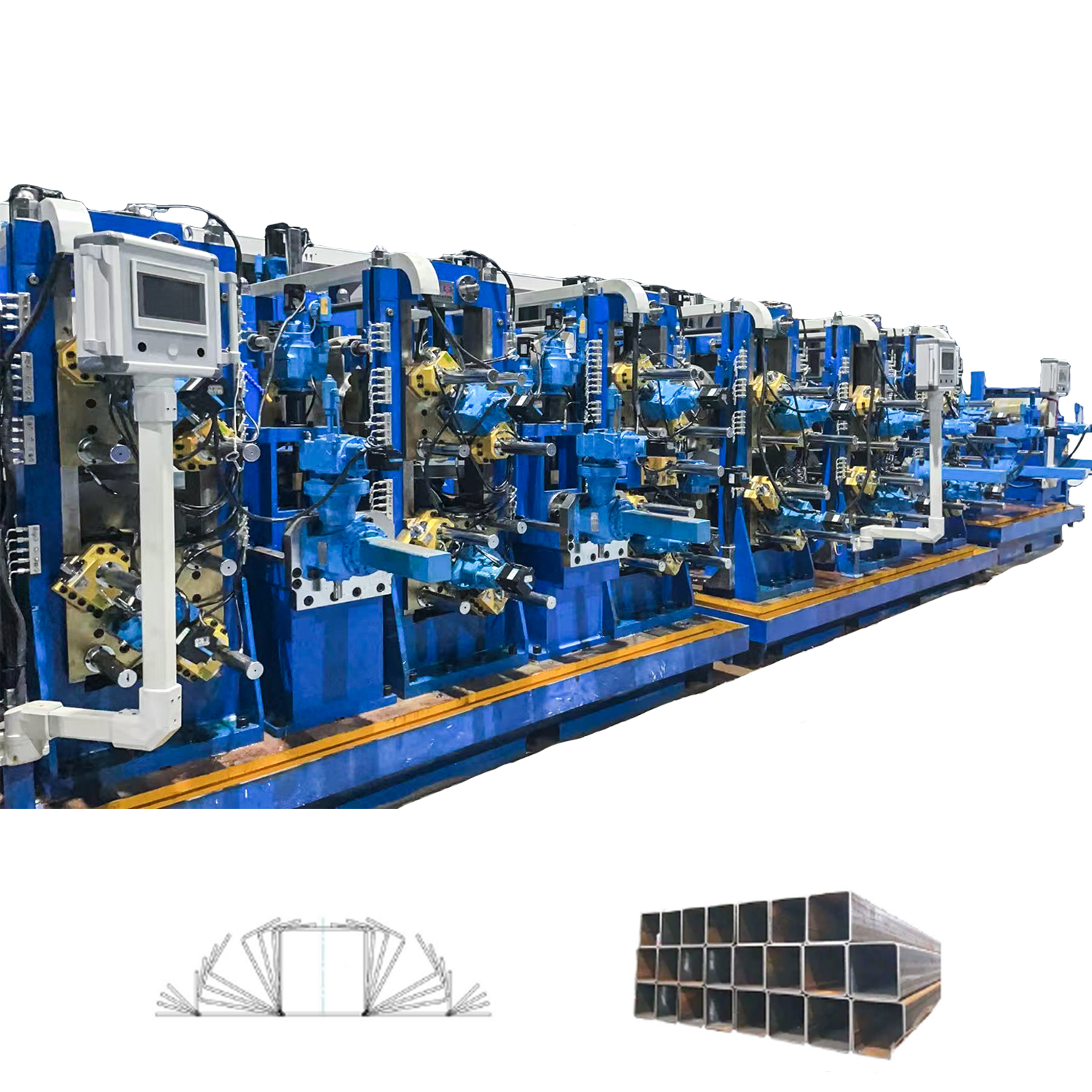
The sizing section applies a controlled reduction of 0.5 to 3% of outer diameter through 3 to 6 fully enclosed roll stands, correcting roundness and bringing the tube to final OD tolerance. For square and rectangular hollow sections, this is where the round tube is progressively shaped into its final square or rectangular profile through 4 to 8 grooved roll passes.
Cut-Off
Cut-off uses a flying saw that travels with the moving tube to cut it to length without stopping the line, achieving length tolerances of plus or minus 1 to 3 mm on standard 6 to 12 meter lengths. This is the final stage before the tube is transferred for inspection, bundling, and dispatch or secondary processing such as galvanizing or hydrostatic testing.
How Real-Time Process Control Differs from Manual Adjustment in the Tube Mill Process
Real-time process control differs from manual adjustment in response speed and consistency — automated systems react to process drift in milliseconds, while manual adjustment depends on operator observation and reaction time, which is typically measured in seconds to minutes.
| Control Aspect | Automated Real-Time Control | Manual Operator Adjustment |
| Weld power adjustment for speed change | Milliseconds, automatic | Seconds to minutes, manual |
| OD measurement frequency | Continuous laser gauging | Periodic spot-check with calipers |
| Weld defect detection | 100% inline eddy current / UT | Sample-based visual or destructive testing |
| Cooling rate after welding | Infrared-monitored, adjusted automatically | Fixed spray settings, rarely adjusted |
| Typical OD consistency achieved | Plus or minus 0.01 to 0.05 mm | Plus or minus 0.1 to 0.3 mm |
Table 2: Comparison of automated real-time process control versus manual operator adjustment in the tube mill machine process, by control function and achievable consistency.
Why Product Standards Shape How the Tube Mill Process Is Set Up
Product standards shape the tube mill process setup because they define the acceptable tolerances and testing requirements that every stage must collectively achieve, working backward from the finished product specification to the process parameters needed at each stage. A tube destined for structural hollow section use under EN 10219 has different forming roll sequences, welding parameters, and sizing reductions than a tube of the same nominal diameter destined for pressure pipe under API 5L, even though both may start from similar strip material. API 5L line pipe requires 100% ultrasonic weld inspection and hydrostatic testing of every length, which means the mill's online UT system and downstream test bay must be sized and configured for the production rate. EN 10219 structural tube, by contrast, typically requires eddy current testing with sample-based mechanical testing, allowing a simpler online inspection configuration. This is why two tube mills producing visually similar product can have substantially different process configurations, control systems, and inspection equipment — the standard the finished tube must meet determines how the process is set up from strip preparation through to final inspection.
Frequently Asked Questions About the Tube Mill Machine Process
Why can't weld defects be fixed after the welding stage?
Weld defects cannot be fixed after the welding stage because the forge weld created by high-frequency welding is a metallurgical bond formed under specific temperature and pressure conditions at the moment the edges meet — once the material has cooled and moved past the squeeze rolls, that exact thermal and mechanical condition cannot be recreated locally without cutting out the defective section and re-welding it as a separate joint. This is why inline eddy current or ultrasonic testing immediately after welding is standard: catching a defect within seconds of its formation allows the mill to be stopped and the cause corrected (power, V-angle, or speed) before significant scrap accumulates, rather than discovering the defect during final inspection after meters of defective tube have already been produced.
Which factor most often causes tube mill scrap?
The factor most often cited for tube mill scrap is incoming strip quality variation, particularly width tolerance and edge condition. Because strip width directly determines the seam gap geometry at the weld point, even small width variations (0.1 to 0.2 mm) accumulated over the length of a coil can cause the V-angle at the fin pass to drift out of the optimal range, producing intermittent weld defects that may not appear at every point along the tube. Mills that source strip with tighter width tolerances (plus or minus 0.05 mm rather than plus or minus 0.15 mm) typically report scrap rate reductions of 1 to 3 percentage points.
How does mill speed affect the tube mill machine process overall?
Mill speed affects every stage simultaneously because the entire line operates as a single mechanically and electrically synchronized system — increasing speed requires proportional increases in welding power (to maintain the same heat input per unit length), adjustments to cooling water flow (to achieve the same cooling rate over a shorter time), and recalibration of the flying cut-off timing. Most tube mills have a defined optimal speed range for each product size; operating significantly below this range can actually reduce quality (due to excessive heat input causing grain growth in the weld HAZ) just as operating above it can (due to insufficient heat input causing cold welds).
What happens if the fin pass roll tooling is worn?
Worn fin pass roll tooling changes the V-angle and edge geometry presented to the weld point, even though the rest of the forming section may be producing a correctly shaped tube body. This is one of the most difficult issues to diagnose because the tube appears dimensionally correct, but weld quality gradually degrades as tooling wear progresses — often appearing first as an increase in the eddy current rejection rate rather than a visible defect. Fin pass tooling wear limits are typically specified at 0.05 to 0.1 mm of profile deviation from new tooling dimensions, and tooling is inspected on a fixed schedule (commonly every 200 to 500 tonnes of production) rather than waiting for quality issues to appear.
Why do some tube mills include an annealing or normalizing stage?
Some tube mills include an inline annealing or normalizing stage — typically an induction heating coil positioned after the weld zone — because the rapid heating and cooling cycle of high-frequency welding produces a heat-affected zone (HAZ) with different grain structure and hardness than the parent strip material. For applications where weld zone ductility or impact toughness is critical (line pipe for low-temperature service, for example), normalizing the weld seam to 880 to 950 degC followed by controlled cooling restores a more uniform grain structure across the weld and base material, improving the weld zone's mechanical properties to match the parent material's specification.
Conclusion: Why Understanding Stage Dependencies Is Key to Tube Mill Success
The tube mill machine process matters because it is a chain of dependent operations in which the quality achievable at any stage is capped by the quality delivered by the stages before it. Roll forming and high-frequency welding are the two stages that most directly determine whether the finished tube will meet its structural and dimensional requirements, because errors introduced there cannot be corrected downstream — sizing, scarfing, and cut-off can refine surface finish, roundness, and length, but they cannot repair a defective weld or correct a fundamentally misaligned forming sequence. For manufacturers, engineers, and buyers evaluating tube mill output, focusing inspection effort and process control investment on strip incoming quality, forming roll setup, and weld parameter monitoring delivers the greatest return in terms of reduced scrap, consistent dimensional tolerances, and reliable compliance with the product standards that govern the finished tube's end use.