
 English
 Español
 عربى
عربى русский
 中文简体
中文简体
Sourcing a tube mill machine from China offers global buyers the most competitive combination of price, customization, and production capacity available anywhere in the world today. Chinese manufacturers now supply more than 40% of all tube and pipe mill equipment exported globally, with shipments reaching over 160 countries. Whether you are setting up a greenfield ERW pipe plant, expanding an existing roll-forming line, or replacing aging square tube equipment, understanding the Chinese tube mill machine landscape is essential before making a capital investment decision.
Content
- 1 What Is a Tube Mill Machine and How Does It Work?
- 2 Why Has China Become the World's Leading Supplier of Tube Mill Machines?
- 3 Which Types of Tube Mill Machines Are Available from Chinese Suppliers?
- 4 How Do Chinese Tube Mill Machines Compare to European and Japanese Alternatives?
- 5 What Key Specifications Should You Evaluate When Buying a Tube Mill Machine from China?
- 6 How to Evaluate and Select a Reliable Tube Mill Machine Supplier in China
- 7 What Are the Total Cost Considerations When Importing a Tube Mill Machine from China?
- 8 Why Chinese Tube Mill Machine Technology Keeps Advancing
- 9 Frequently Asked Questions: Tube Mill Machine from China
- 9.1 Q: What is the minimum order for a tube mill machine from China?
- 9.2 Q: How long does commissioning of a Chinese tube mill machine typically take?
- 9.3 Q: Can Chinese tube mill machines process high-strength steel grades such as S355 or API 5L X65?
- 9.4 Q: What power supply requirements do Chinese tube mill machines typically need?
- 9.5 Q: Is it possible to visit a Chinese tube mill machine factory before placing an order?
- 10 Conclusion: Is a Tube Mill Machine from China the Right Choice for Your Operation?
What Is a Tube Mill Machine and How Does It Work?
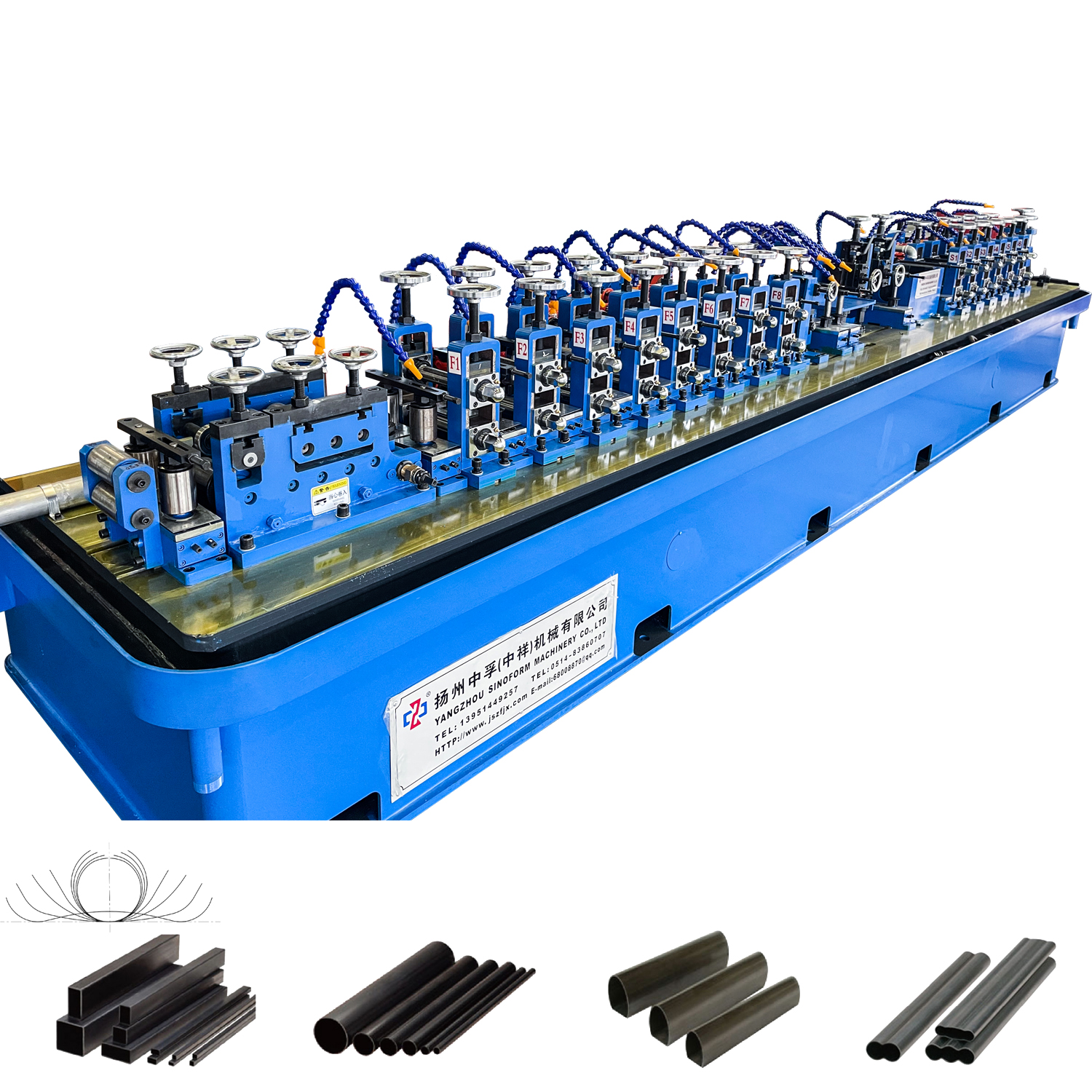
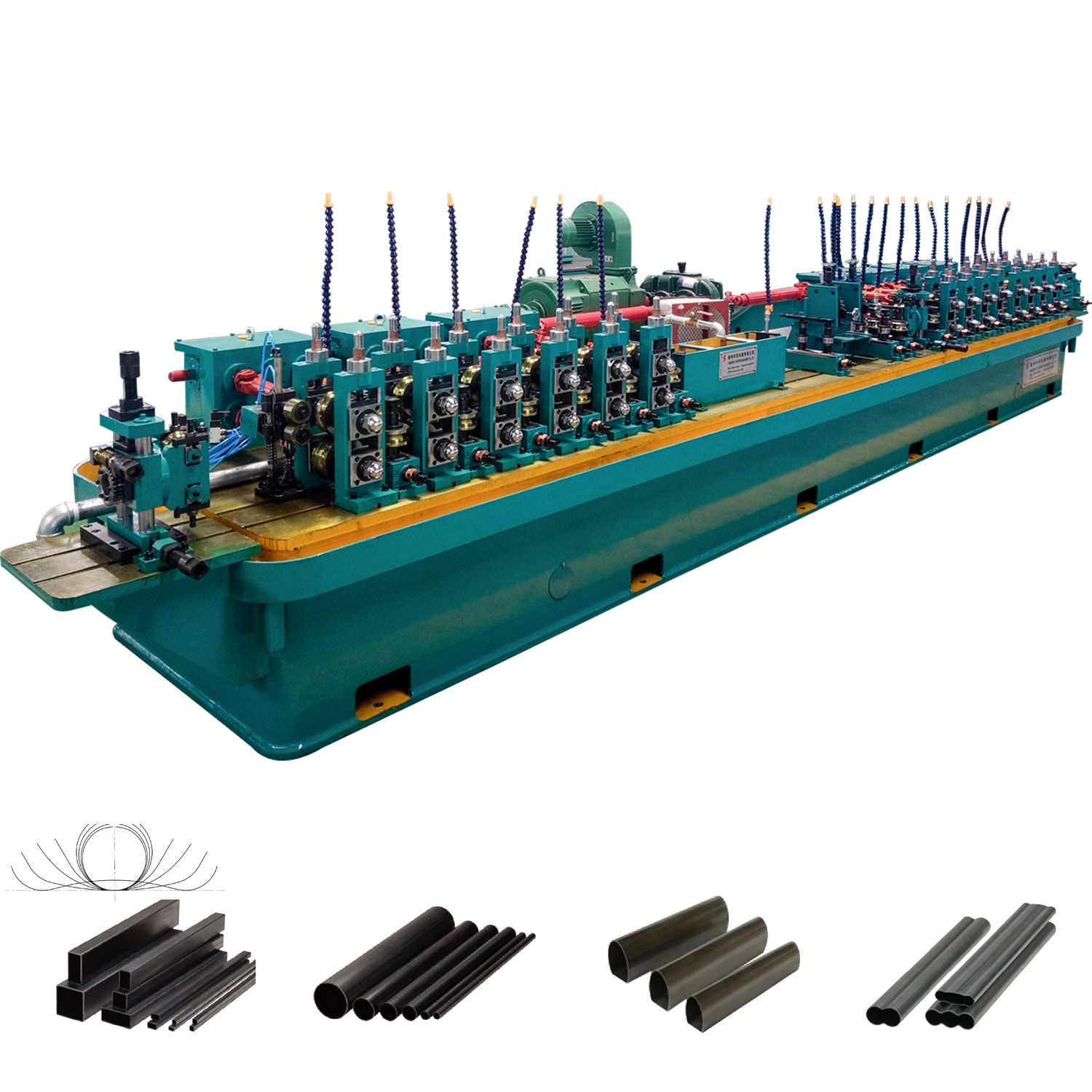
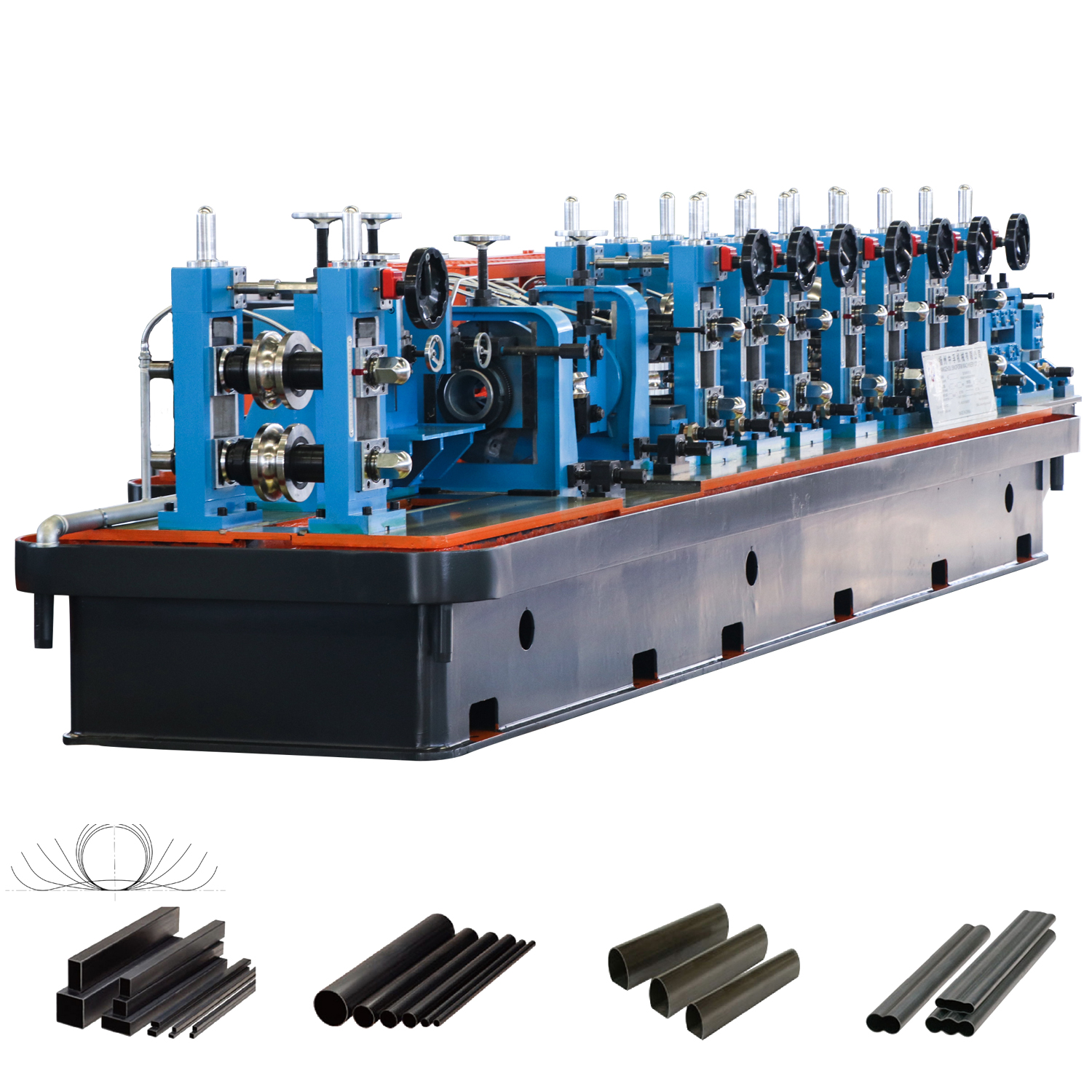
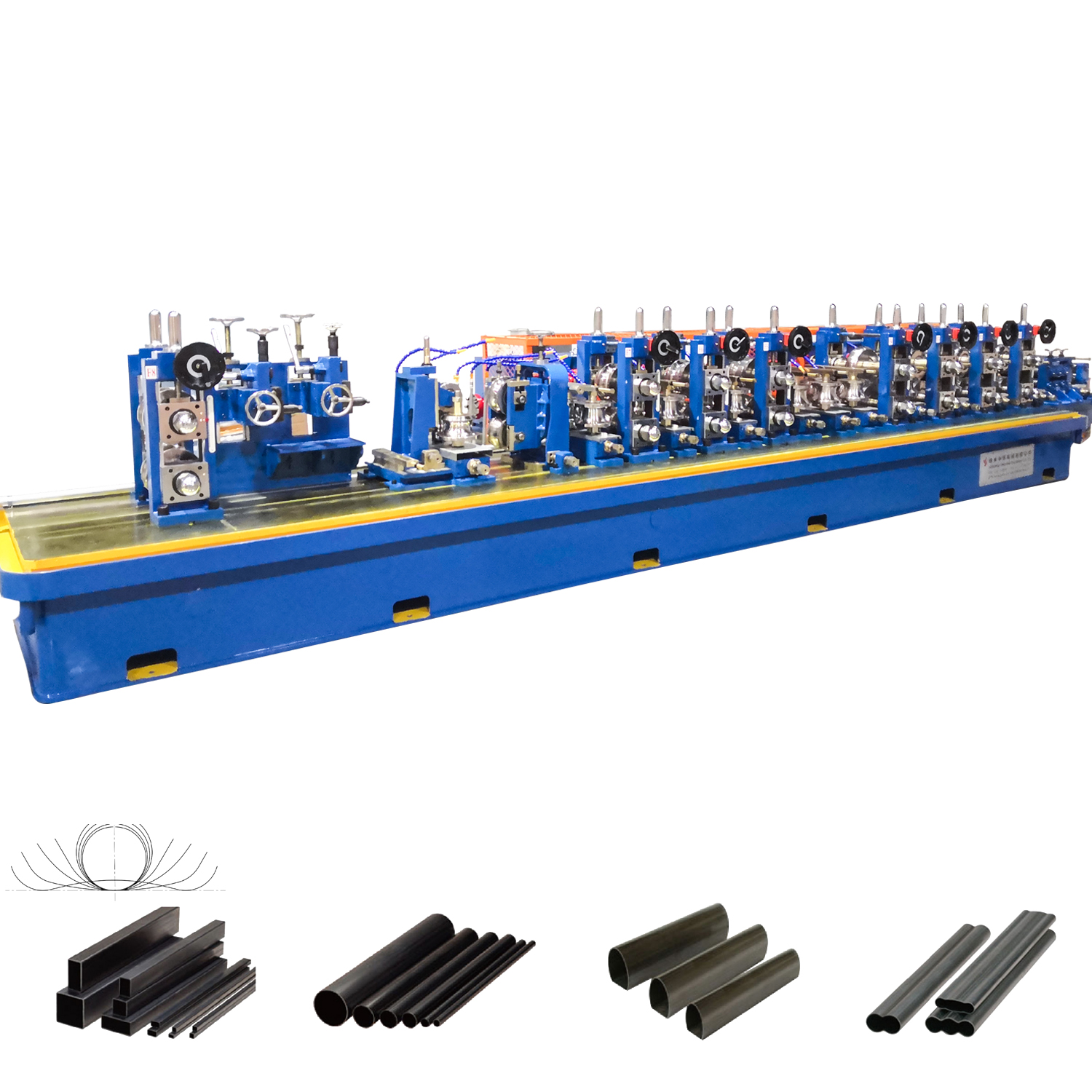
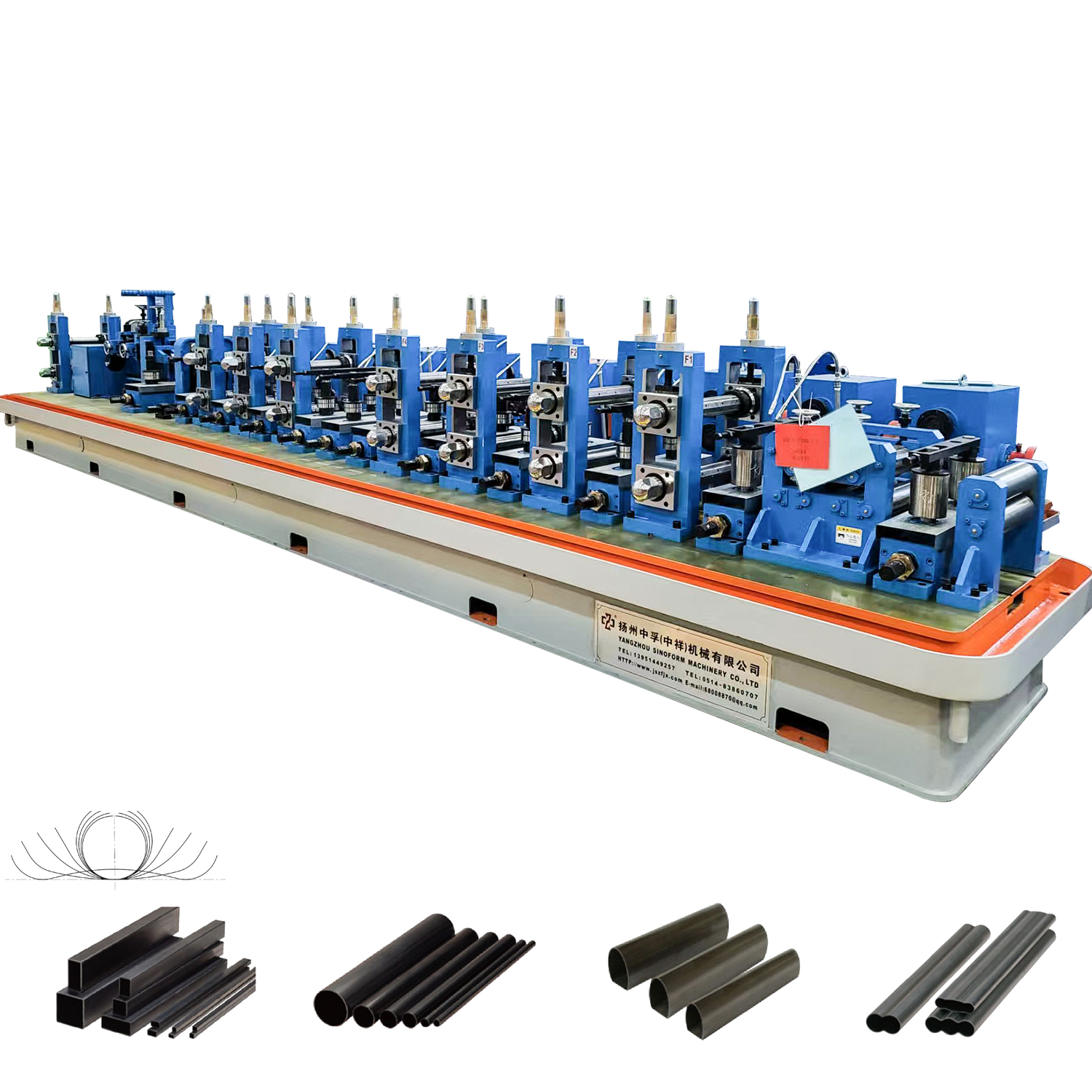
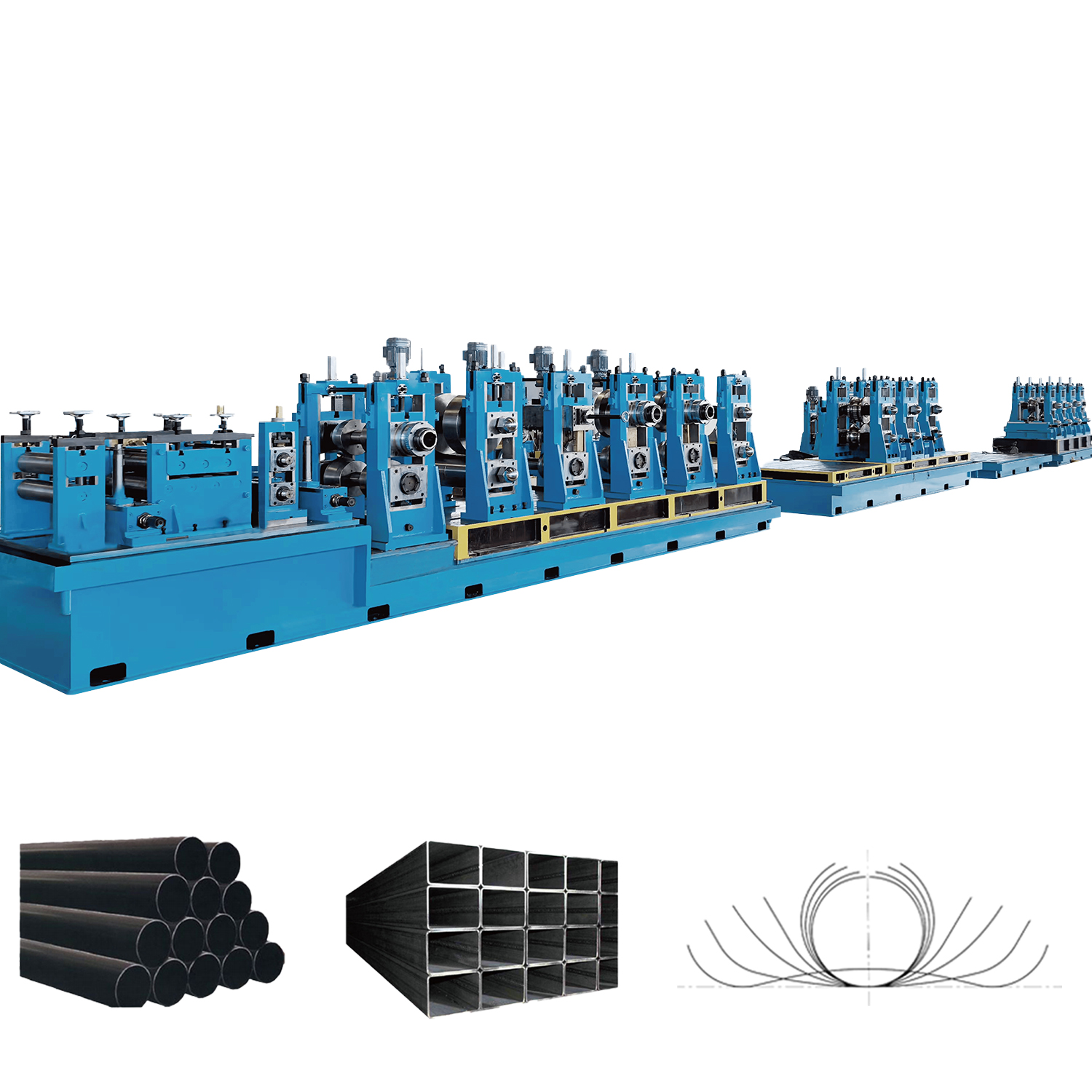
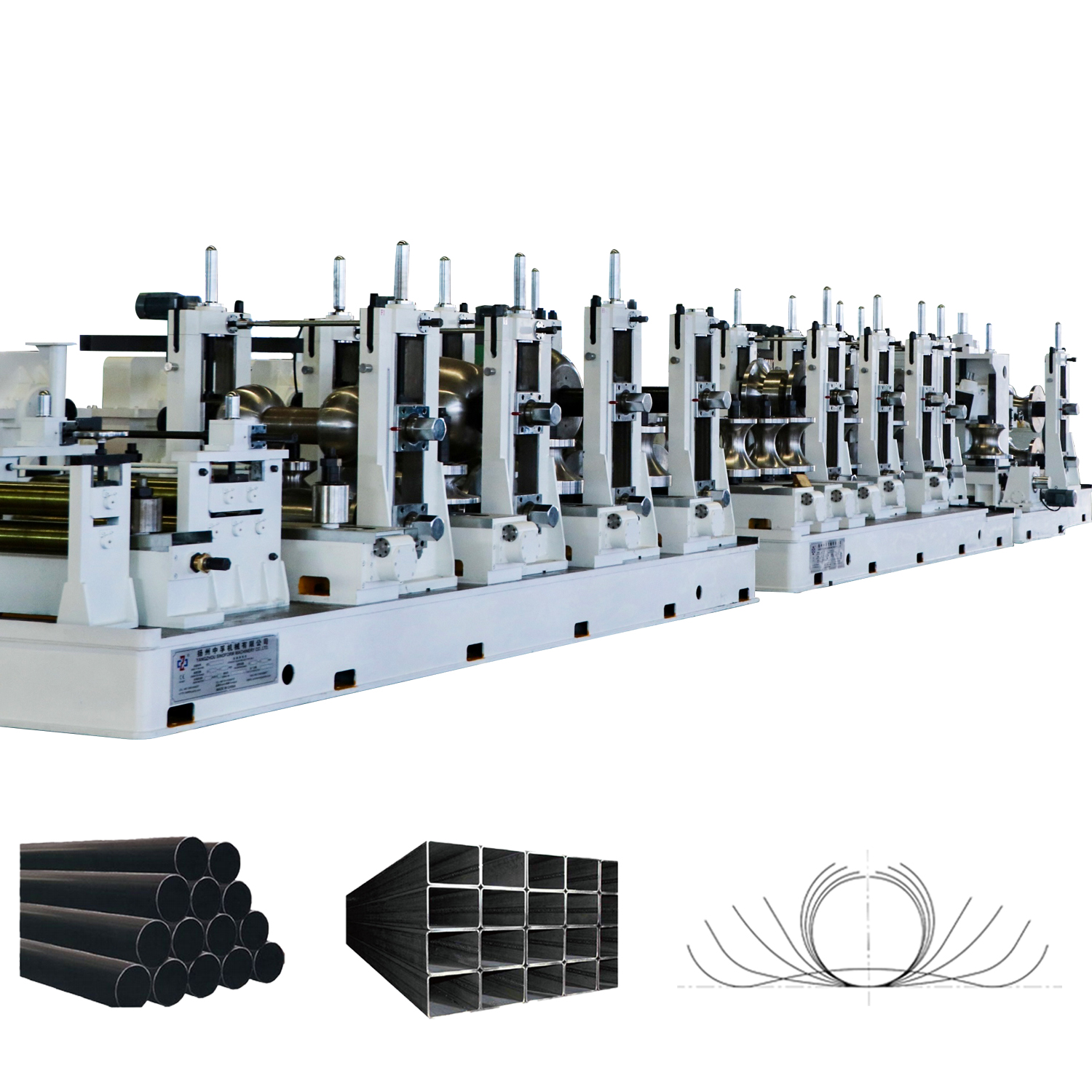
A tube mill machine is a continuous roll-forming system that converts flat steel strip into welded tubes or pipes by progressively bending, forming, and high-frequency welding the material in a single inline process. Unlike batch fabrication, a tube mill operates as an uninterrupted production line — strip enters one end and finished, cut-to-length tubes exit the other at speeds of 20 to 120 meters per minute depending on diameter and wall thickness.
The core process stages in a modern tube mill machine are:
- Decoiling and Straightening: A hydraulic decoiler unwinds the steel strip coil and a multi-roll straightener eliminates coil set before feeding.
- Edge Milling / Slitting: Both strip edges are trimmed to precise width and bevel angle to ensure weld quality.
- Roll Forming: A series of horizontal and vertical roll stands progressively bend the flat strip into an open tubular profile.
- High-Frequency Welding (HFW): An induction or contact HF welder fuses the open seam under squeeze pressure. Frequencies of 200–450 kHz are standard. Weld power ranges from 100 kW to 1,500 kW depending on tube size.
- Bead Removal: An internal and external scarfing tool removes the weld bead flush with the tube wall.
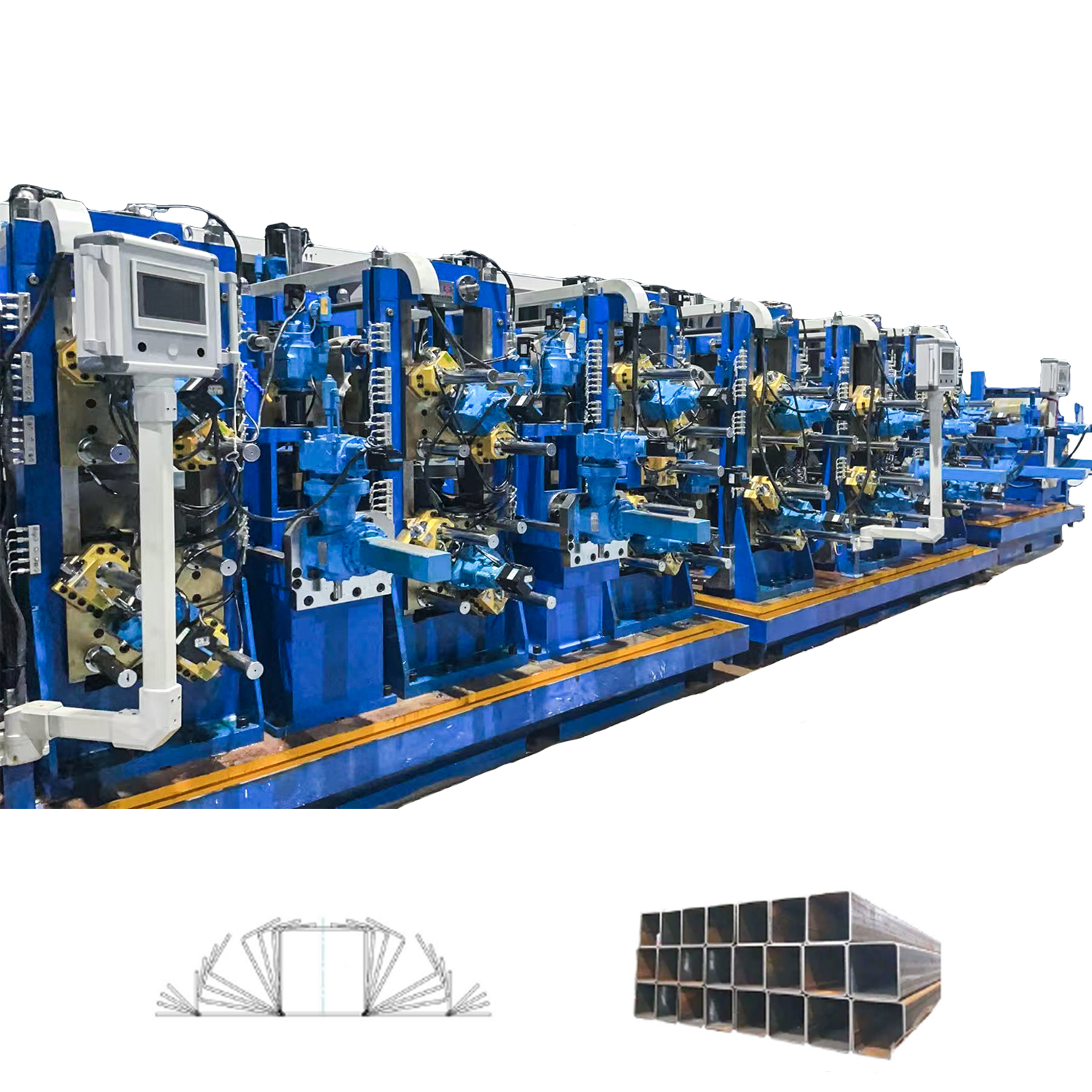
- Sizing and Shaping: Finishing stands correct diameter and roundness; for square or rectangular tubes, a dedicated sizing section reshapes the round profile.
- Straightening and Cut-Off: A flying cut-off saw or rotary shear cuts tubes to ordered length without stopping the line.
- Run-Out Table and Bundling: Tubes are collected, inspected, and bundled for dispatch.
Why Has China Become the World's Leading Supplier of Tube Mill Machines?
China dominates global tube mill machine exports because of its vertically integrated supply chains, vast domestic pipe-production base, lower manufacturing costs, and rapid technology absorption over the past two decades. The country produces over 70 million tonnes of steel pipes and tubes annually — more than the next five producing nations combined — which has created an enormous captive demand for tube mill equipment and forced Chinese machinery builders to innovate at scale.
Key Competitive Advantages of Chinese Tube Mill Machine Manufacturers
- Price Advantage: A fully equipped Chinese tube mill machine line — decoiler through cut-off — typically costs 35–60% less than equivalent European or Japanese systems. A medium-capacity ERW line (OD 20–114 mm) sourced from China averages USD 400,000–900,000 versus USD 1.5–2.8 million from Western suppliers.
- Customization Flexibility: Chinese builders routinely engineer tube mills for non-standard tube profiles, unusual wall-thickness-to-diameter ratios, and integration with downstream galvanizing or coating lines — without the lengthy change-order processes common at larger European OEMs.
- Short Lead Times: Standard tube mill machine configurations are delivered in 90–150 days from order. Some builders maintain semi-completed line sections in stock for delivery in 60 days.
- After-Sales Support: Leading Chinese manufacturers maintain spare-parts warehouses and technical service teams capable of on-site support in Southeast Asia, the Middle East, Africa, and South America within 48–72 hours.
- Technology Level: Top-tier Chinese tube mill machines now incorporate PLC-based automation (Siemens S7, Mitsubishi Q-series), servo-driven flying cut-off systems, inline ultrasonic weld inspection, and Industry 4.0-ready data acquisition.
Which Types of Tube Mill Machines Are Available from Chinese Suppliers?
Chinese manufacturers offer the full spectrum of tube mill machine types, from small-diameter decorative tube lines to large-diameter oil country tubular goods (OCTG) mills capable of producing pipes up to OD 630 mm. The correct machine type depends on your target product range, material grade, production volume, and downstream application.
Round ERW Tube Mill Machines
ERW (Electric Resistance Welded) round tube mills are the most widely produced tube mill machine type in China, covering OD ranges from 6 mm to 630 mm. They are used to produce structural tubes, precision tubes, fluid-conveying pipes, and pre-galvanized hollow sections. HF solid-state welders (IGBT-based) have largely replaced older vacuum tube welders, improving energy efficiency by 20–30% and weld consistency.
Square and Rectangular Tube Mill Machines
Square and rectangular hollow section (RHS/SHS) mills form the single largest product category for Chinese tube mill machine builders, driven by construction and furniture sector demand. These lines form round tubes first, then pass through a square sizing section with driven corner rolls. Common size ranges are 15x15 mm to 400x400 mm square and up to 600x400 mm rectangular. Wall thickness capability ranges from 0.8 mm to 20 mm.
Galvanized Pipe Tube Mill Lines
Inline galvanized pipe production lines combine a tube mill machine with a continuous hot-dip galvanizing section, eliminating the need to batch-galvanize formed tubes externally. These integrated lines are especially popular in South and Southeast Asia for producing water supply, conduit, and greenhouse structure pipes. Total line lengths of 120–200 meters are typical.
Stainless Steel Tube Mill Machines
Stainless steel tube mills require tighter forming tolerances, argon-shielded or plasma welding heads, and bright annealing furnaces — all of which Chinese builders now supply with competitive quality for 304, 316L, and duplex grades. Sizes range from OD 6 mm (capillary tube) to OD 219 mm for food, pharmaceutical, and petrochemical applications.
Tube Mill Machine Type Comparison
| Machine Type | OD Range | Wall Thickness | Line Speed | Typical Price Range (USD) |
| Small ERW Round | 6–76 mm | 0.5–4 mm | 60–120 m/min | 80,000–300,000 |
| Medium ERW Round | 20–219 mm | 1–10 mm | 20–80 m/min | 400,000–900,000 |
| Large ERW / LSAW | 219–630 mm | 6–20 mm | 5–30 m/min | 1,500,000–5,000,000 |
| Square / Rectangular SHS | 15x15–400x400 mm | 0.8–16 mm | 20–80 m/min | 200,000–1,200,000 |
| Stainless Steel Tube | 6–219 mm | 0.3–8 mm | 10–60 m/min | 300,000–1,500,000 |
| Galvanized Pipe Line | 15–165 mm | 1.5–6 mm | 15–50 m/min | 600,000–2,000,000 |
Table 1: Overview of major tube mill machine types available from Chinese manufacturers, with typical specifications and price ranges (FOB China, complete line).
How Do Chinese Tube Mill Machines Compare to European and Japanese Alternatives?
Chinese tube mill machines offer the best price-to-capability ratio for standard product ranges, while European and Japanese machines retain an edge in ultra-precision applications and the highest-grade material processing. The technology gap has narrowed dramatically since 2010. Today's leading Chinese tube mill machine builders use the same drive and control brands (Siemens, ABB, Mitsubishi) as their Western counterparts, while offering 40–60% lower capital cost.
| Evaluation Criterion | Chinese Tube Mill Machine | European / Japanese Machine |
| Capital Cost | 35–60% lower | Benchmark (higher) |
| Lead Time | 90–150 days | 180–360 days |
| Customization Speed | High — fast engineering changes | Moderate — formal change-order process |
| Dimensional Tolerance | +/-0.1–0.3 mm (standard); +/-0.05 mm (precision) | +/-0.03–0.05 mm (standard) |
| Automation Level | PLC, servo, HMI — standard; full MES optional | Full MES / Industry 4.0 — standard |
| Spare Parts Availability | Excellent — low-cost, fast global shipping | Good — higher cost, longer lead time |
| After-Sales Service | Variable — strong from top-tier builders | Comprehensive — included in contract |
| Best Suited For | Structural, construction, standard precision | Aerospace, ultra-precision, OCTG premium |
Table 2: Comparative evaluation of Chinese versus European/Japanese tube mill machine suppliers across key purchasing criteria.
What Key Specifications Should You Evaluate When Buying a Tube Mill Machine from China?
The eight most critical technical specifications to evaluate before purchasing a tube mill machine from China are: OD range and wall thickness capability, HF welder power and technology, forming stand configuration, drive system, cut-off method, tooling steel grade, PLC brand, and factory acceptance test (FAT) protocol. Buyers who overlook any of these often encounter production problems after installation that are expensive to correct.
HF Welder Technology
Insist on a solid-state IGBT HF welder rather than a vacuum tube (triode) welder — IGBT units consume 20–30% less power, have faster power response, and require significantly less maintenance. Welder power should be matched to your maximum tube OD and wall thickness. A conservative rule of thumb: 1 kW per 0.1 mm wall thickness per 10 mm OD at maximum line speed. For a 114 mm OD x 5 mm wall tube at 30 m/min, a minimum of 350 kW HF welder is required.
Forming Stand Configuration
The number and type of forming stands determine weld quality, surface finish, and product dimensional consistency. A well-designed medium ERW tube mill machine should have no fewer than 8–12 horizontal forming passes plus 3–5 vertical (fin pass) stands before the weld box. Fewer passes increase forming stress and residual strain in the weld zone. Stands should be built with cast iron or ductile iron housings and use tapered roller or spherical roller bearings rated for continuous duty.
Flying Cut-Off System
A servo-driven flying cold saw cut-off produces burr-free, square ends without stopping the line — and is strongly preferable to a rotary shear for applications requiring clean tube ends. Servo flying saws with cutting accuracy of +/-1 mm at 60 m/min are standard on quality Chinese tube mills. Rotary shear cut-offs are acceptable only for low-cost structural tube where end finish is unimportant.
Tooling (Roll) Steel Grade
Forming rolls made from D2 (Cr12Mo1V1) or equivalent high-chromium tool steel with HRC 58–62 surface hardness will outlast lower-grade rolls by a factor of 3–5 in normal production. Some Chinese suppliers use cheaper Cr12 or even H13 steel for rolls on price-competitive packages — always request material certification and hardness test reports for rolls before accepting a quotation.
How to Evaluate and Select a Reliable Tube Mill Machine Supplier in China
Selecting a reliable tube mill machine supplier in China requires a structured due-diligence process covering factory audit, reference checks, technical documentation review, and contractual safeguards. The price difference between the cheapest and best-value Chinese supplier can be 20–40% for nominally similar machines — and that gap usually reflects real differences in component quality, engineering depth, and post-sale support.
Supplier Evaluation Checklist
- Years in Business: Prefer suppliers with 10+ years of tube mill machine manufacturing experience and at least 50 documented installed lines internationally.
- Factory Size and Equipment: The supplier's own machine shop should have CNC turning centers, vertical machining centers, gear hobbing machines, and coordinate measuring machines (CMMs) for in-house quality control.
- Reference Visits: Request contact with at least two overseas customers who purchased similar tube mill machines in the last three years. A credible supplier will facilitate this without hesitation.
- Factory Acceptance Test (FAT): Require a full FAT before shipment, running the complete tube mill machine at rated production speed with your specified tube size for a minimum of four continuous hours. Document dimensional results and weld test data.
- Certifications: ISO 9001:2015 quality management certification is the minimum. CE marking is required for machines shipped to the EU. Some buyers also require machine-specific third-party inspection reports from SGS or Bureau Veritas.
- Warranty and Spare Parts Package: A standard warranty period for a Chinese tube mill machine is 12 months from commissioning. Insist on a recommended spare parts list with prices, and consider purchasing a two-year consumable and wear-parts package at time of order to lock in pricing.
- Payment Terms: Standard terms are 30% deposit, 60% against shipping documents, 10% after acceptance. Avoid suppliers demanding more than 40% upfront for a non-standard machine.
What Are the Total Cost Considerations When Importing a Tube Mill Machine from China?
The ex-works or FOB China price of a tube mill machine is only 60–75% of the true total landed and commissioned cost — buyers must budget for freight, customs, civil works, electrical installation, commissioning, and operator training. Failing to plan for these costs leads to project overruns that can equal or exceed the machine cost itself for smaller lines.
| Cost Component | Typical % of FOB Machine Price | Notes |
| Ocean Freight | 5–12% | FCL; varies by destination and line size |
| Import Duties and Taxes | 0–15% | Varies by country; many offer machinery duty exemptions |
| Inland Transport and Rigging | 2–5% | Heavy lift crane required for large roll stands |
| Civil / Foundation Works | 8–20% | Concrete pits, anchor bolts, embedded leveling pads |
| Electrical and Utilities | 5–10% | HV transformer, compressed air, cooling water |
| Commissioning (Supplier Engineers) | 3–7% | Daily rates USD 350–600 per engineer plus travel |
| Initial Tooling and Spare Parts | 8–15% | One full roll set plus recommended consumables |
Table 3: Total cost components for importing and commissioning a tube mill machine from China, expressed as a percentage of FOB machine price.
Why Chinese Tube Mill Machine Technology Keeps Advancing
Chinese tube mill machine builders are investing heavily in servo-electric forming systems, AI-assisted weld parameter control, and digital twin commissioning — driven by intense domestic competition and rising export market expectations.
- All-Servo Drive Systems: Replacing individual geared AC motors with coordinated servo drives eliminates inter-stand speed variation, reduces strip tension fluctuation, and allows instant speed changes without mechanical adjustment. Leading Chinese mills now offer fully servo-synchronized lines across all 12–18 driven stands.
- Inline Weld Inspection: Ultrasonic testing (UT) systems with phased-array probes can now be integrated directly into the tube mill machine line for 100% weld inspection at production speed — eliminating the need for separate offline NDT stations.
- Quick Roll Change Systems: Hydraulic roll locking and pre-set cassette systems reduce changeover time from 8–12 hours (manual) to under 2 hours — critical for tube mills producing multiple product sizes.
- Remote Diagnostics: Post-2022 Chinese tube mill machines increasingly include VPN-enabled remote diagnostic capability, allowing the supplier's engineers to monitor PLC data, drive faults, and production KPIs from China — dramatically reducing downtime for overseas customers.
Frequently Asked Questions: Tube Mill Machine from China
Q: What is the minimum order for a tube mill machine from China?
There is no minimum order quantity — Chinese manufacturers sell single tube mill machine lines. Most builders will accept orders for one complete line, including decoiler through cut-off and bundling. However, some builders have minimum order values of USD 150,000–200,000, which effectively excludes only the smallest bench-top tube forming units.
Q: How long does commissioning of a Chinese tube mill machine typically take?
Commissioning a tube mill machine from China typically requires 3–8 weeks on-site, depending on line complexity and local infrastructure readiness. A small single-size ERW line may be commissioned in 15–20 working days. A large multi-size combo line with square forming, inline annealing, and automated bundling can require 6–8 weeks. Foundation curing time (concrete needs 28 days minimum) is often the critical path — plan accordingly.
Q: Can Chinese tube mill machines process high-strength steel grades such as S355 or API 5L X65?
Yes — modern Chinese tube mill machines are routinely built to process high-strength steels including S355, S420, API 5L X52, and X65, provided forming roll profiles and HF welder parameters are correctly specified. The key is to communicate your material specification (yield strength, UTS, elongation) to the supplier at the quotation stage. High-strength grades require more powerful squeeze roll assemblies and precise HF frequency control to avoid weld HAZ cracking.
Q: What power supply requirements do Chinese tube mill machines typically need?
Most Chinese tube mill machines are engineered for 380V/50Hz three-phase supply as standard, with adaptation packages available for 415V/50Hz, 440V/60Hz, or 480V/60Hz markets. The HF welder is the largest single power consumer — a 350 kW HF welder requires a 500 kVA transformer minimum. Total connected load for a medium ERW line is typically 600–1,200 kVA. Always request a full electrical load schedule from the supplier before designing your power supply infrastructure.
Q: Is it possible to visit a Chinese tube mill machine factory before placing an order?
Factory visits are strongly recommended and routinely facilitated by reputable Chinese tube mill machine manufacturers. Most major tube mill equipment manufacturing clusters are located in Hebei province (particularly Cangzhou and Tangshan), Jiangsu, Guangdong, and Zhejiang. A factory audit visit of 2–3 days allows you to inspect machining capabilities, assess build quality on current orders, interview engineering staff, and verify reference line performance. Travel costs are the buyer's responsibility, but credible suppliers will arrange all logistics support.
Conclusion: Is a Tube Mill Machine from China the Right Choice for Your Operation?
For the vast majority of tube and pipe producers targeting structural, construction, mechanical, or standard fluid-conveying applications, a tube mill machine from China represents the highest-value investment available in today's market. The combination of dramatically lower capital cost, short lead times, strong customization capability, and steadily improving technology makes Chinese tube mill equipment the rational first choice for new capacity across emerging markets and an increasingly credible option even for sophisticated Western operators.
The critical success factor is supplier selection. A rigorous due-diligence process — including factory audit, reference verification, detailed technical specification review, and FAT — separates the high-value mid-tier Chinese tube mill machine builders from lower-quality assemblers. Buyers who invest this effort consistently report production results that meet or exceed their original project targets.
As Chinese manufacturers continue to advance in servo automation, inline inspection, and digital connectivity, the performance gap with European and Japanese tube mill machines will continue to narrow. For capital-efficient pipe production in 2025 and beyond, tube mill machine China is not just a cost play — it is increasingly a technology-forward choice.