
 English
 Español
 عربى
عربى русский
 中文简体
中文简体
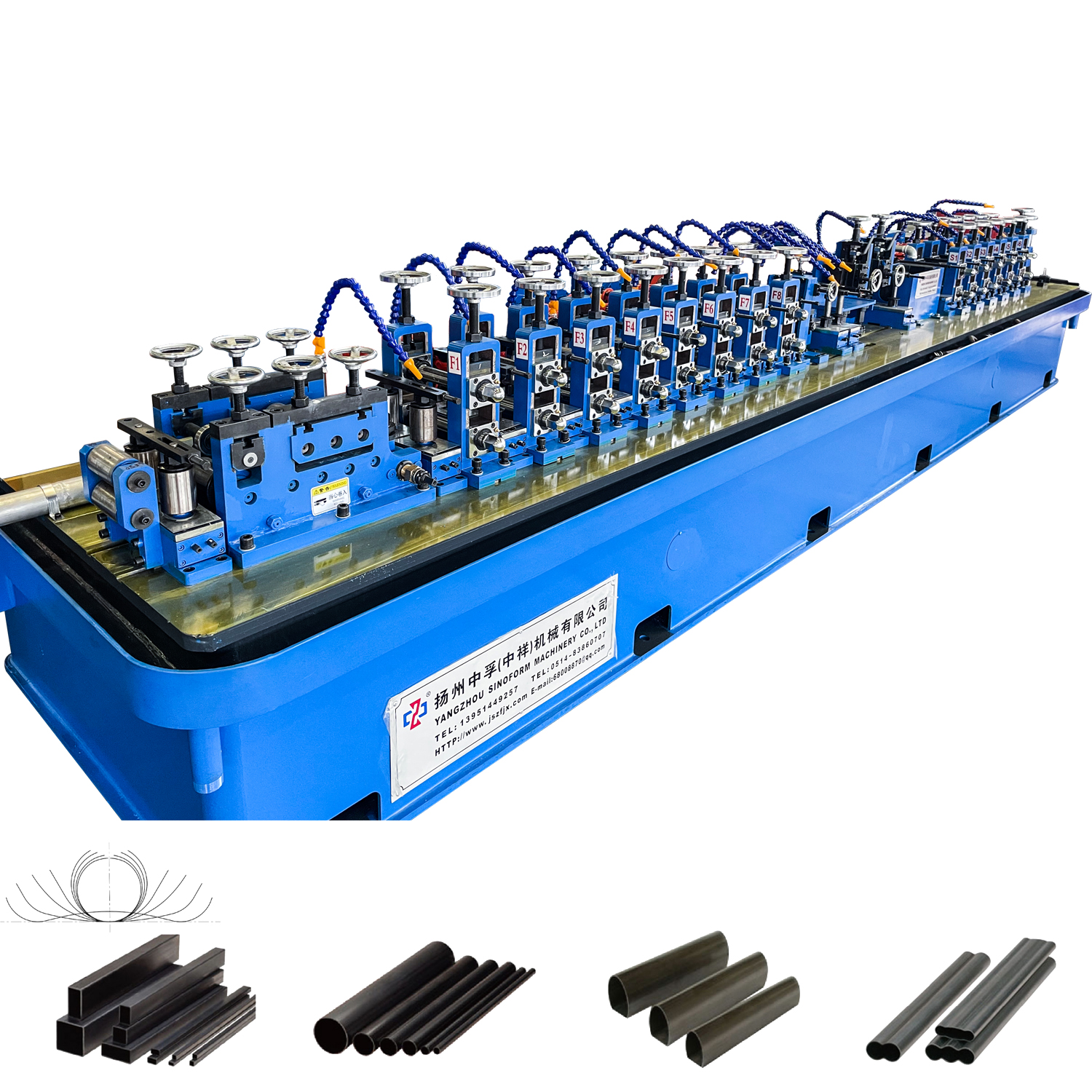
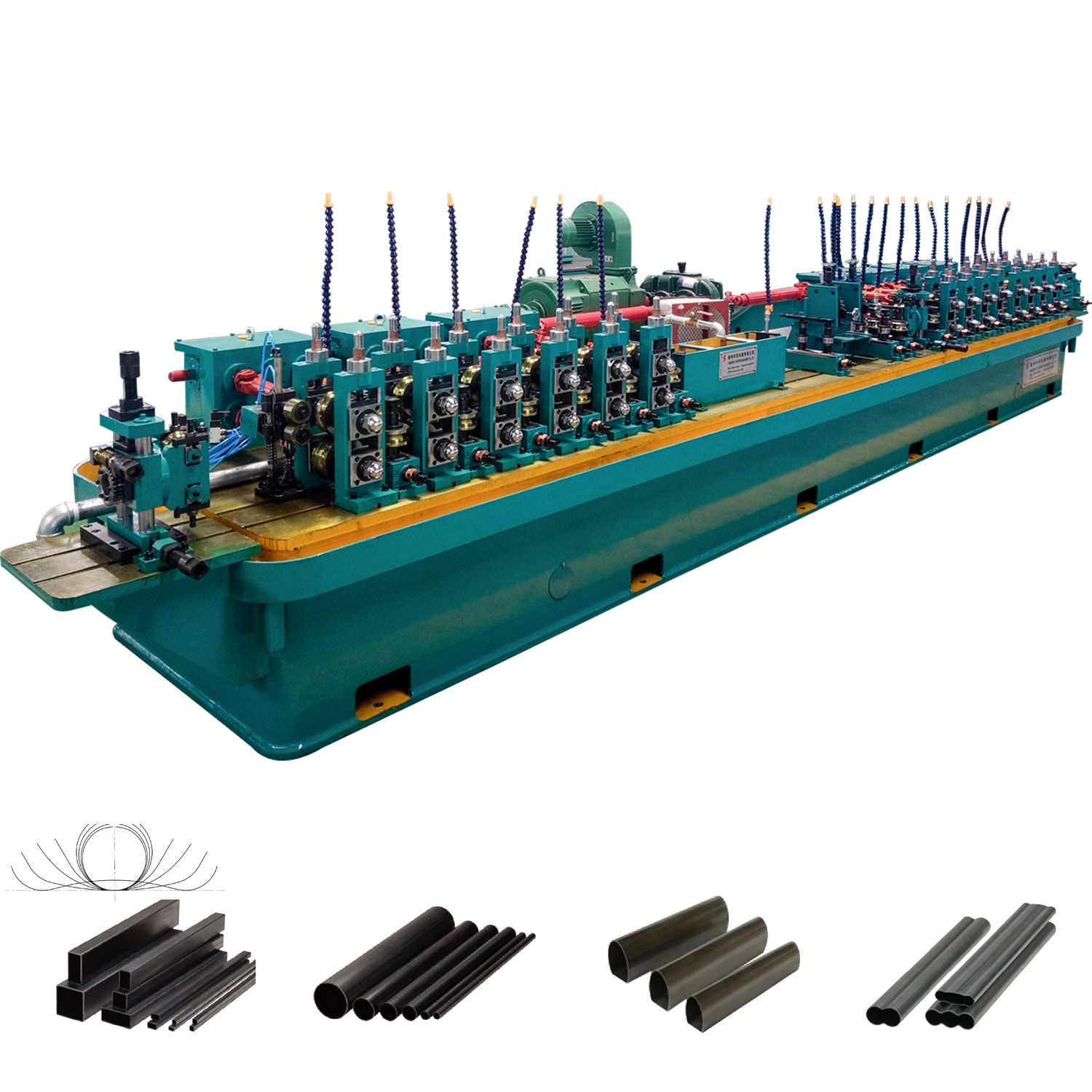
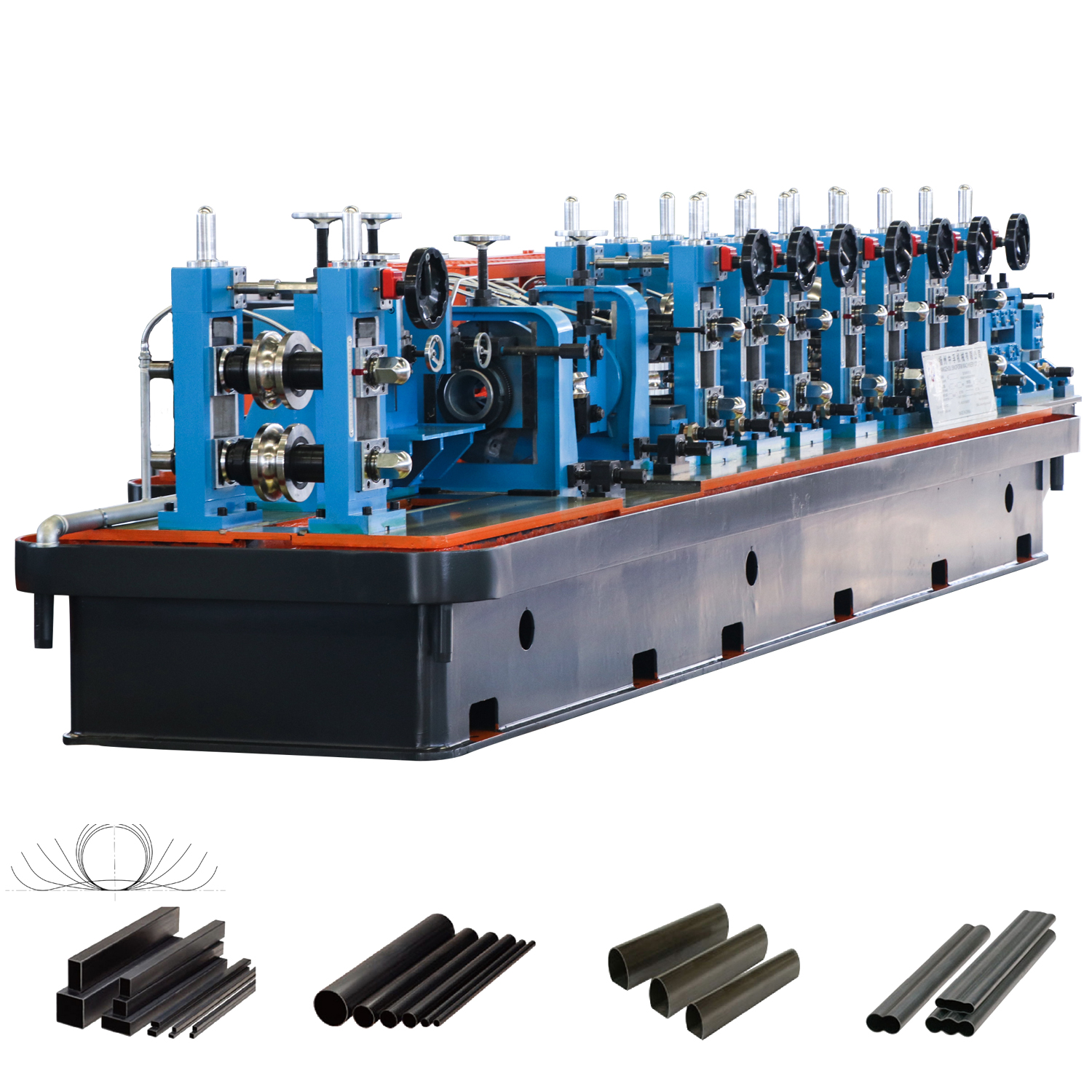
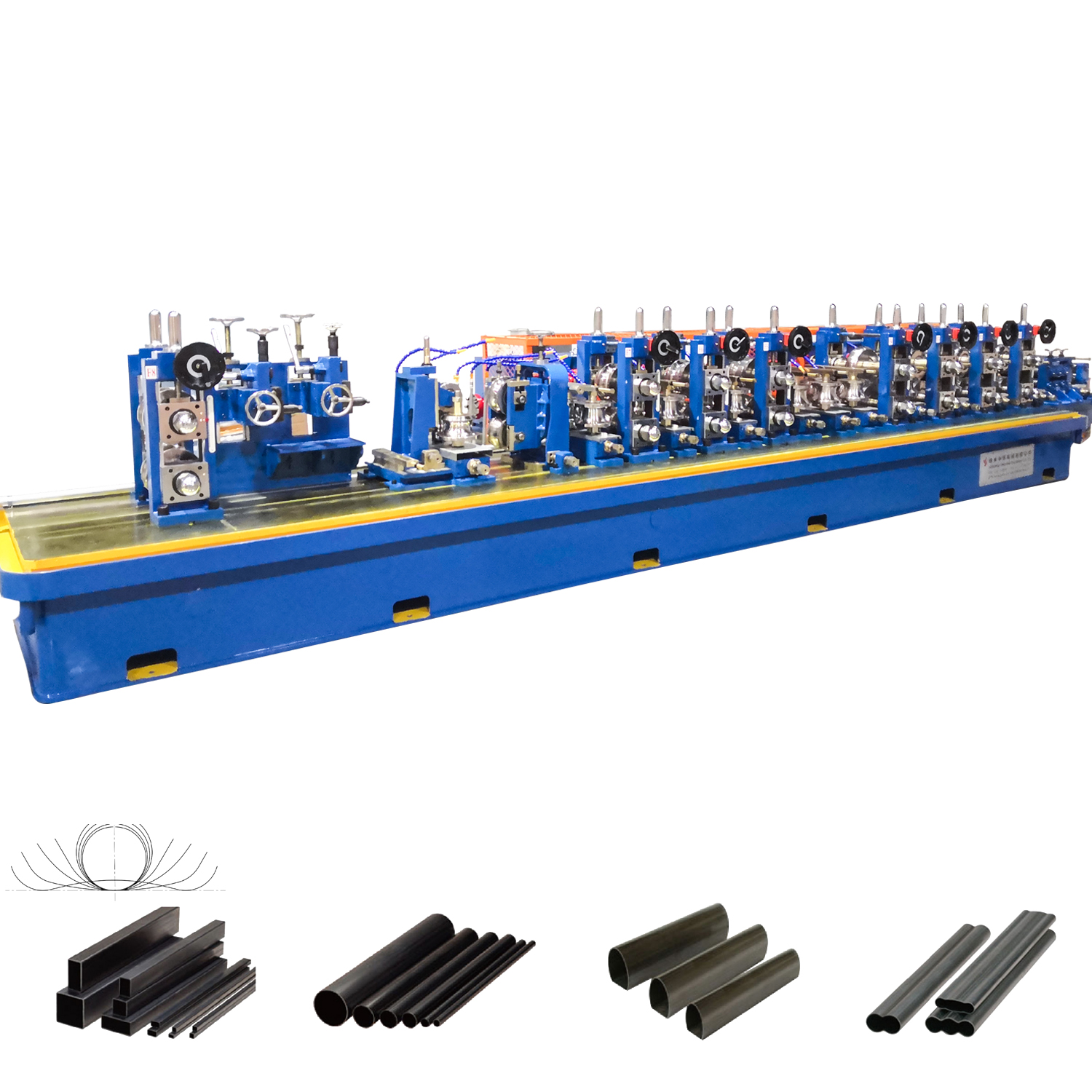
An ERW tube mill machine — short for Electric Resistance Welding tube mill — is the most widely adopted solution for producing high-precision steel pipes at scale. From construction infrastructure to automotive components and fluid transportation systems, ERW tube mills deliver consistent weld quality, dimensional accuracy, and production efficiency that no other forming process can match at comparable cost. This article breaks down everything you need to know: how the technology works, what differentiates modern machines, which industries rely on it most, and why upgrading your line can dramatically improve profitability.
Content
- 1 How Does an ERW Tube Mill Machine Actually Work?
- 2 Why Choose ERW Over Other Pipe Manufacturing Methods?
- 3 Which Industries Rely Most Heavily on ERW Tube Mill Machines?
- 4 How to Select the Right ERW Tube Mill Machine: Key Specifications Explained
- 5 What Are the Standard ERW Tube Mill Machine Configurations by Production Scale?
- 6 Why Are Modern ERW Tube Mill Machines Adopting Smart Manufacturing Technology?
- 7 How to Maximize the Service Life of an ERW Tube Mill Machine
- 8 Which International Standards Apply to ERW Tube Mill Products?
- 9 FAQ: ERW Tube Mill Machine — Frequently Asked Questions
- 10 Conclusion: Why the ERW Tube Mill Machine Remains the Industry Standard
How Does an ERW Tube Mill Machine Actually Work?
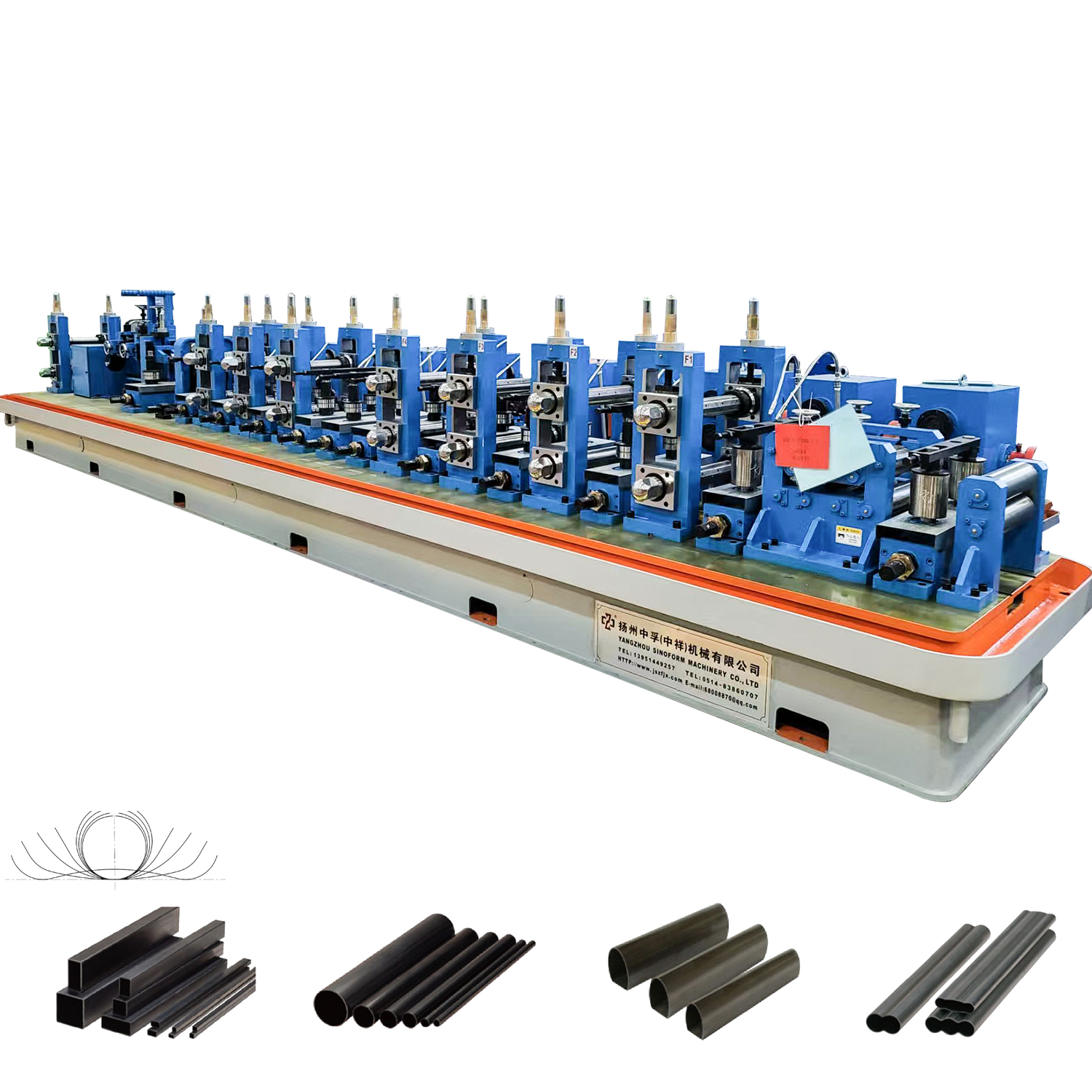
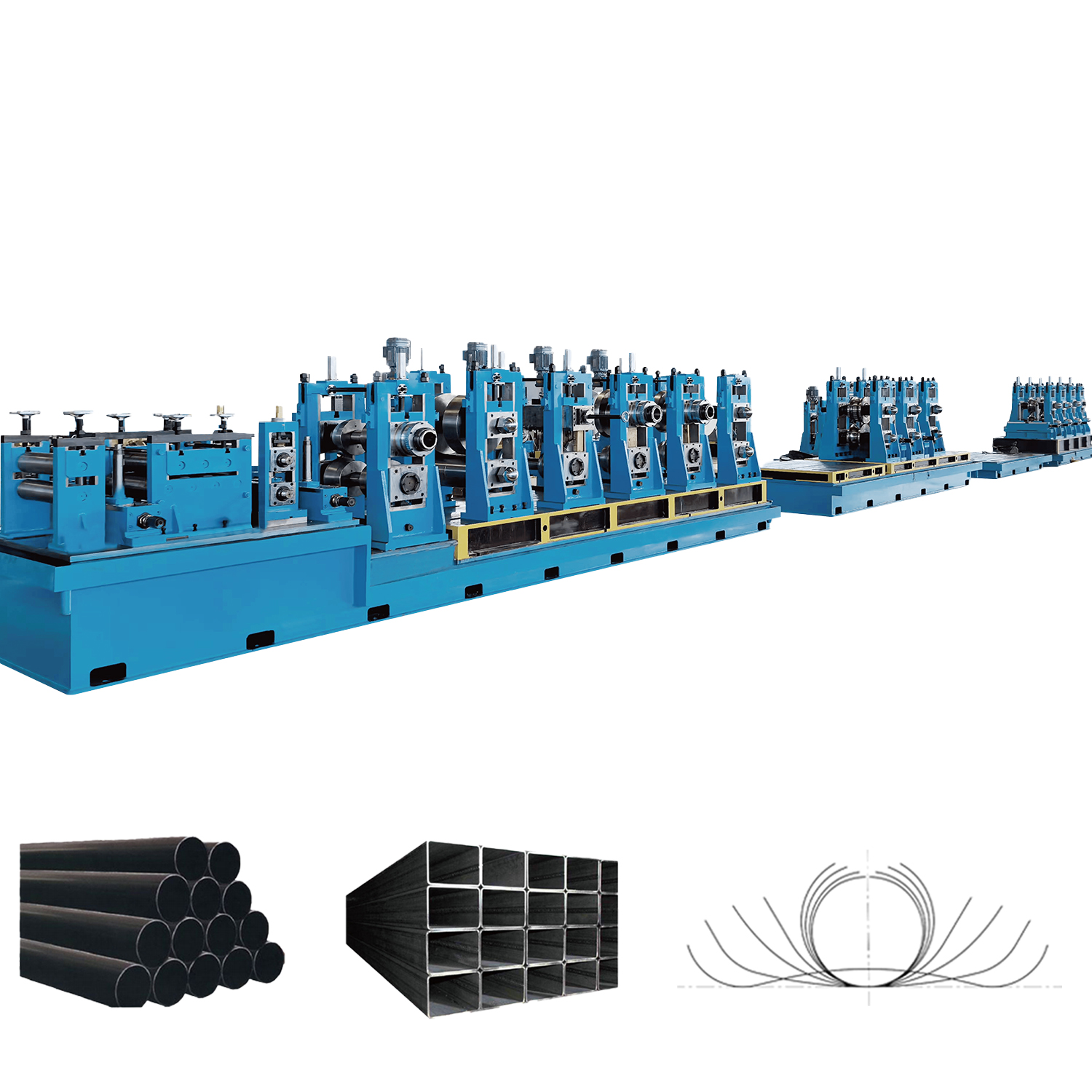
The ERW tube mill process converts a flat steel strip (coil) into a finished welded tube through a continuous, multi-stage inline operation. The result is a tube that is structurally sound, dimensionally precise, and ready for downstream processing with minimal waste.
Stage-by-Stage Process Flow
- Decoiling & Leveling: Steel coil is unspooled and straightened to remove residual curl before entering the forming section.
- End-to-End Joining: Coil ends are flash-butt or shear-welded to enable continuous operation, reducing downtime between coil changes.
- Accumulator Buffering: A looping accumulator absorbs strip during coil joining so the mill never has to stop.
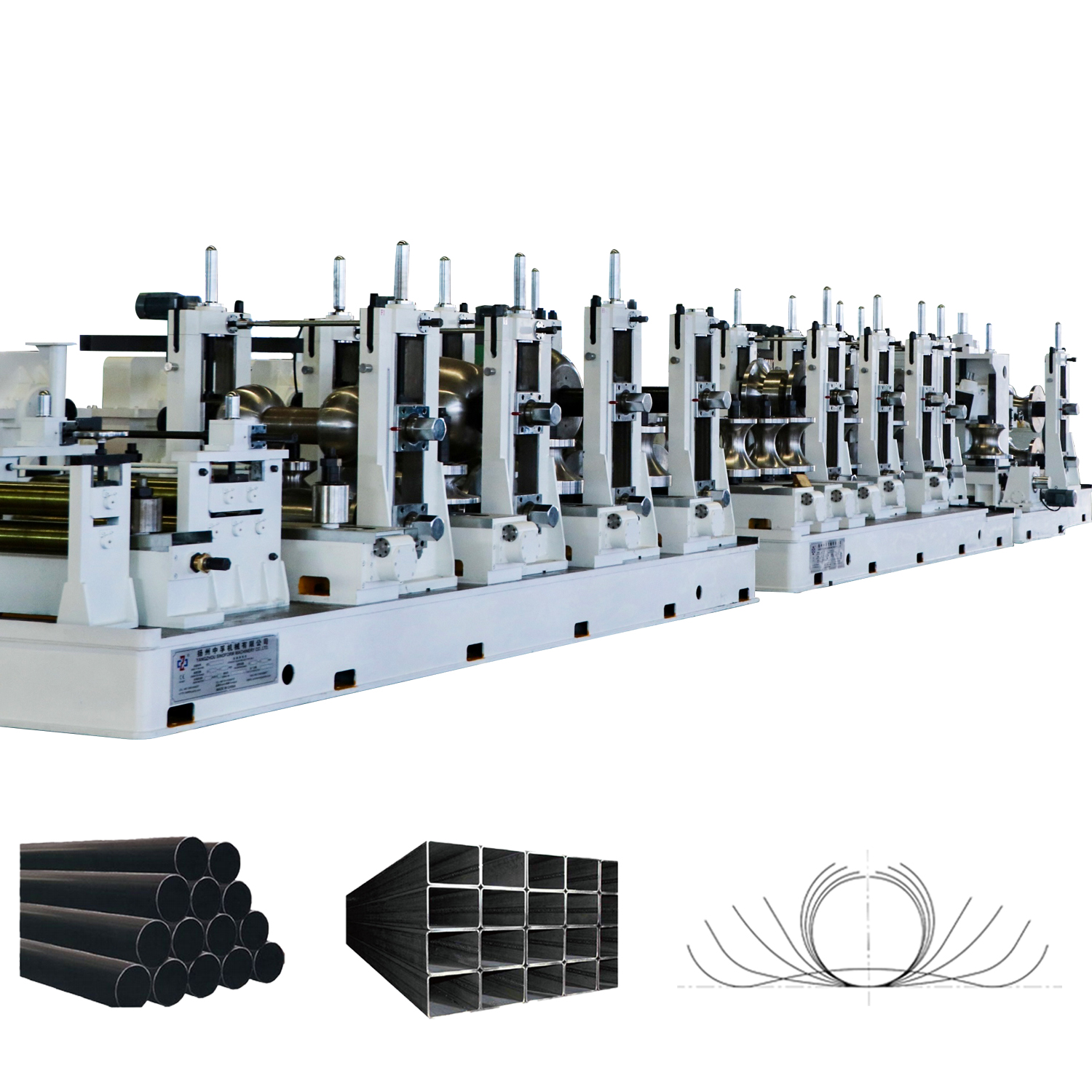
- Roll Forming: A series of horizontal and vertical roll stands progressively bend the flat strip into an open-seam tubular profile.
- HF Welding (High-Frequency Electric Resistance Welding): The strip edges are heated to forging temperature (typically 1,250–1,400 °C) by high-frequency current (100–400 kHz) and pressed together under squeeze rolls to create a solid-state weld — no filler metal required.
- Weld Bead Scarfing: An inside and/or outside scarfing tool trims the weld flash to achieve a smooth surface finish.
- Sizing & Straightening: Final sizing stands bring the tube to exact OD tolerances; a straightening section corrects any bow.
- Cut-off: A flying cut-off saw or rotary crop shear cuts tubes to the required length without stopping production.
Modern ERW pipe mill machines can run at speeds of 20–120 m/min depending on tube size, material grade, and wall thickness, with outputs ranging from 5,000 to over 100,000 tonnes per year for a single line.
Why Choose ERW Over Other Pipe Manufacturing Methods?
ERW tube mills outperform seamless and LSAW/SSAW processes across the majority of commercial pipe diameters due to their superior cost efficiency, dimensional consistency, and adaptability. The table below provides a direct comparison.
| Criterion | ERW Tube Mill | Seamless Pipe Mill | LSAW / SSAW Mill |
| OD Range | 10 – 660 mm | 6 – 610 mm | 400 – 4,000 mm |
| Wall Thickness | 0.5 – 20 mm | Up to 150 mm | 6 – 50 mm |
| Production Speed | 20–120 m/min | 2–15 m/min | 1–5 m/min |
| Material Yield Rate | ≥ 97% | 85–90% | 92–95% |
| Capital Cost (relative) | Medium | Very High | High |
| Dimensional Tolerance | ±0.1–0.3 mm OD | ±0.5–1.0 mm OD | ±0.5–1.5 mm OD |
| Grade Flexibility | High (CR, HR, galv., SS) | High (billets) | Medium |
| Best Application | Structural, mechanical, fluid | High-pressure, extreme temp. | Large-diameter pipelines |
Table 1: Comparative overview of ERW tube mill machines versus seamless and submerged arc welded pipe mills across key performance criteria.
Which Industries Rely Most Heavily on ERW Tube Mill Machines?
The ERW steel tube mill is the preferred production platform across no fewer than six major industry segments, each with distinct product specifications.
1. Structural & Construction
Square hollow sections (SHS), rectangular hollow sections (RHS), and circular hollow sections (CHS) for columns, trusses, and scaffolding are almost exclusively made on structural tube mills. Annual global demand for structural steel hollow sections exceeds 80 million tonnes, the majority produced via ERW.
2. Automotive & Transportation
Precision ERW mechanical tube is the standard material for chassis components, seat frames, drive shafts, and exhaust systems. Automotive-grade ERW mills typically achieve OD tolerances within ±0.1 mm and wall thickness tolerances within ±5%, meeting ASTM A513 and EN 10305 standards without secondary operations.
3. Oil, Gas & Energy
Linepipe grades such as API 5L X42–X70 for gathering lines and distribution networks are routinely produced on ERW pipe mill machines. For pressures below 10 MPa and diameters up to 16 inches (406 mm), ERW linepipe offers a verified cost advantage of 15–25% over seamless alternatives while meeting identical pressure test requirements.
4. Furniture & General Engineering
Light-gauge ERW tube mill lines running cold-rolled strip at speeds above 80 m/min supply the furniture, display, and racking industries. These mills typically handle wall thicknesses from 0.5 to 2.5 mm with excellent surface finish, reducing the need for post-weld grinding.
5. Agriculture & Fencing
Galvanized ERW pipe for irrigation, fencing posts, and greenhouse framing is among the highest-volume product categories. Many producers run dedicated galvanized tube mill lines that integrate inline zinc-coating or run pre-galvanized strip to reduce downstream processing steps.
6. HVAC & Fluid Conveyance
Water, steam, and compressed-air distribution systems rely on ERW steel pipes meeting ASTM A53, EN 10217, or JIS G3452 standards. Modern mills with continuous online ultrasonic weld testing (USWT) deliver 100% seam inspection as part of the production cycle.
How to Select the Right ERW Tube Mill Machine: Key Specifications Explained
Choosing the correct ERW tube mill configuration requires matching machine specifications to product mix, production volume, and quality targets. The following parameters are decisive.
Forming Technology: Cage Forming vs. Fin-Pass Forming
Traditional fin-pass forming uses a dedicated set of rolls per product size, requiring significant tooling investment and changeover time (typically 4–8 hours for a complete size change). Cage-roll forming, by contrast, uses a universal cage of adjustable rolls that can form a wide OD range (often 2:1 or even 3:1 ratio) without a full tooling change, cutting changeover to under 60 minutes. For producers running more than 8 product sizes, cage forming delivers ROI within 18–24 months through reduced tooling cost and increased uptime.
HF Welder: Solid-State vs. Vacuum Tube (VTIW)
Solid-state HF welders (IGBT-based) have largely replaced older vacuum tube designs in new ERW tube mill machine installations. Solid-state units offer 90–95% electrical efficiency versus 60–70% for vacuum tube units, with no warm-up time, lower maintenance, and precise digital power control. A 500 kW solid-state welder on a medium-gauge mill can save $40,000–$80,000 annually in electricity costs compared to an equivalent vacuum tube unit, depending on local utility rates.
Drive System: Hydraulic vs. AC Servo
All-electric AC servo drive systems on modern tube mill equipment provide individual roll stand speed control with ±0.01% accuracy, enabling synchronization across the entire line and eliminating surface scratching caused by speed mismatches. Hydraulic systems, still found on older lines, require hydraulic power units, oil management, and introduce latency in speed correction that can cause surface defects at higher mill speeds.
Inline Quality Systems
Leading ERW tube mill machine lines integrate the following inline quality systems as standard or optional:
- Ultrasonic Weld Testing (USWT): 100% seam coverage per API 5L, ASTM E213
- Laser OD/Ovality Measurement: Non-contact, 360° profile scanning at full line speed
- Eddy Current Testing: Surface and sub-surface defect detection for mechanical-grade tubes
- Weld Heat Input Monitoring: Closed-loop control maintaining stable heat-affected zone width
- Automatic Length Verification: Encoder-based cut-to-length accuracy of ±1 mm
What Are the Standard ERW Tube Mill Machine Configurations by Production Scale?
ERW tube mills are categorized by the OD range and annual tonnage they are designed to produce. The table below summarizes the three primary configurations.
| Configuration | OD Range | Wall Thickness | Line Speed | Annual Capacity | Typical HF Power |
| Light-Gauge Mill | 10–76 mm | 0.5–3.0 mm | 60–120 m/min | 5,000–20,000 t/yr | 100–200 kW |
| Medium Mill | 76–219 mm | 2.0–8.0 mm | 30–80 m/min | 20,000–60,000 t/yr | 300–600 kW |
| Heavy-Gauge Mill | 219–660 mm | 6.0–20.0 mm | 10–35 m/min | 40,000–100,000+ t/yr | 600–2,000 kW |
Table 2: Standard ERW tube mill machine configurations by production scale, illustrating the relationship between OD range, wall thickness capability, line speed, and annual capacity.
Why Are Modern ERW Tube Mill Machines Adopting Smart Manufacturing Technology?
Digitalization is transforming the ERW tube mill machine from a mechanical production line into a data-driven manufacturing system. The motivation is clear: mills that implement Industry 4.0 technologies report an average 12–18% reduction in scrap rate, a 20–30% improvement in OEE (Overall Equipment Effectiveness), and a 15% reduction in energy consumption.
Key Smart Technologies in ERW Mills
- PLC-Based Recipe Management: Pre-stored product recipes ensure repeatable setup for every size change, reducing operator error and cutting setup time by 40–60% versus manual parameter entry.
- Closed-Loop Weld Power Control: Real-time feedback from pyrometers at the weld point adjusts HF power output to maintain constant weld temperature despite strip width, thickness, or speed variations.
- Predictive Maintenance (PdM): Vibration and temperature sensors on gearboxes, roll stands, and the HF welder feed data to condition monitoring platforms, predicting bearing failures 2–6 weeks in advance.
- MES Integration: Manufacturing Execution System connectivity links mill data to ERP for real-time production tracking, quality record management, and coil traceability from input strip to finished tube.
- AI-Assisted Defect Classification: Camera-based vision systems at the cut-off area identify surface defects and weld anomalies, automatically flagging or diverting out-of-spec lengths without manual inspection.
How to Maximize the Service Life of an ERW Tube Mill Machine
Proper maintenance of your ERW tube mill equipment is the single most controllable factor in total cost of ownership. A well-maintained line will achieve 20+ years of productive life; neglected equipment typically requires major rebuild after 8–10 years, at a cost often exceeding 60% of original capital expenditure.
Maintenance Best Practices
- Roll Inspection Schedule: Inspect forming and sizing rolls every 500–1,000 operating hours for wear, chipping, and dimensional deviation. Replace or regrind rolls when OD tolerance exceeds ±0.5 mm at the sizing exit.
- Impeder Maintenance: Replace ferrite-core impeders per manufacturer schedule (typically every 200–400 hours for heavy-wall applications) to maintain HF induction efficiency and weld consistency.
- Contact Tool Inspection: On contact-type HF welders, inspect and dress or replace contact shoes every 50–100 hours to prevent arcing, which causes seam burn marks and pitting.
- Lubrication Management: Use automatic lubrication systems on all stand bearings and gearboxes; manual greasing intervals on roll mill equipment are a leading cause of premature bearing failure.
- Alignment Verification: Re-align the full pass schedule annually or after any collision or tooling crash using laser alignment tools; pass misalignment of 0.3 mm at a fin pass stand is sufficient to cause consistent weld seam offset defects.
Which International Standards Apply to ERW Tube Mill Products?
Tubes produced on ERW steel tube mills must comply with the applicable product standard for the end-use market. The table below summarizes the most commonly referenced standards worldwide.
| Standard | Region | Application | Key Requirements |
| ASTM A53 | USA / Global | Fluid / structural | Hydrostatic test, tensile, bend test |
| API 5L | Global (oil & gas) | Line pipe | CVN, UT, chemical composition |
| EN 10219 | Europe | Structural hollow sections | Charpy impact, dimensional tolerance |
| EN 10305-2 | Europe | Precision mechanical tubes | Tight OD/WT tolerance, surface finish |
| ASTM A513 | USA | Mechanical / automotive | Mechanical properties, weld quality |
| JIS G3452 | Japan / Asia | Gas / water piping | Hydraulic pressure test, coatings |
Table 3: Internationally recognized product standards applicable to tubes produced on ERW tube mill machines, grouped by application and region.
FAQ: ERW Tube Mill Machine — Frequently Asked Questions
Q1: What is the difference between ERW and HFI (High-Frequency Induction) tube mill machines?
Both terms describe the same welding process — high-frequency electric resistance welding. "ERW" is the broad category; "HFI" specifically refers to induction-type HF welding where the coil contacts the strip inductively rather than via direct contact electrodes. HFI is preferred for stainless steel and coated strip because it avoids electrode-to-strip arcing that can damage surface finishes. For carbon steel in standard applications, contact-type ERW remains the dominant configuration.
Q2: How long does a complete size change take on a modern ERW tube mill?
On a conventional fin-pass mill with full tooling changes, a size change from one OD to another within the same family takes 4–8 hours including roll changes, setup, and first-off inspection. On a cage-roll forming mill with pre-set sizing stands and quick-clamp tooling, the same operation can be completed in 45–90 minutes, a critical advantage for service-center operations running multiple sizes per shift.
Q3: Can an ERW tube mill machine process stainless steel and alloy grades?
Yes. Many ERW tube mill machines are designed or retrofitted to handle austenitic stainless steel (304, 316), duplex grades, and high-strength low-alloy (HSLA) steels. Key adaptations include HFI welding heads (to avoid contact contamination), dedicated stainless tool sets with precision surface finish, and either inert gas purging of the weld zone or solid-state welding parameters that minimize heat-affected zone width and sensitization risk.
Q4: What is the typical return on investment (ROI) period for a new ERW tube mill?
ROI depends heavily on local steel prices, labour costs, and product mix margins. In most emerging markets (Southeast Asia, South Asia, MENA), a medium-gauge ERW pipe mill machine with annual output of 30,000–50,000 tonnes typically achieves payback in 3–5 years at standard structural tube margins of $60–100/tonne. In developed markets with higher labour costs, a higher degree of automation can reduce conversion costs to $35–55/tonne, compressing payback to 4–6 years even at lower-margin product levels.
Q5: What strip specifications are required for feeding an ERW tube mill machine?
Standard input material is a hot-rolled or cold-rolled steel coil with width tolerance typically within ±0.1–0.2 mm (edge quality is critical to weld seam consistency), camber under 2 mm per meter, and coil inner diameter of 508–610 mm (20–24 inches). Strip surface should be free of heavy scale, pitting, and laminations; these defects cause weld interruptions, impeder damage, and dimensional instability in the forming section.
Q6: Is it possible to produce square and rectangular hollow sections on an ERW tube mill?
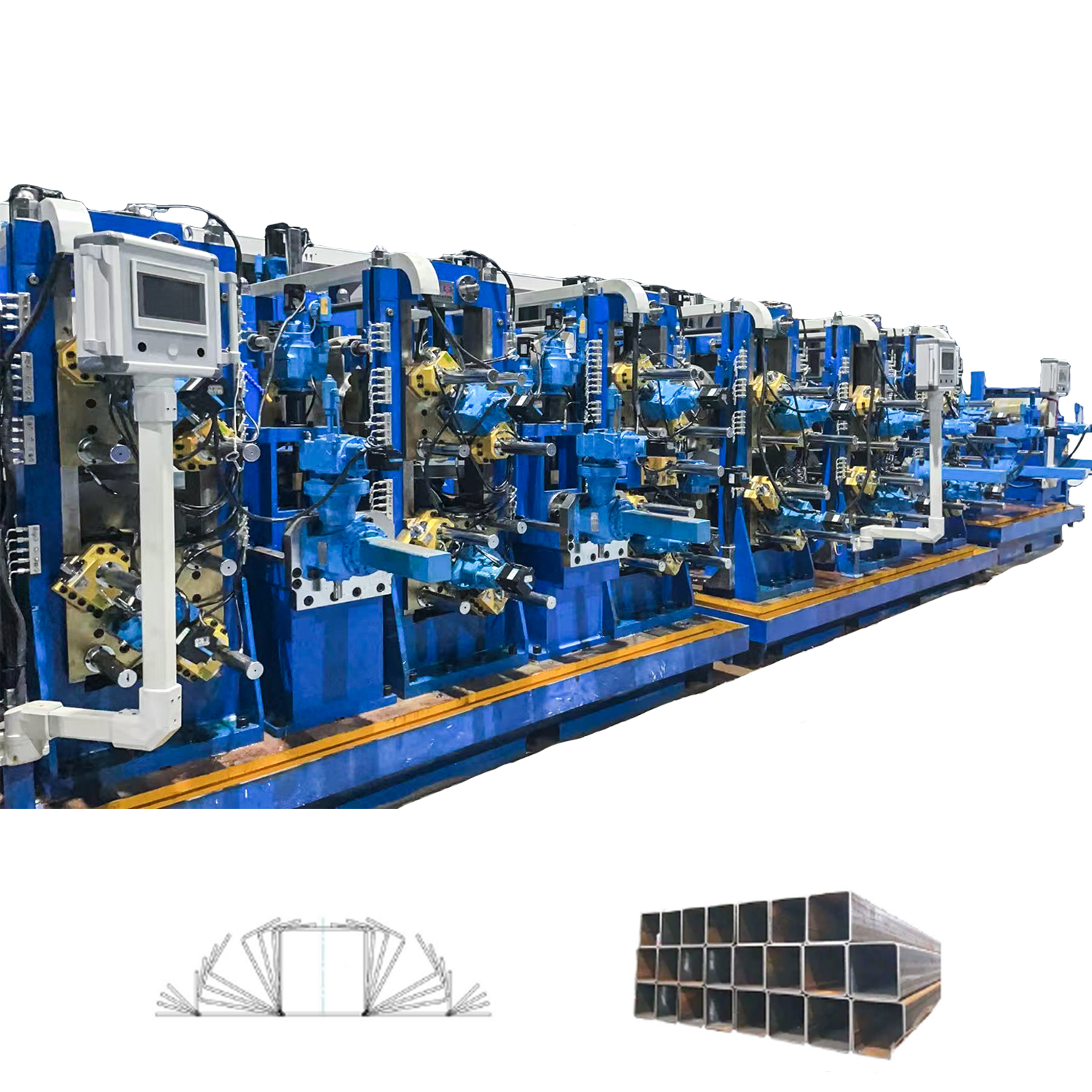
Yes. Producing square or rectangular hollow sections (SHS/RHS) on an ERW tube mill involves a secondary forming section placed downstream of the round forming and welding section. After the weld bead is scarfed, the round tube passes through a series of forming stands that progressively shape it into the desired square or rectangular profile before the final sizing and cut-off operations. This inline round-to-square capability is standard on most structural tube mill configurations.
Conclusion: Why the ERW Tube Mill Machine Remains the Industry Standard
The ERW tube mill machine has sustained its position as the dominant global platform for steel pipe and hollow section production because it uniquely combines high throughput, dimensional precision, material efficiency, and broad product flexibility within a single continuous line. With material yield rates consistently above 97%, production speeds reaching 120 m/min for small-diameter tube, and the ability to serve structural, mechanical, energy, and fluid-conveyance markets from one configurable platform, the ERW pipe mill offers an unmatched combination of capital efficiency and output versatility.
As smart manufacturing technology — from closed-loop weld control to AI-assisted quality inspection — continues to be integrated into ERW tube mill equipment, the gap between ERW and competing processes on quality metrics is narrowing further. Producers who invest in modern ERW tube mill machines with digital capabilities are positioning themselves to serve increasingly demanding specifications while simultaneously reducing conversion costs and improving sustainability metrics including energy consumption per tonne of output.
Whether you are evaluating a greenfield installation, upgrading an existing line, or expanding your product range, a thorough understanding of ERW tube mill machine technology — its process stages, configuration options, quality systems, and maintenance requirements — is the foundation of a sound capital investment decision.