

 English
 Español
 عربى
عربى русский
 中文简体
中文简体
200x200 ERW Square And Rectangular Tube Mill Line
Product IntroductionDuring the process of forming square and rectangular pipes, the roll utilizes a combined roll ...
Product Introduction
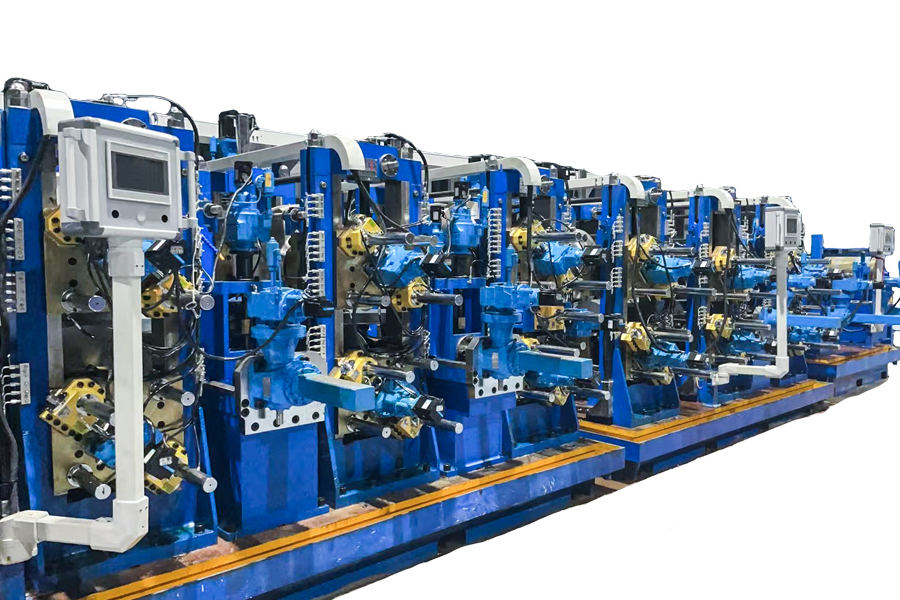
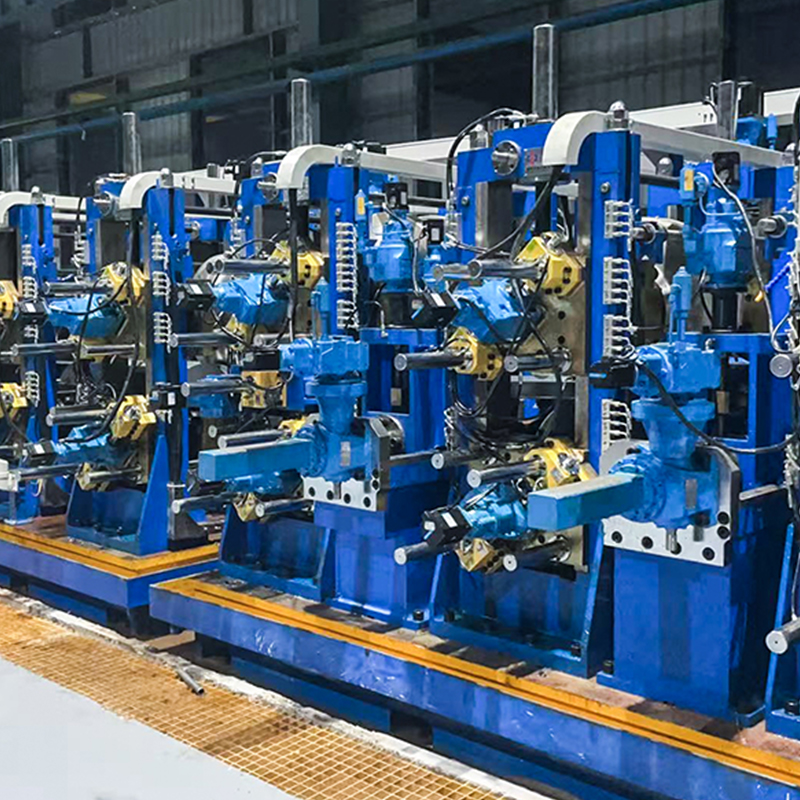
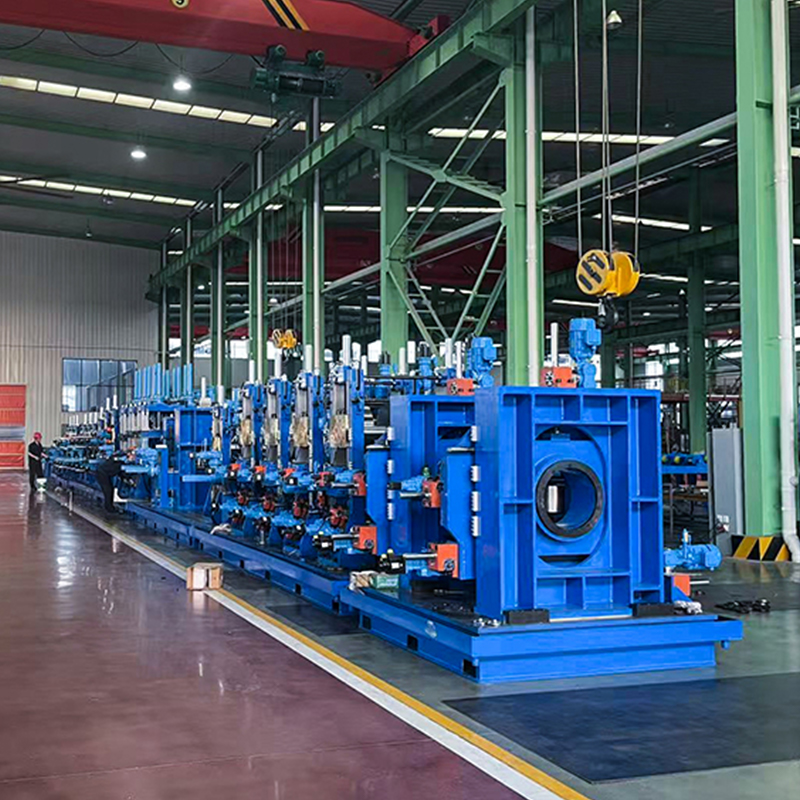
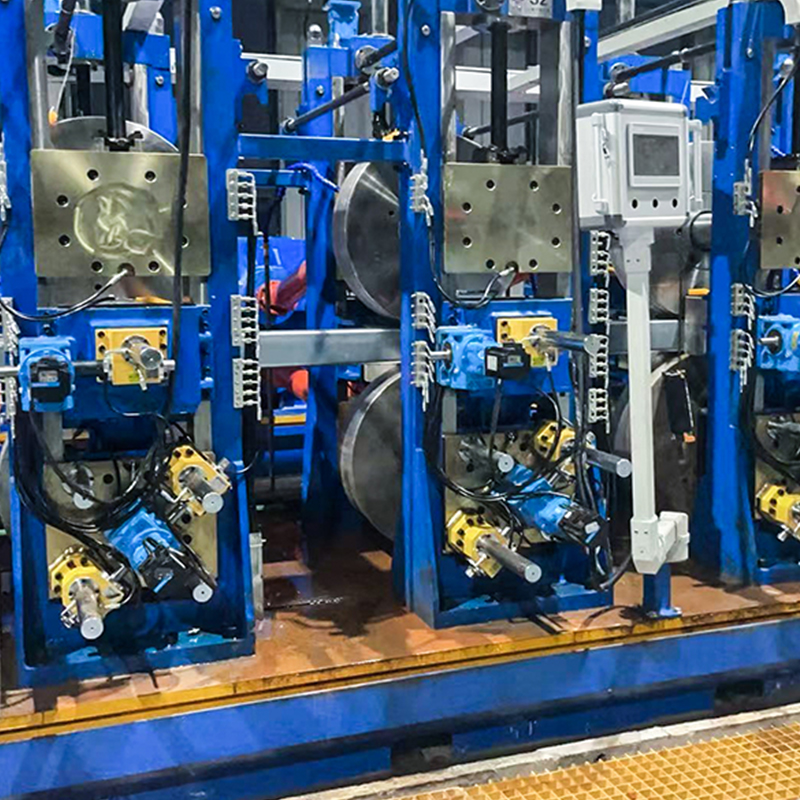
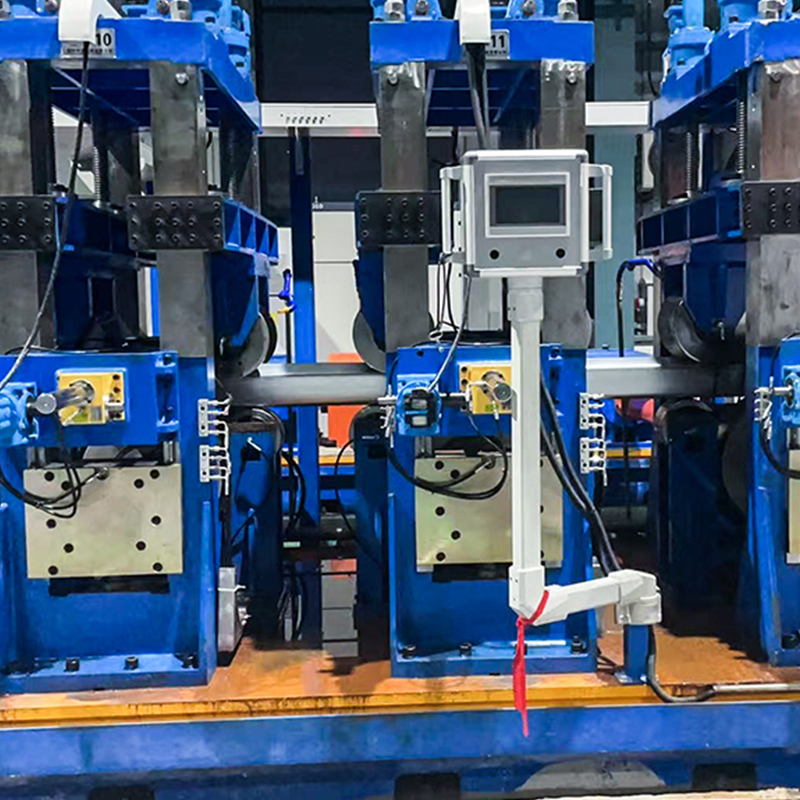
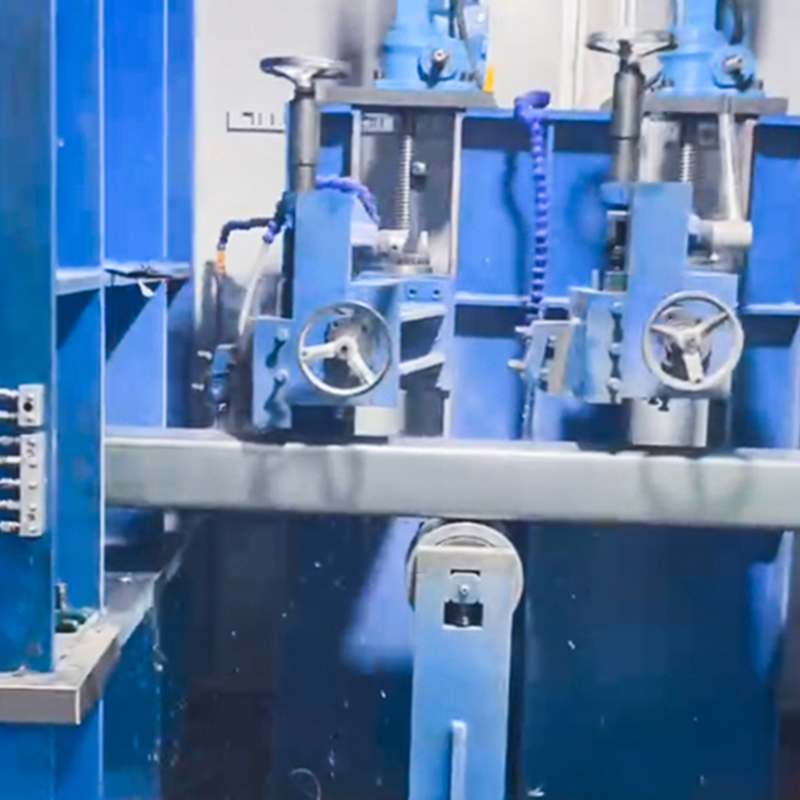
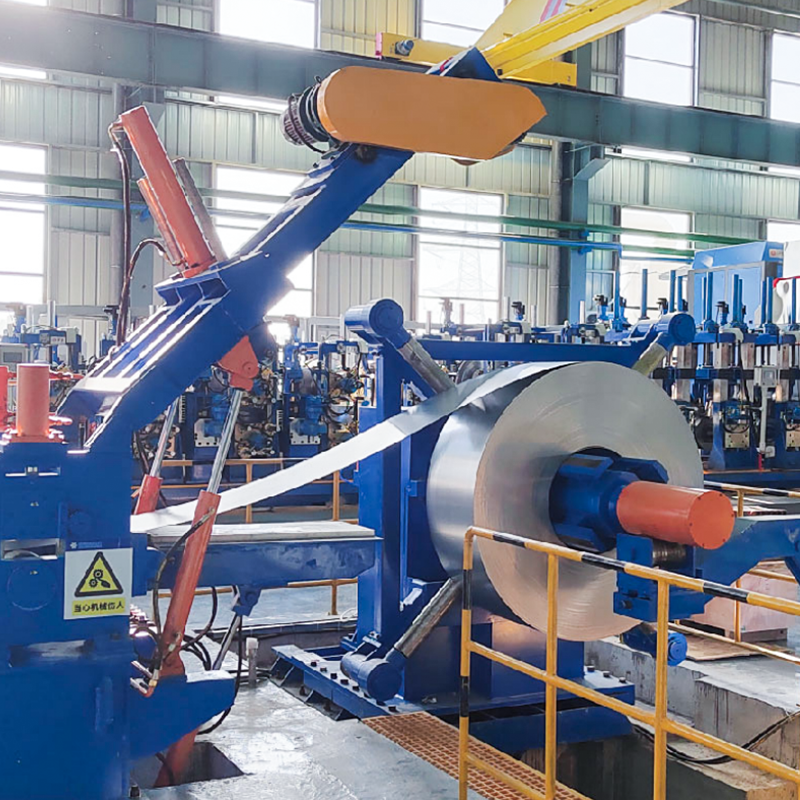
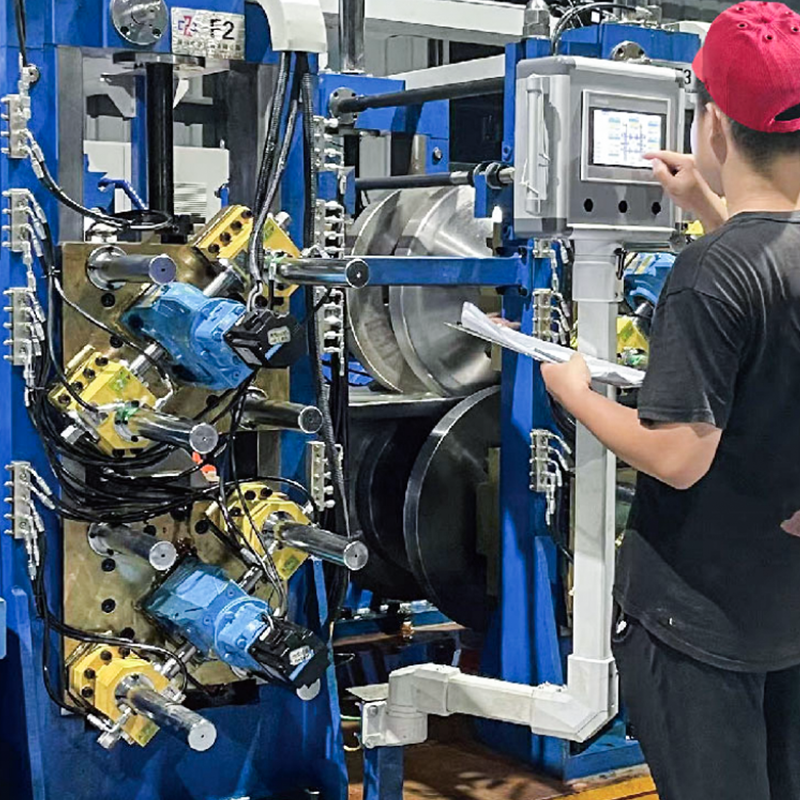
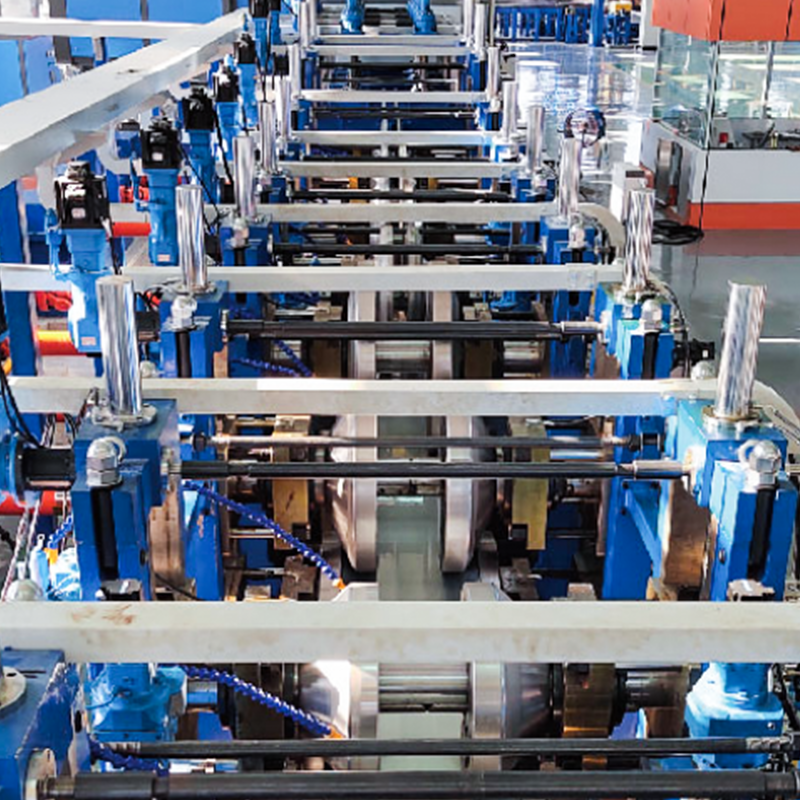
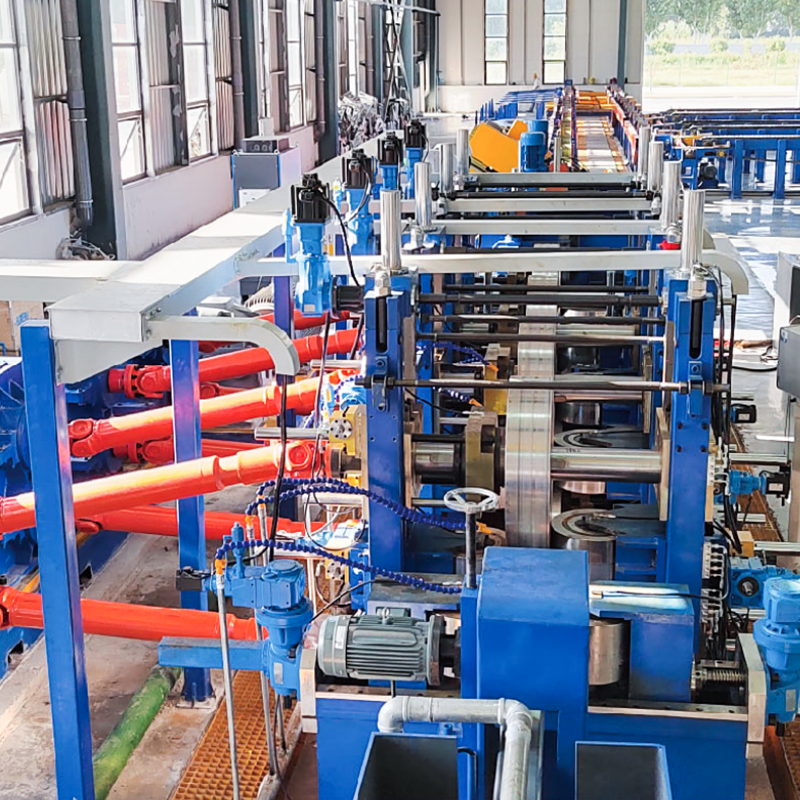
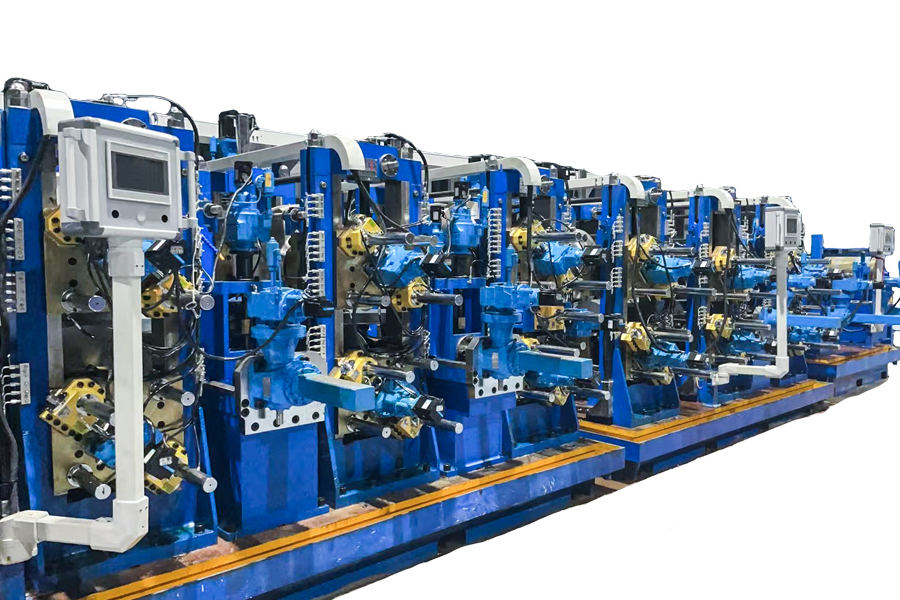
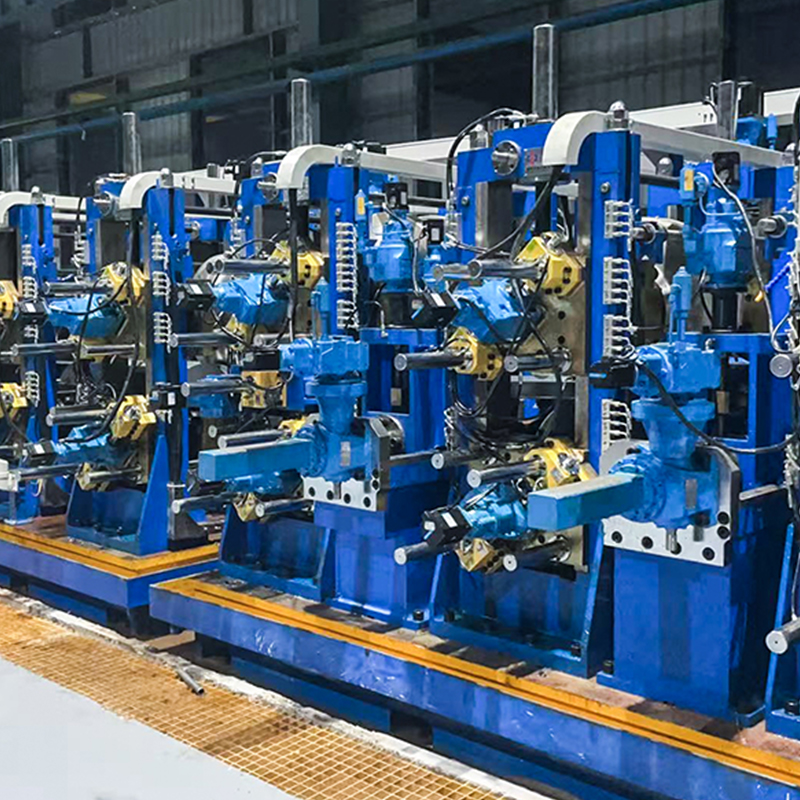
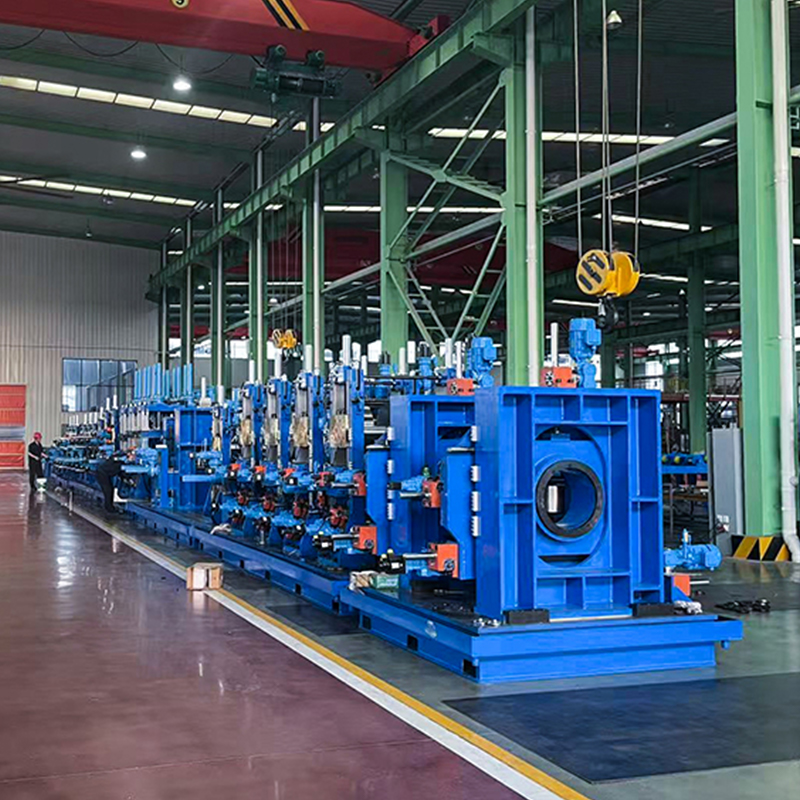
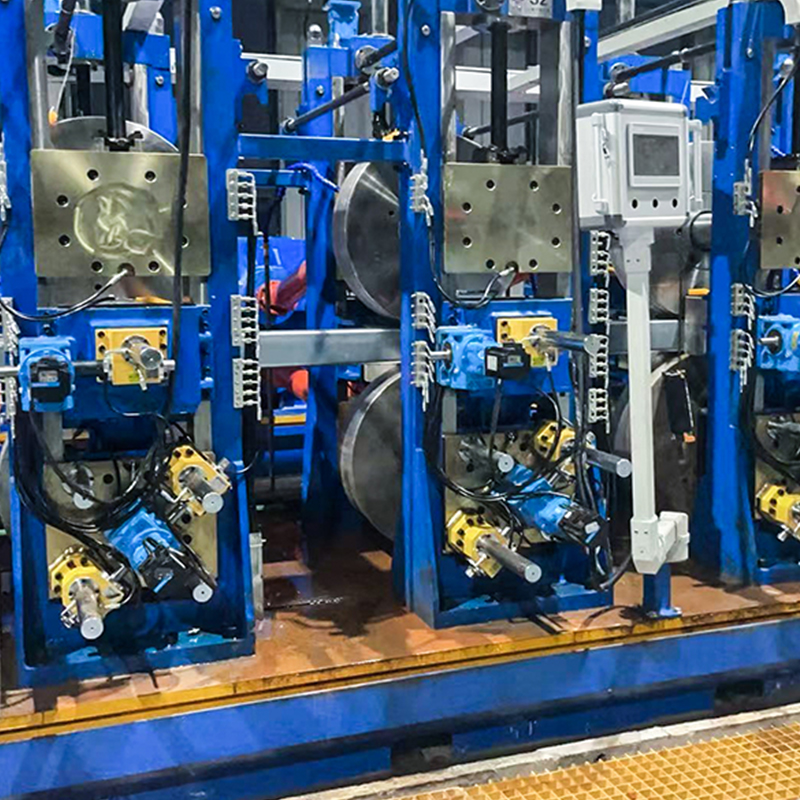
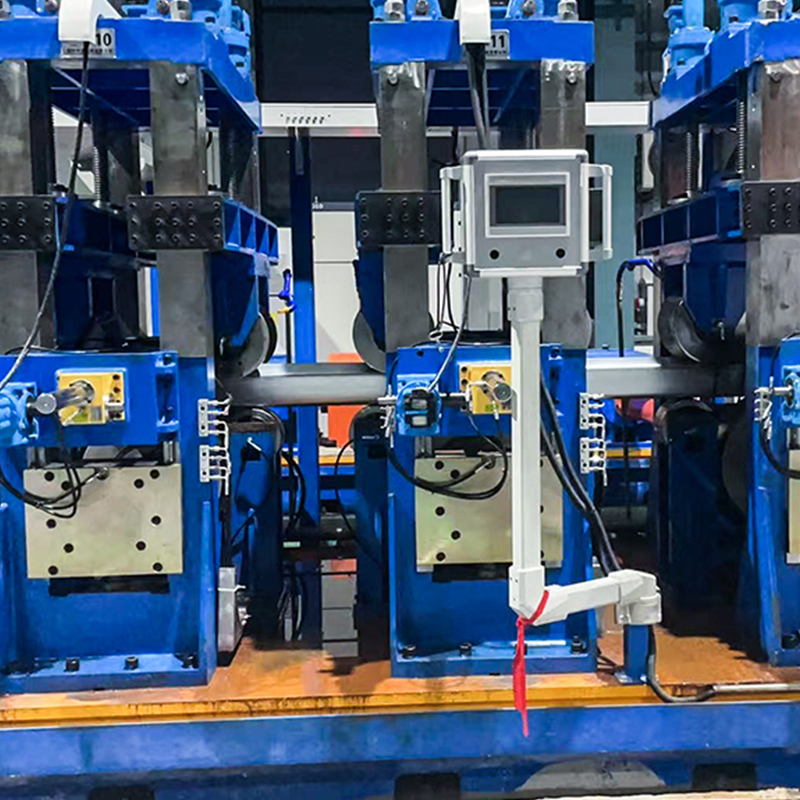
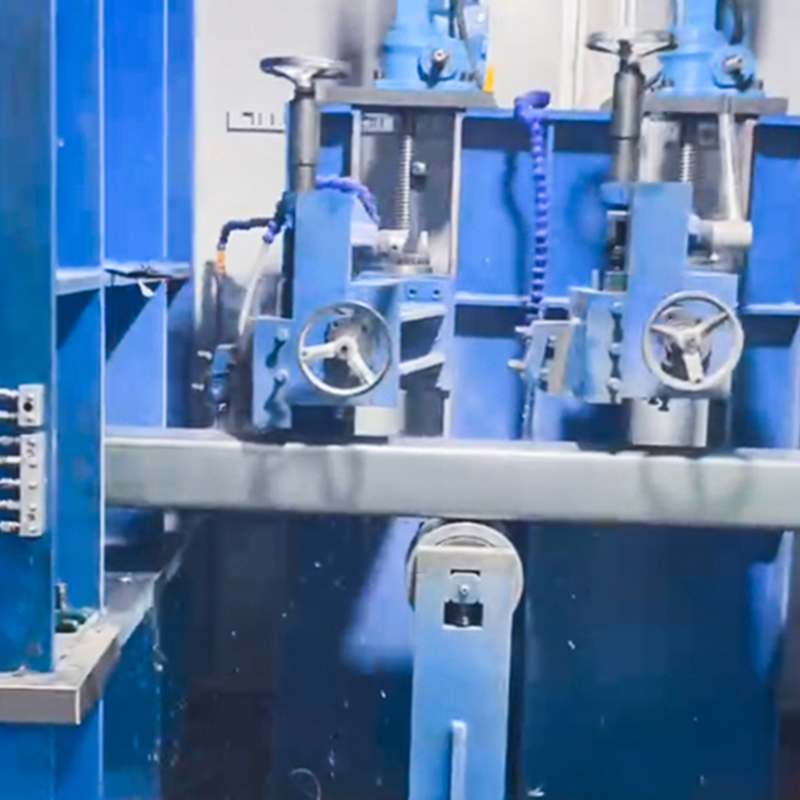
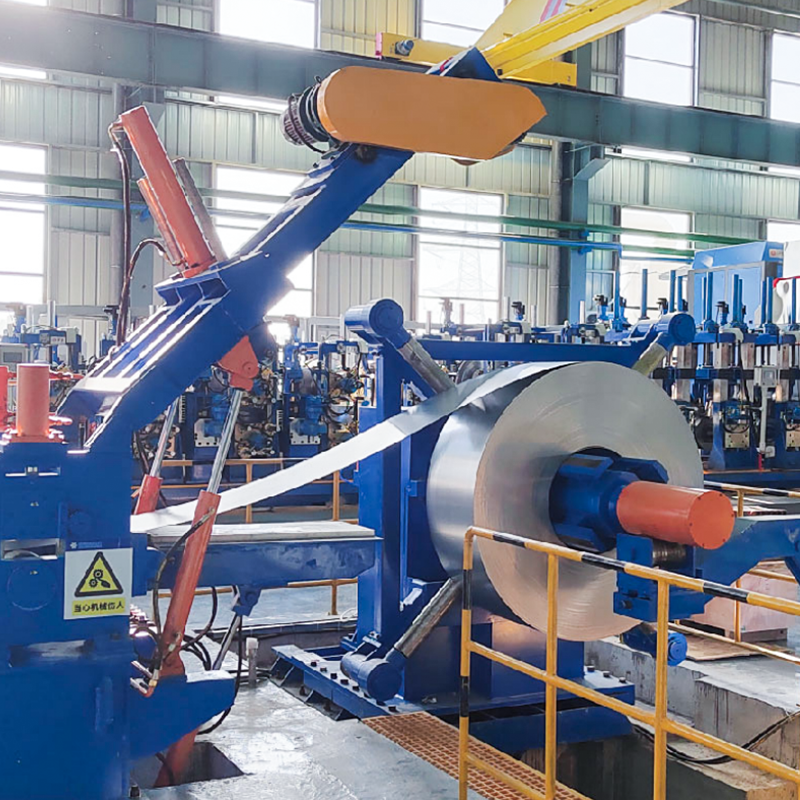
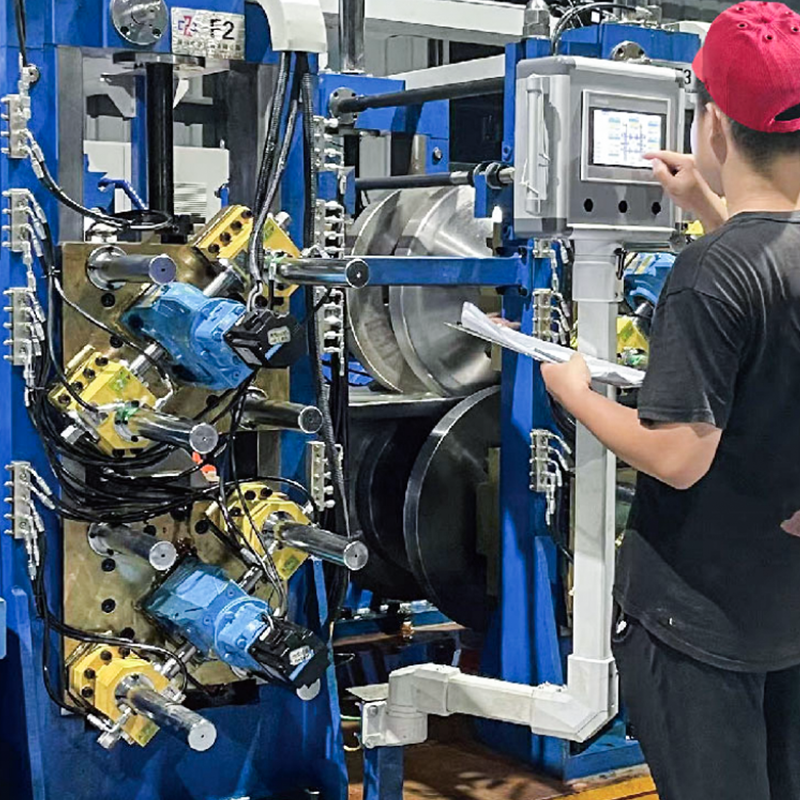
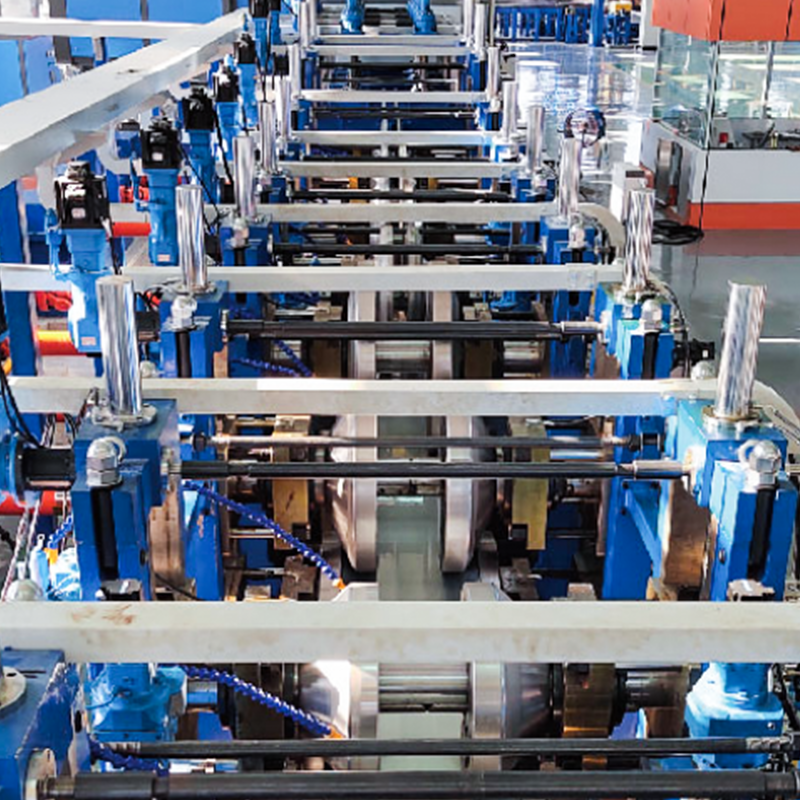
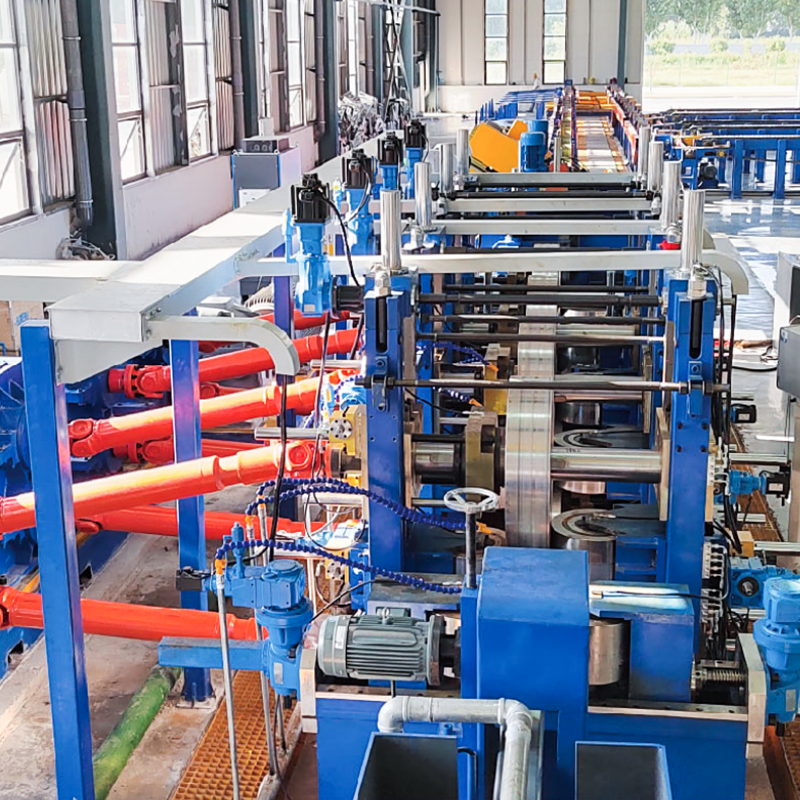
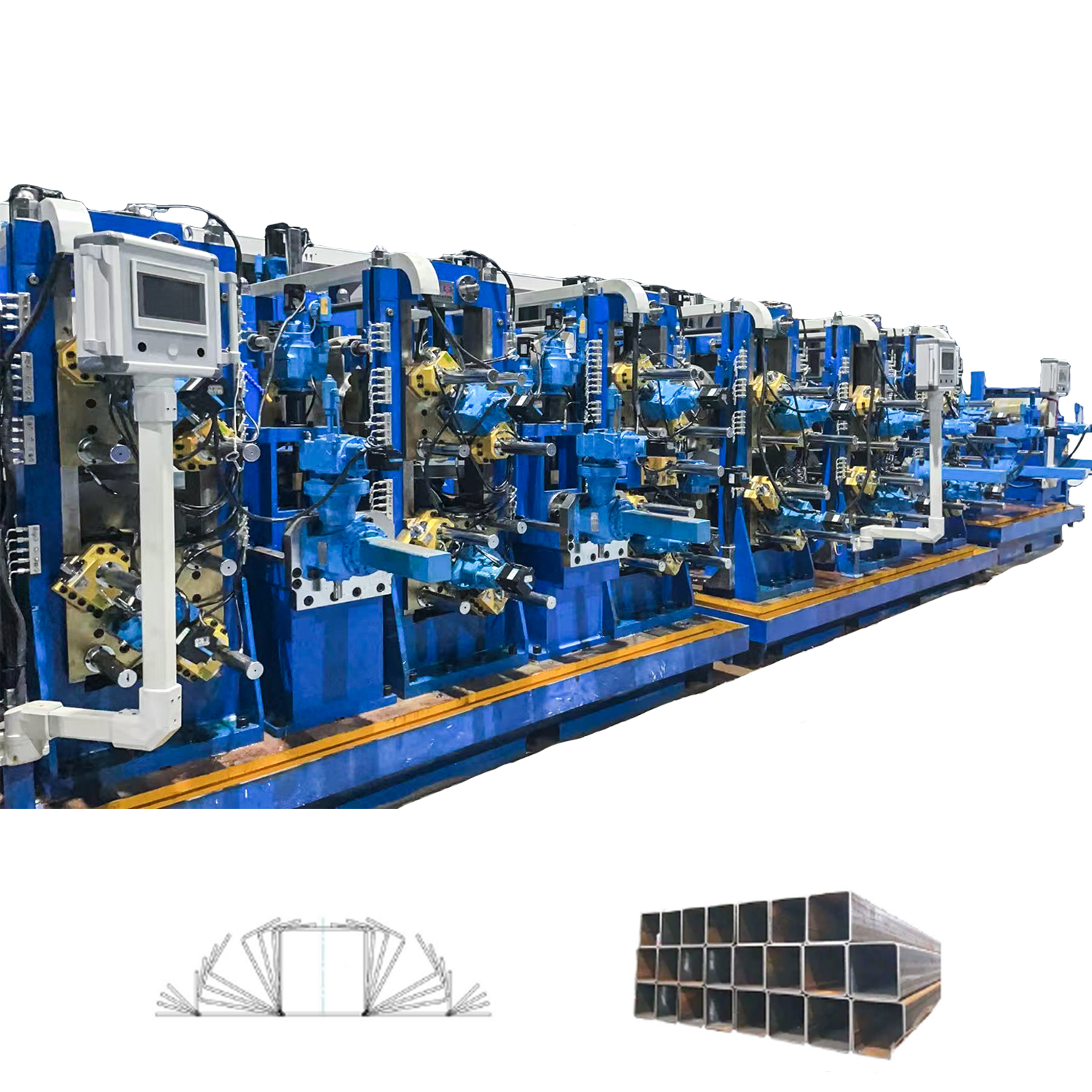
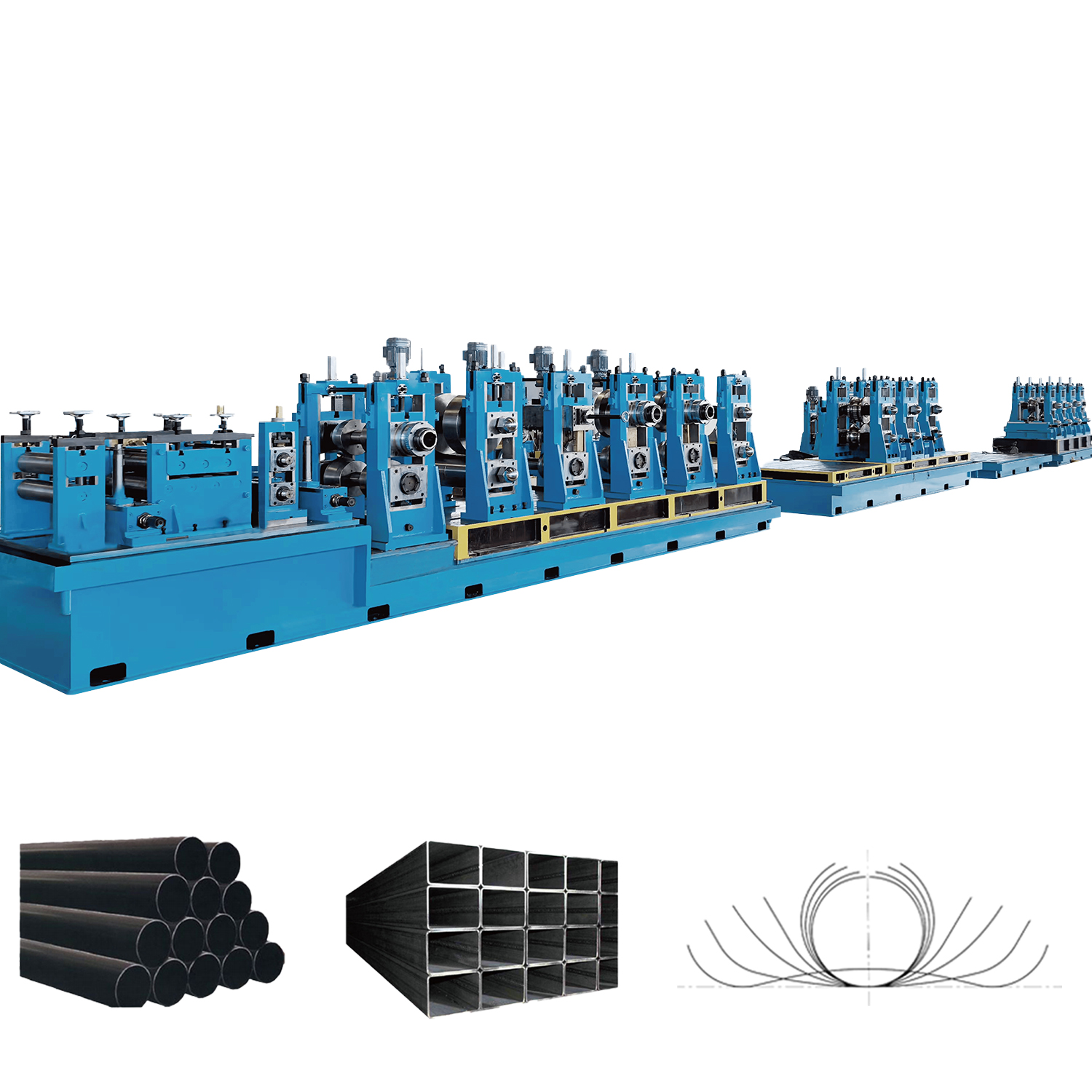
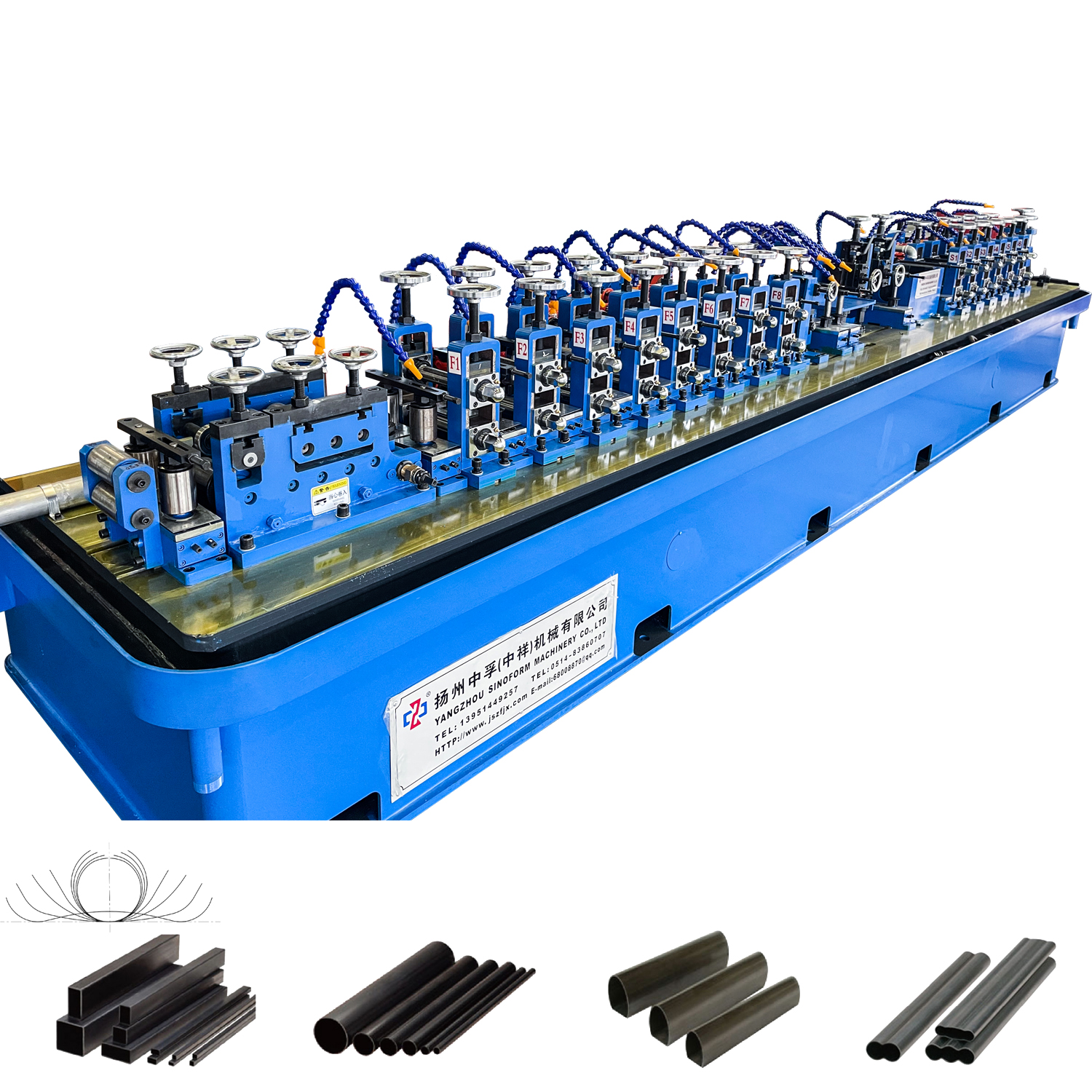
During the process of forming square and rectangular pipes, the roll utilizes a combined roll with a fragment structure, and the roll sheet is filled with the roll sleeve. One set of rolls can cover the welded pipes of the product specifications, and the roll-sharing rate reaches 100%. The roll adopts a segmented structure, and the local contact between the roll and the steel strip in the deformation area is not uniform, thus reducing the contact area and correspondingly reducing the friction between the strip steel and the roll. As a result, the roll wastage is less. The energy consumption of the machine forming is reduced correspondingly, and the strip width can be saved by about 4%. According to the needs of users, the machine can be designed to produce profiles, square tubes, rectangular tubes, and round tubes, multi-functional combination equipment, to achieve a multi-purpose machine.
The fundamental difference between ERW and EFW steel pipes lies in the welding mechanism: ERW (Electric Resistance Welded) pipes use electrical resistance to ...
READ MOREAn ERW tube mill is a continuous production line that transforms flat steel strip into round, square, or rectangular tubes using high-frequency electric resist...
READ MOREERW pipes, which stands for Electric Resistance Welded pipes, are steel pipes manufactured by cold-forming flat steel strip or coil into a cylindrical shape an...
READ MOREPipes are made using one of three core manufacturing methods depending on the material: seamless steel pipes are formed by piercing a solid metal billet, welde...
READ MOREThe 60x60 ERW square tube mill is a specialized high-frequency Electric Resistance Welding (ERW) equipment line engineered to manufacture continuous square steel tubing with cross-sectional dimensions up to 60mm x 60mm. As a precision manufacturing solution designed and built by Yangzhou SINOFORM Machinery Co., Ltd., this machinery integrates cold-forming, high-frequency welding, sizing, and cutting processes into an automated production workflow. Equipped with dedicated roll tooling and advanced drive systems, the 60x60 square tube mill serves as a critical asset for producing structural, decorative, and industrial tubing from steel strip coils.
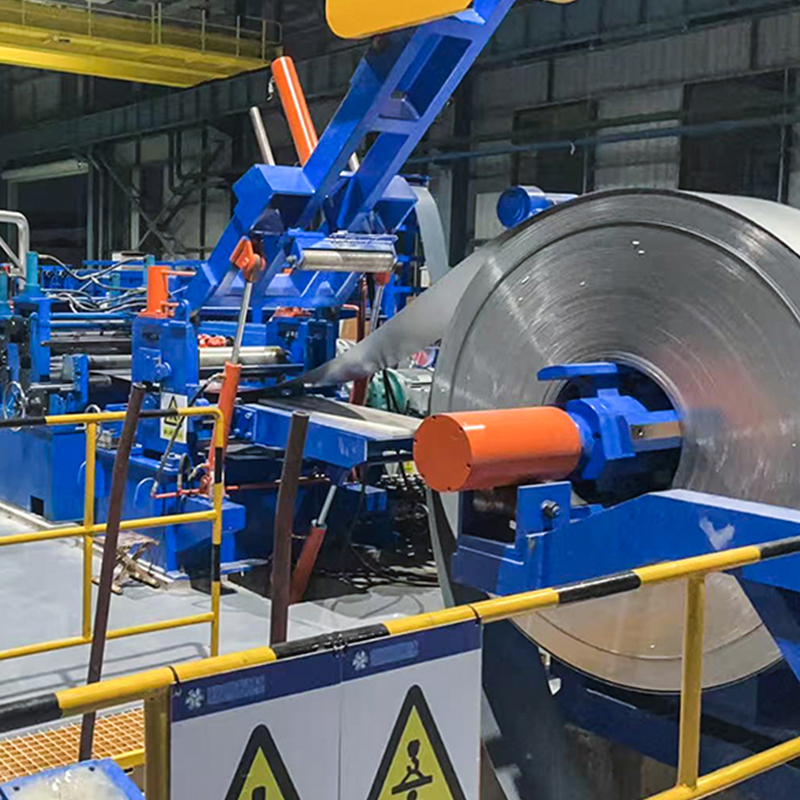
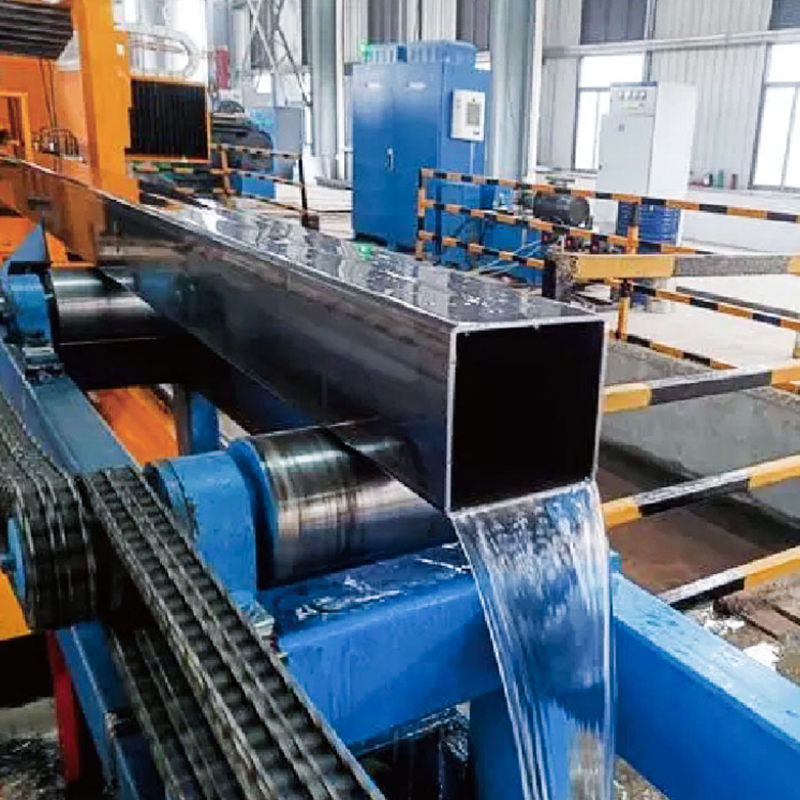
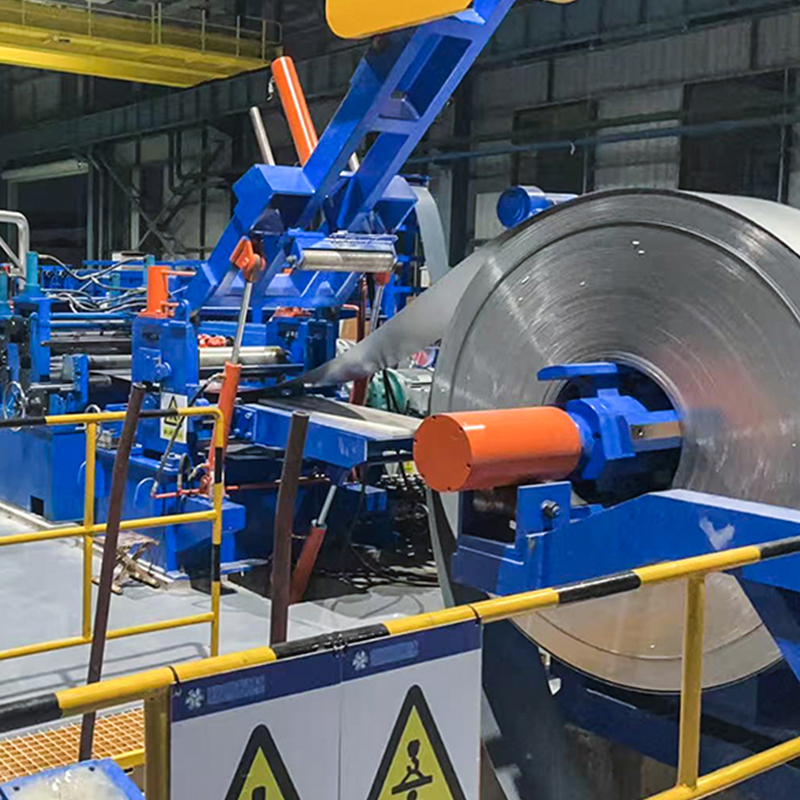
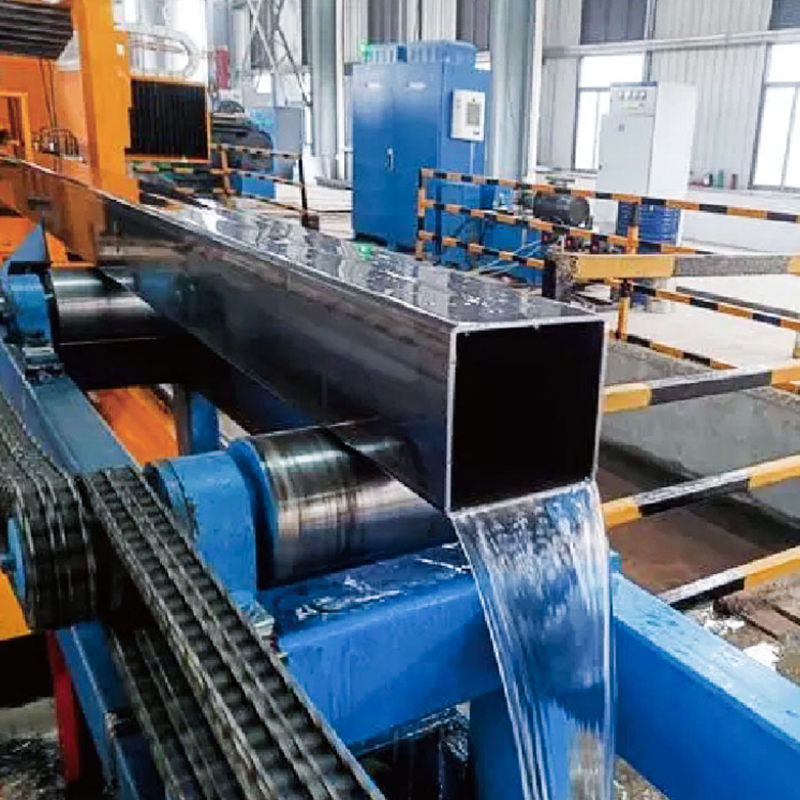
The ERW tube mill process begins with continuous strip feeding and forming. Structural steel strip is uncoiled, leveled, and guided into the forming mill, where sequential pass rolls gradually bend the flat strip into an open round tube profile. High-frequency electrical current (typically 200–500 kHz) is then concentrated at the strip edges, heating them to forging temperature before squeeze rolls press the molten edges together to form a solid weld seam without filler metal. After internal and external weld bead removal, the tube passes through a cooling section into the sizing and squarifying mill, where Turk's head rolls precisely shape the round cross-section into a uniform 60x60mm square profile before online cutting.
Key structural components of the 60x60 ERW square tube mill line include:
In the production of 60x60 ERW square tubing, two primary cold-forming methodologies are utilized based on structural requirements and mill configuration:
In direct-to-square forming, the strip is bent directly into a square profile prior to welding. This approach reduces overall roll set tooling inventory and eliminates the need for round-to-square sizing passes. However, it requires precise edge alignment during the welding stage to maintain edge heating efficiency and square corner radii consistency.
Round-to-square forming shapes the strip into a standard round tube first, completes the high-frequency ERW welding and seam trimming, and then deforms the circular profile into a 60x60mm square section using sizing stands and Turk's head passes. This process provides highly stable welding conditions, uniform wall thickness distribution, and tighter dimensional tolerances across corner radii.
Tubing manufactured via 60x60 ERW square tube mills meets rigorous international standards, including ASTM A500, EN 10219, and JIS G3466. Key application sectors include:
To assist in operational decision-making, the table below outlines the structural and performance differences between high-frequency ERW square tube production and seamless square tube manufacturing methods for 60x60 profiles.
| Parameter | 60x60 ERW Square Tube Mill | Seamless Square Tube Method |
|---|---|---|
| Raw Material | Hot-rolled or cold-rolled steel strip coils | Solid round steel billets |
| Production Efficiency | Continuous high-speed automated output (up to 80-100 m/min) | Batch process with lower yield per hour |
| Wall Thickness Uniformity | High uniformity controlled by flat strip thickness tolerances | Variable wall uniformity due to piercing dynamics |
| Manufacturing Cost | Lower operational and raw material costs | Higher energy consumption and processing expenses |
| Dimensional Consistency | Tight dimensional tolerances in length, squareness, and straightness | Requires secondary machining or cold drawing for high precision |
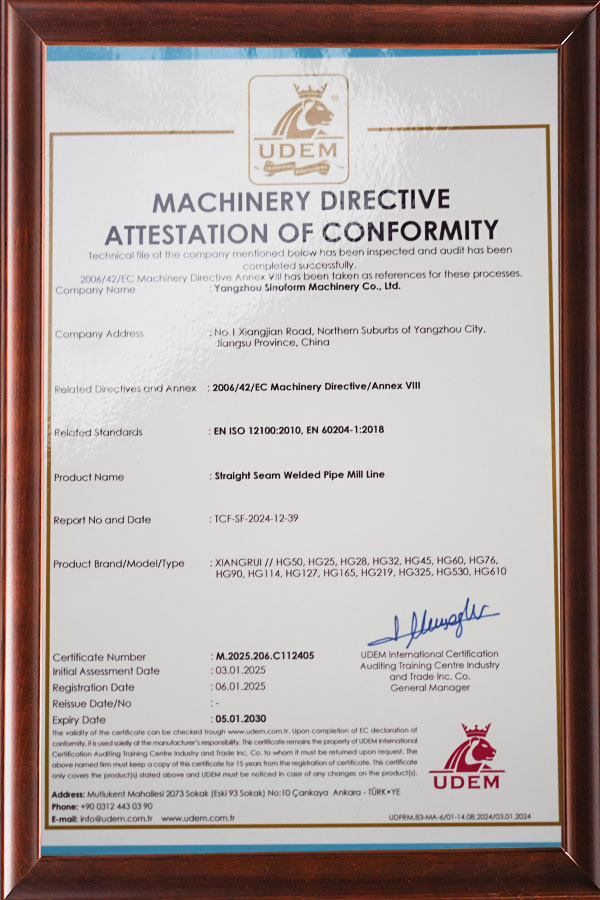
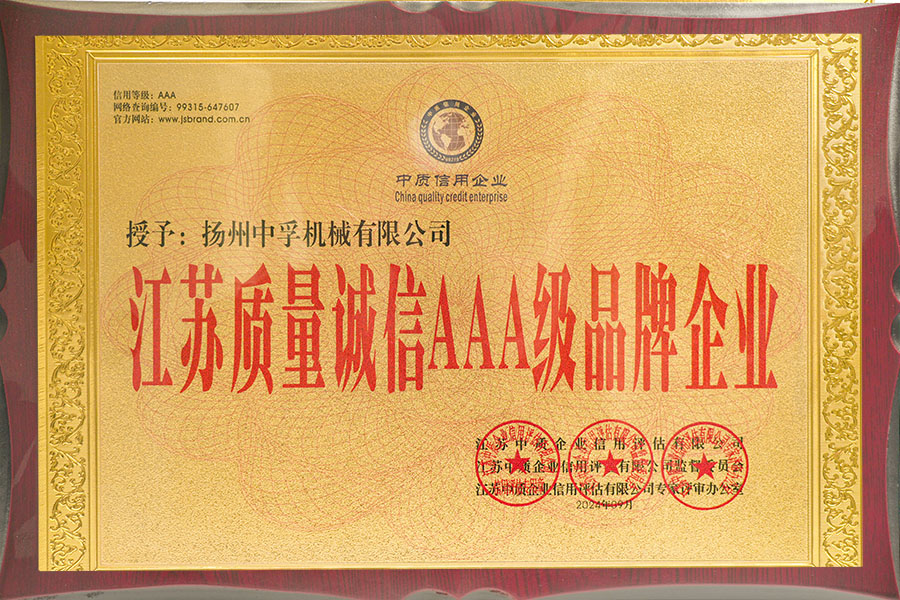
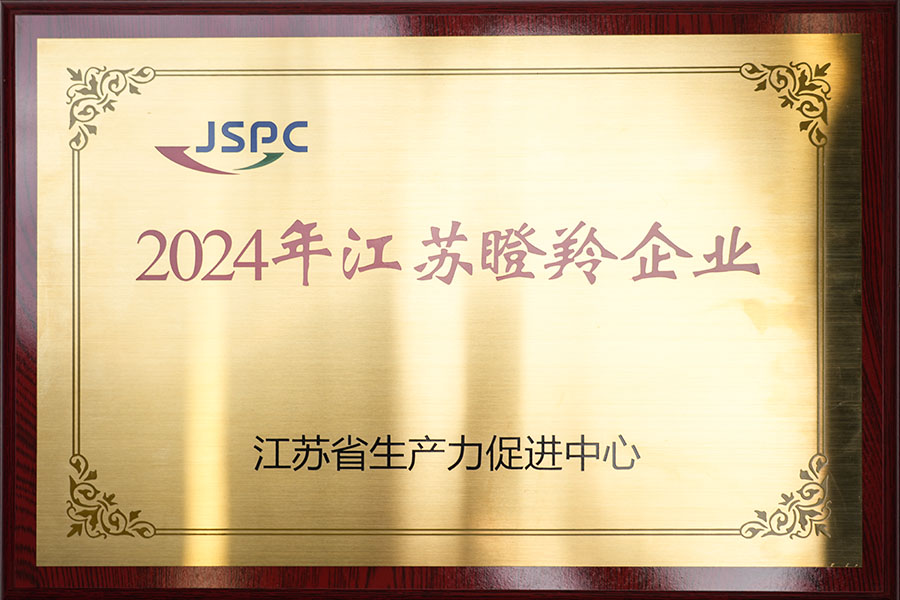
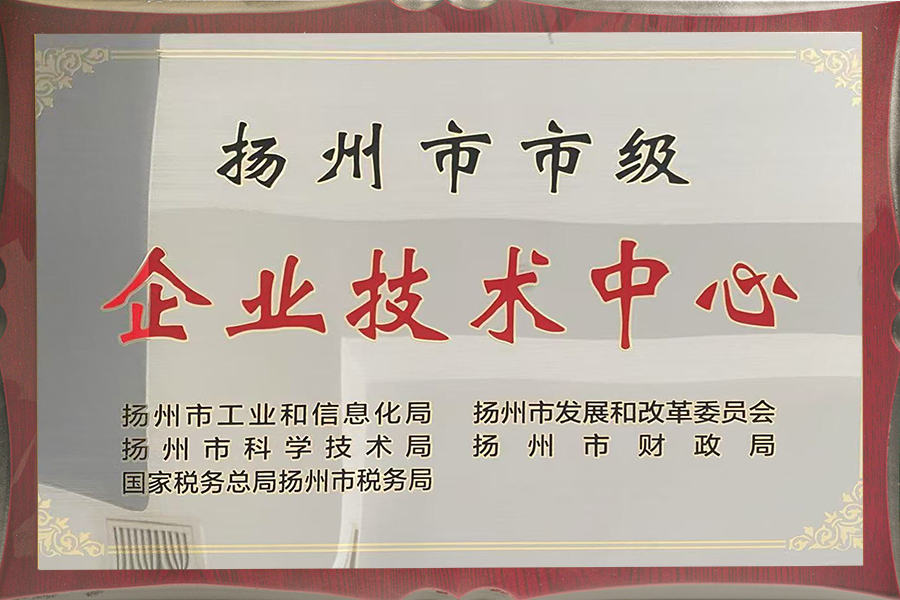
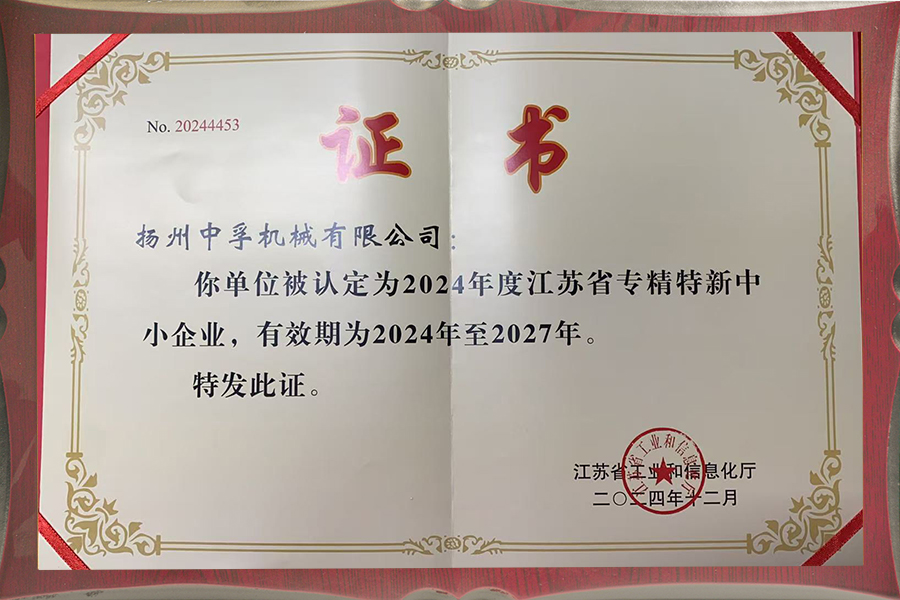
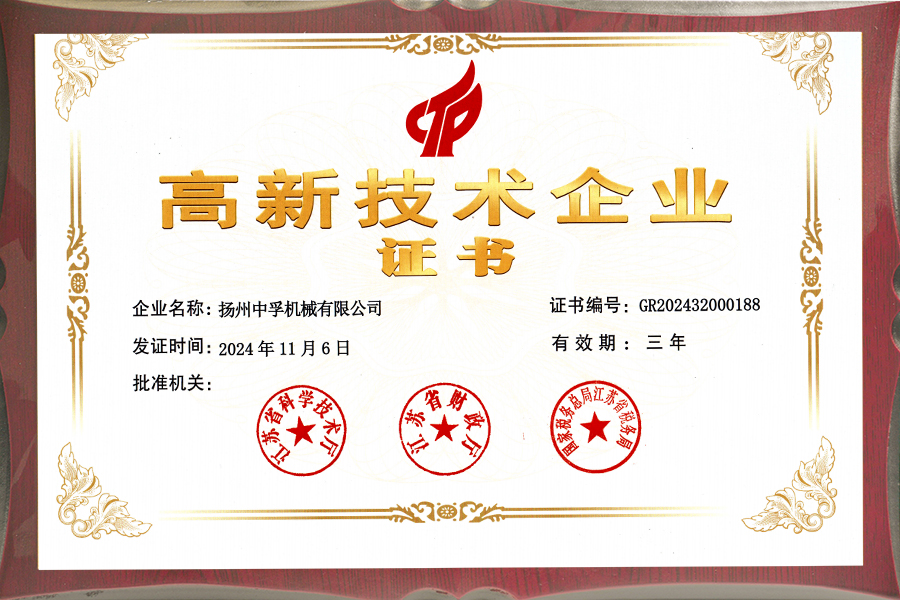
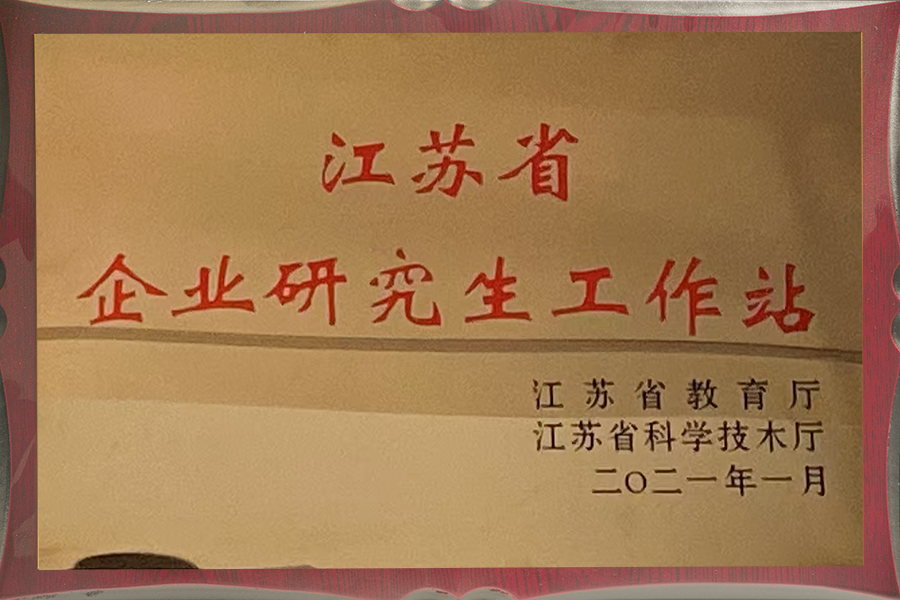
Precision manufacturing of ERW square tube equipment relies on rigorous quality management frameworks. Operating under an ISO9001 certified quality system and CE compliance standards, Yangzhou SINOFORM Machinery Co., Ltd. applies integrated scientific research, mechanical engineering, and precision tooling manufacturing to produce reliable welded pipe lines. Advanced machining equipment ensures that the forming stands and rolling mill molds meet exact geometric tolerances, minimizing profile distortion and stress concentration along tube corners.
A standard 60x60 ERW square tube mill typically handles wall thicknesses ranging from 1.0mm to 4.5mm, depending on the yield strength of the steel strip coil and the specific motor power configuration of the forming mill stands.
High-frequency resistance welding creates localized thermal stress along the longitudinal joint. Online weld seam annealing restores the grain structure in the heat-affected zone (HAZ), eliminating residual stress and ensuring uniform mechanical strength across the square profile.
Rolling mill molds are manufactured from high-grade alloy tool steel, subjected to precision heat treatment, and inspected regularly for wear. Proper lubrication during continuous tube forming reduces surface abrasion on both the steel strip and the roll surfaces.

 No.1 Xiangjian Road, Northern
Suburbs Of Yangzhou City,
Jiangsu Province,China
No.1 Xiangjian Road, Northern
Suburbs Of Yangzhou City,
Jiangsu Province,China
 Phone: +86-0514-8363 8877
 E-mail: [email protected]
© Yangzhou SINOFORM Machinery Co., Ltd. Custom 60x60 ERW Square Tube Mill suppliers
