The primary answer to this question is that a high-frequency tube mill machine provides unprecedented production speeds, exceptional weld seam structural integrity, and remarkable material versatility, making it the absolute industry standard for modern steel pipe manufacturing. By utilizing electromagnetic induction to rapidly heat the edges of a formed metal strip, these advanced production lines achieve a solid-state forge weld that is virtually indistinguishable from the parent material in strength. Unlike traditional arc welding methods that introduce excessive heat and filler metals, high-frequency (HF) welding is clean, highly controllable, and extremely energy-efficient. In today's competitive manufacturing landscape, investing in a high-frequency tube mill machine guarantees an immense reduction in operational costs per meter of tube produced while satisfying the most stringent international metallurgical quality standards.
To truly understand why this technology dominates the production of structural pipes, fluid transmission tubes, and automotive components, we must delve deeply into the underlying engineering, physics, and electromechanical processes that define its operation. This comprehensive guide breaks down the core technical advantages, operational physics, and real-world economic impacts of utilizing a state-of-the-art high-frequency tube mill machine.
Content
The most significant advantage of this system is its ability to reach continuous production speeds exceeding 150 meters per minute without compromising the structural integrity of the steel pipe. This phenomenal speed is dictated by the unique physics of high-frequency alternating current, which instantly heats only the necessary areas of the metal strip. Traditional welding techniques, such as TIG (Tungsten Inert Gas) or conventional MIG (Metal Inert Gas), are fundamentally limited by the slow nature of thermal conduction and the necessity of depositing filler material. In stark contrast, a high-frequency tube mill machine transforms raw steel coils into finished, cut-to-length tubes in a continuous, high-velocity stream that dramatically maximizes factory throughput.
The interaction of the skin effect and proximity effect guarantees that thermal energy is localized exclusively at the strip edges, completely eliminating wasted heat and drastically accelerating the heating time. When high-frequency current (typically running between 200 kHz and 400 kHz) is applied to the induction coil surrounding the steel tube, it does not flow evenly through the metal. The skin effect forces the electrical current to travel almost entirely on the outer surface of the conductor. Simultaneously, the proximity effect concentrates this surface current strictly on the two adjacent edges of the open tube profile forming the "V-angle." Because the volume of metal being heated is infinitesimally small, it reaches the forging temperature of roughly 1300°C to 1400°C in a fraction of a second, allowing the entire line to run at breathtaking speeds.
Advanced accumulators integrated into the mill line ensure zero downtime during coil changeovers, allowing the high-speed welder to run continuously 24/7. In a standard setup, when a raw steel coil is exhausted, the line would typically need to stop to weld the tail end of the old coil to the leading edge of a new one. However, a premium high-frequency tube mill machine utilizes a horizontal spiral or vertical cage accumulator. This device stores hundreds of meters of steel strip. While the entry section stops for the operator to perform the end-to-end shear and butt weld, the accumulator feeds its stored strip into the forming section. By the time the accumulator is depleted, the new coil is fully attached, and the entry section accelerates to refill the accumulator without the welding section ever dropping a single meter per minute of speed.
High-frequency welding produces a weld seam whose mechanical properties and metallurgical structure equal or exceed those of the base metal, ensuring absolute reliability under high-pressure testing. Because the HF welding process is essentially a high-temperature forging operation rather than a casting operation (which occurs when filler wire is melted), there is no foreign chemistry introduced into the joint. The resulting weld is incredibly pure, possessing exceptional tensile strength, yield strength, and elongation characteristics. This makes pipes produced by a high-frequency tube mill machine perfectly suited for rigorous applications like scaffolding, hydro-tested fluid transportation, and severe structural load-bearing.
The absence of a liquid weld pool during the final squeeze phase ensures that impurities and oxides are physically expelled from the joint, leaving a flawless solid-state weld. As the intensely heated edges converge at the apex of the V-angle, a set of specially designed squeeze rolls applies massive mechanical pressure. This pressure forces the semi-molten (pasty) edges together. In this exact millisecond, all surface oxides, scale, and molten metal impurities are squeezed out to the inner and outer surfaces in the form of a weld bead. Because the actual bond occurs between pristine, highly heated solid-state metal atoms, the risk of porosity, cold laps, or inclusion defects—which frequently plague traditional welding—is virtually non-existent.
The ultra-fast heating cycle of the HF process creates a significantly narrower Heat-Affected Zone (HAZ), thereby preserving the original temper and mechanical strength of the steel tube. Whenever metal is heated, its internal crystalline grain structure changes, often becoming brittle or losing its work-hardened strength. Because a high-frequency tube mill machine heats the edges in milliseconds and cools them rapidly, the thermal energy does not have time to conduct deeply into the wall of the pipe. The resulting HAZ is remarkably thin—often less than 1 to 2 millimeters wide. Consequently, the vast majority of the tube circumference retains its original, factory-rolled metallurgical properties, ensuring predictable bending, flaring, and flattening performance during downstream processing.
A well-engineered high-frequency line provides unparalleled flexibility, allowing manufacturers to process diverse steel grades and flawlessly transition between a massive range of outer diameters (OD) and wall thicknesses (WT). Today's global market demands versatility. A factory cannot afford to purchase a dedicated line for every single pipe size. Modern HF mill machines are designed with modularity in mind. Through the use of quick-change roll cassette systems and advanced CNC-driven sizing blocks, a single high-frequency tube mill machine can seamlessly shift from producing a 20mm thin-walled furniture tube to a 100mm heavy-duty structural pipe within a matter of hours, drastically reducing machinery downtime.
High-frequency technology effortlessly accommodates the welding of low-carbon steel, High-Strength Low-Alloy (HSLA) steel, advanced galvanized strip, and even certain non-ferrous metals like aluminum. Different metals have wildly different electrical resistivities and thermal conductivities. Because a high-frequency tube mill machine features infinitely adjustable power outputs and frequency controls via its solid-state inverter, operators can easily fine-tune the heat input to match the specific metallurgical requirements of the raw material. For instance, when running HSLA steels (which require strict heat input limits to prevent grain coarsening), the high-frequency welder can be dialed down to provide precise edge heating without compromising the high-tensile strength of the alloy.
The multi-stand sizing section ensures that the final dimensional tolerances of the pipe are rigorously controlled, frequently achieving wall thickness and diameter accuracies within ±0.05mm. After the welding process, the tube is slightly oversized and highly heated. As it passes through the cooling zone and enters the sizing section, a series of vertically and horizontally aligned rollers physically compress the tube into its exact final diameter. This step is crucial for achieving the perfect roundness required for threading, grooving, or precision cutting. A premium high-frequency tube mill machine utilizes heavy-duty sizing stands that eliminate any residual ovality or longitudinal bowing, delivering perfectly straight, geometrically flawless pipes to the packaging area.
Upgrading to a modern HF mill drastically lowers factory electricity consumption and minimizes scrap material, directly resulting in a vastly superior Return on Investment (ROI) compared to legacy equipment. In heavy manufacturing, utility bills and raw material waste constitute the largest ongoing expenses. The integration of modern silicon-controlled rectifiers and insulated-gate bipolar transistors (IGBTs) into the power supply of a high-frequency tube mill machine ensures that electrical conversion efficiencies exceed 85%, far outpacing the 50-60% efficiencies seen in old vacuum-tube welders.
Solid-state high-frequency welders entirely eliminate the massive power losses associated with outdated vacuum-tube technology, providing a highly stable, energy-efficient output. Traditional welders relied on fragile glass vacuum oscillators that required continuous high-voltage water cooling and suffered from severe power degradation over time. By utilizing modern IGBT or Silicon Carbide (SiC) MOSFET arrays, today's high-frequency tube mill machine provides instant power-on, zero warm-up time, and flawless power regulation. This means the welder precisely matches the required joules of energy to the speed of the mill line; if the mill slows down, the power drops proportionately automatically, preventing edge burning and eliminating wasted kilowatts.
High-frequency technology guarantees a remarkably stable welding arc and consistent seam tracking, ensuring that end-to-end scrap waste is kept well below 1.5% of total production volume. Because the process relies on physical induction and heavy mechanical forging, it is less susceptible to minor variations in raw material quality or surface rust compared to optical laser welding or TIG. Furthermore, sophisticated edge milling prior to the forming rolls ensures clean, parallel edges that mate perfectly at the squeeze rolls. By minimizing open seams, cold welds, and geometrical rejects, a high-frequency tube mill machine maximizes the yield of prime, sellable products from every single coil of steel.
When compared against traditional TIG and modern Laser welding, high-frequency induction welding stands out as the absolute most cost-effective and highest-speed solution for carbon steel, galvanized steel, and structural aluminum applications. To fully comprehend the engineering superiority of a high-frequency tube mill machine, we must objectively analyze its metrics against alternative tube manufacturing methodologies. The data below outlines exactly why HF dominates the mass production market.
| Feature / Specification | High-Frequency (HF) Welding | TIG (Tungsten Inert Gas) | Laser Welding |
|---|---|---|---|
| Production Speed | Very High (Up to 150 m/min) | Low (1 to 10 m/min) | Medium (10 to 40 m/min) |
| Filler Material Required? | No (Solid-state forging) | Often Required | No (Autogenous) |
| Capital Investment | Medium to High | Low | Extremely High |
| Heat Affected Zone (HAZ) | Narrow (1-2 mm) | Very Wide (High distortion) | Extremely Narrow |
| Primary Applications | Carbon steel, structural pipes, API lines | Sanitary stainless steel, thin exotic alloys | High-precision stainless, aerospace |
Empirical data from modern factory implementations unequivocally proves that replacing outdated production lines with advanced HF technology yields massive increases in annual tonnage and profound reductions in per-ton electricity costs. Consider a standard structural pipe facility manufacturing 2-inch (50.8mm) carbon steel tubing with a 2.0mm wall thickness. Utilizing an older AC rotary welder or outdated vacuum tube technology, the maximum stable speed might hover around 60 meters per minute, consuming over 400 kW of power.
By installing a next-generation high-frequency tube mill machine equipped with an IGBT solid-state welder, that same facility can instantly elevate production speeds to a staggering 120 meters per minute. Simultaneously, the energy consumption for the welder drops to approximately 250 kW. This represents a 100% increase in manufacturing output combined with a nearly 40% reduction in specific energy consumption. Over a standard operational year (running 2 shifts, 5 days a week), this translates to tens of thousands of dollars saved in electrical utility costs alone, while drastically expanding the factory's revenue potential through doubled output volume. The precision of the automated flying cold saw also ensures that length tolerances are kept within ±1mm, entirely eliminating the need for secondary facing or deburring operations.
The extraordinary efficiency of this equipment is not generated by the welder alone; it is the synergistic result of a highly engineered sequence of components, from uncoiling to final cutting, working in perfect harmonic synchronization. A high-frequency tube mill machine is a massive, multi-stage production line. Understanding its individual mechanical sections highlights exactly why it is so capable.
High-precision forming rolls are the determining factor in achieving perfect cylindrical geometry before the steel strip ever reaches the induction coil, ensuring a flawless welding environment. The forming section is arguably the mechanical heart of the line. It consists of breakdown passes, idler rolls, and fin passes. Utilizing computer-aided design (CAD) software, engineers calculate the exact "roll flower" pattern—the sequential bending steps required to gradually curl the flat steel strip into a perfect "O" shape without stretching or wrinkling the metal. The final fin pass rolls precisely dictate the V-angle geometry (usually maintained between 4 to 7 degrees) as the edges enter the squeeze rolls. If the forming is perfectly executed, the high-frequency tube mill machine will produce a weld that is structurally impregnable.
Integrating a CNC-controlled flying cold saw ensures that pipes are cut to exact lengths seamlessly while the line is running at maximum velocity, producing a mirror-smooth, burr-free tube end. Older machines relied on hot friction saws, which generated tremendous sparks, horrific noise, and left jagged, sharp burrs on the tube ends that required costly manual removal. A modern high-frequency tube mill machine synchronizes a servo-driven carriage with the line speed. The cold saw blade, coated in advanced titanium-nitride or ceramics, slices cleanly through the metal at high RPM while the carriage travels alongside the pipe. This technology protects the operator, creates a pristine finish ready for immediate shipping, and preserves the factory environment.
Implementing a strict, preventative maintenance schedule focused on roll tooling inspection and cooling system purity is the absolute key to guaranteeing decades of profitable operation from your tube mill equipment. Even the most robustly engineered machinery requires intelligent care.
To provide absolute clarity on the capabilities and operational realities of this technology, we have compiled answers to the most common queries raised by plant managers and manufacturing engineers.
The primary material of choice is carbon steel (hot-rolled or cold-rolled), but these machines are exceptionally adept at processing High-Strength Low-Alloy (HSLA) steels, dual-phase steels, galvanized steel strips, and certain non-ferrous metals such as aluminum and brass. While high-frequency welding *can* process stainless steel, the industry generally prefers TIG or Laser welding for stainless applications due to the strict sanitary requirements and specific metallurgical behavior of chromium-nickel alloys under high-frequency forging. However, for 90% of structural and fluid transmission applications, the material adaptability of a high-frequency tube mill machine is unmatched.
Solid-state welders replace fragile, high-voltage vacuum glass tubes with arrays of modern transistors (IGBTs or SiC MOSFETs), resulting in vastly superior energy efficiency, absolute power stability, and near-zero routine maintenance. Traditional vacuum tube welders operate at immensely high voltages (often exceeding 10,000 volts), posing significant safety risks and wasting nearly 40% of their consumed energy as ambient heat. Conversely, a modern high-frequency tube mill machine running on solid-state architecture operates at highly safe, low voltages with efficiencies exceeding 85%, ensuring a massively lower carbon footprint and drastically reduced utility bills.
Yes, absolutely; the standard procedure is to first weld the strip into a perfect circular tube and then utilize specialized sizing rollers to physically deform the hot pipe into precise square, rectangular, or complex polygonal profiles. This "round-to-square" methodology guarantees that the weld seam remains centralized and structurally sound. Advanced iterations of a high-frequency tube mill machine can even utilize "direct-forming to square" technologies, which bend the strip directly into a box shape prior to welding, further saving energy and tooling changeover time for manufacturers specializing strictly in structural profiles.
To achieve a perfectly smooth bore, an internal bead scarfing tool is mounted onto the impeder rod and physically shaves away the extruded internal weld flash while the metal is still red-hot. While standard structural pipes only require the external weld bead to be removed, pipes intended for hydraulic cylinders, water transmission, or oil pipelines require an uninterrupted internal diameter. A sophisticated high-frequency tube mill machine accommodates heavy-duty internal scarfing systems that cleanly peel the internal bead and flush the resulting ribbon out of the pipe using high-pressure coolant, ensuring zero flow restriction in the final product.
Maximum line speed is strictly determined by the wall thickness of the steel strip, the available kilowatt power of the high-frequency welder, and the mechanical cutting capacity of the flying saw. Thin-walled pipes (e.g., 1.0mm to 1.5mm) require very little thermal energy to reach forging temperatures, allowing the line to run at blazing speeds (often 120-150 m/min). Conversely, thick-walled pipes (e.g., 6.0mm to 10.0mm) require a massive influx of kilowatts to heat the thick edges adequately, slowing the line to perhaps 25-40 m/min. Regardless of the gauge, a properly calibrated high-frequency tube mill machine consistently operates at the absolute maximum physical threshold dictated by thermal dynamics, ensuring optimized factory output.
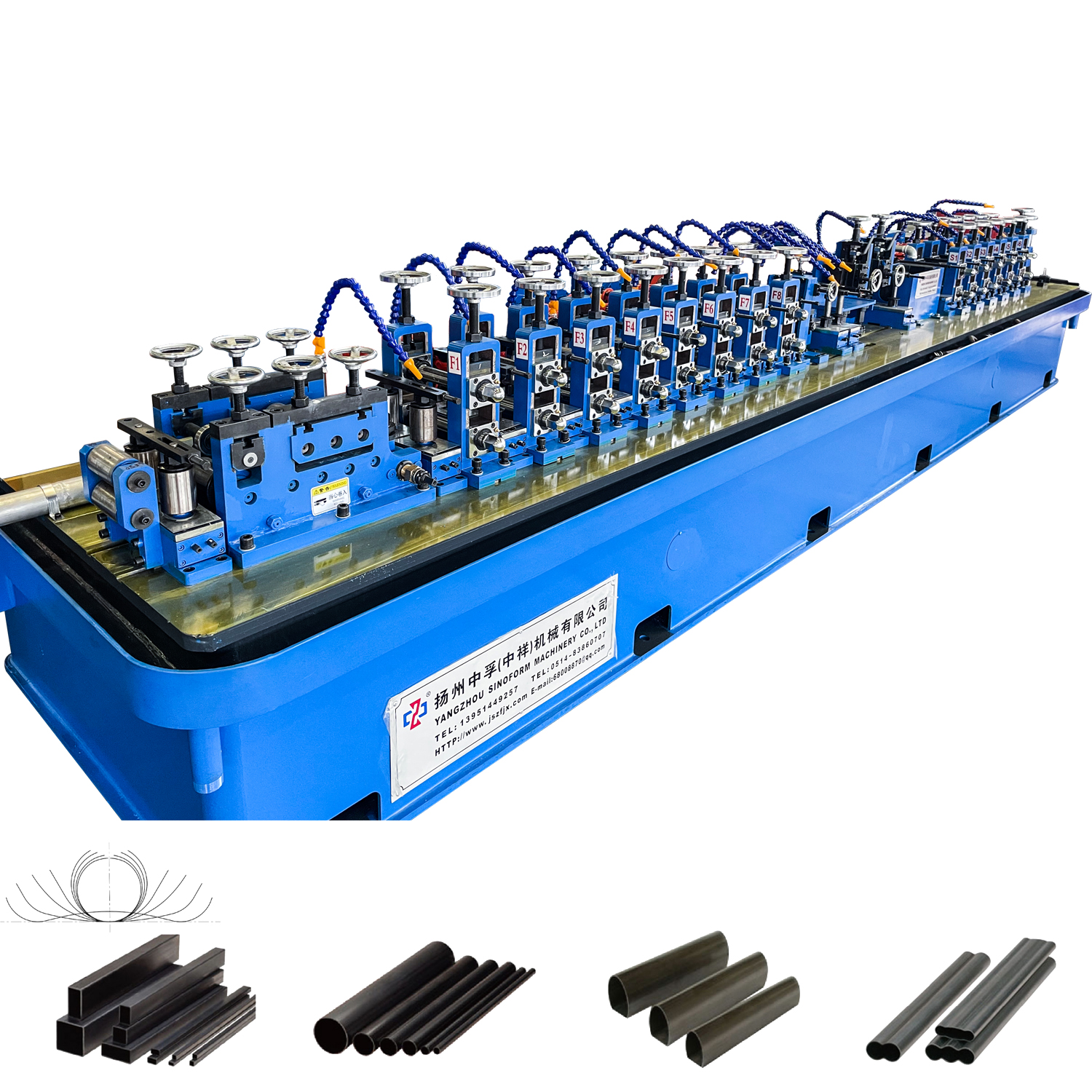 High Precision High-Frequency ERW Tube Mill line
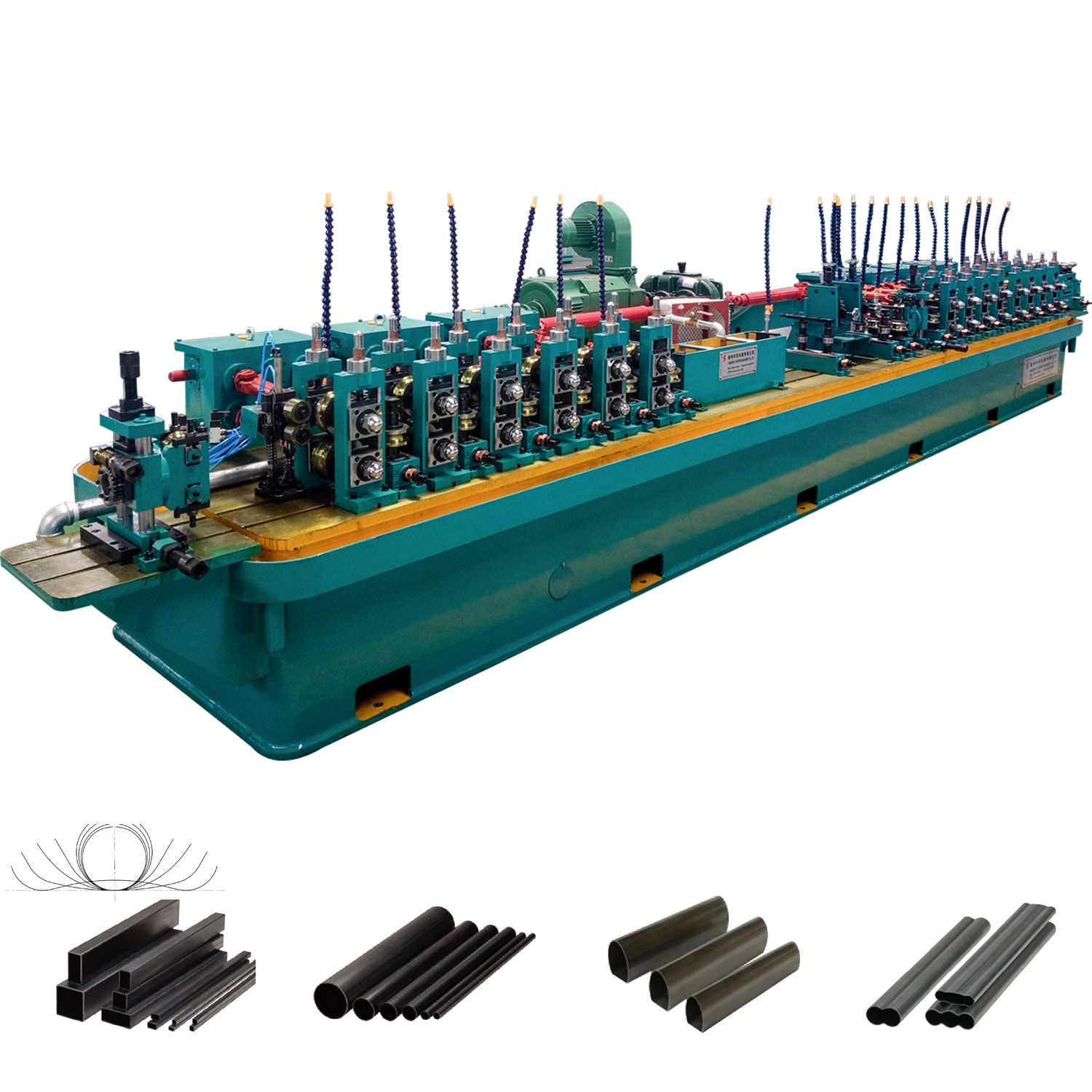 High Precision High-Frequency ERW Tube Mill line
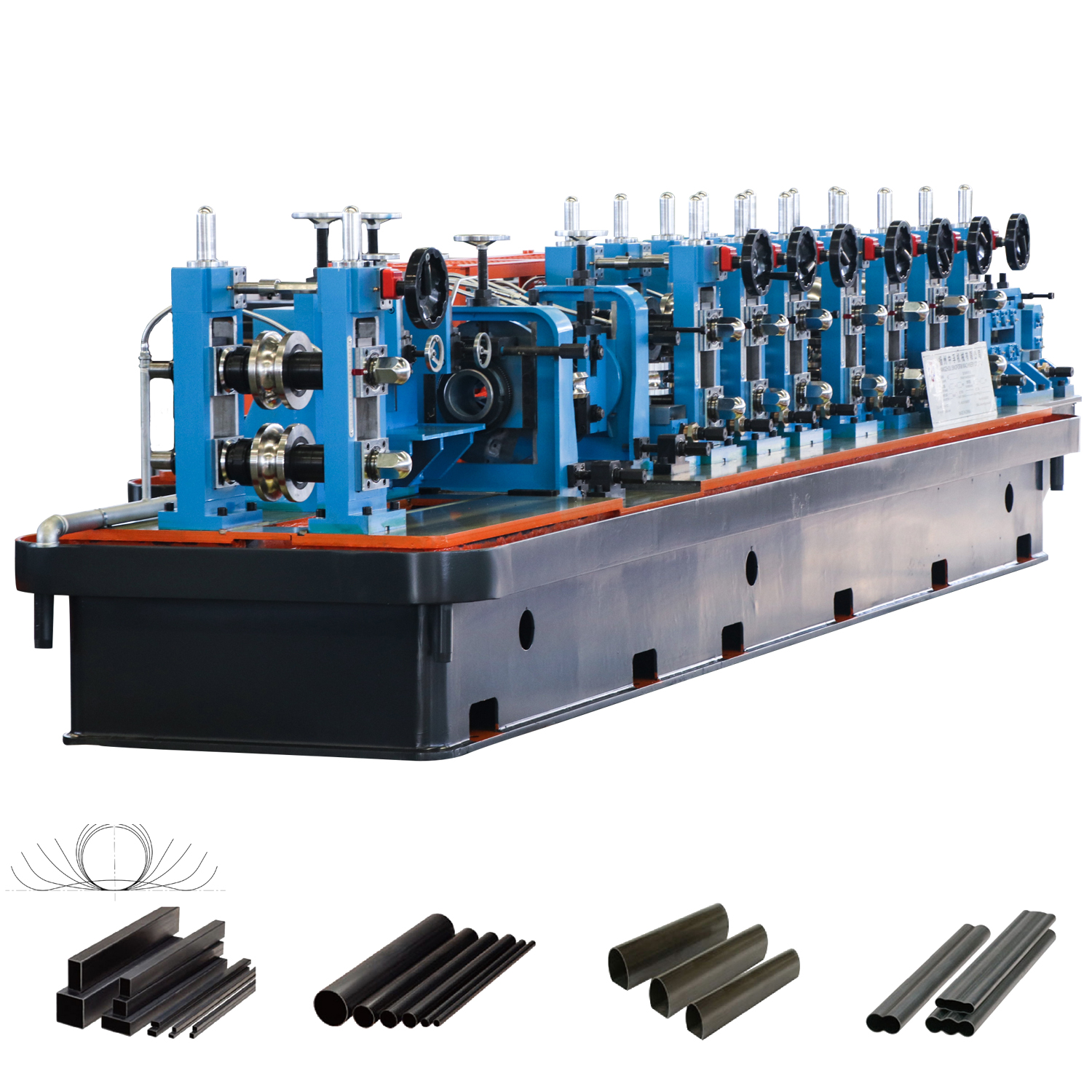 High Precision High-Frequency ERW Tube Mill line
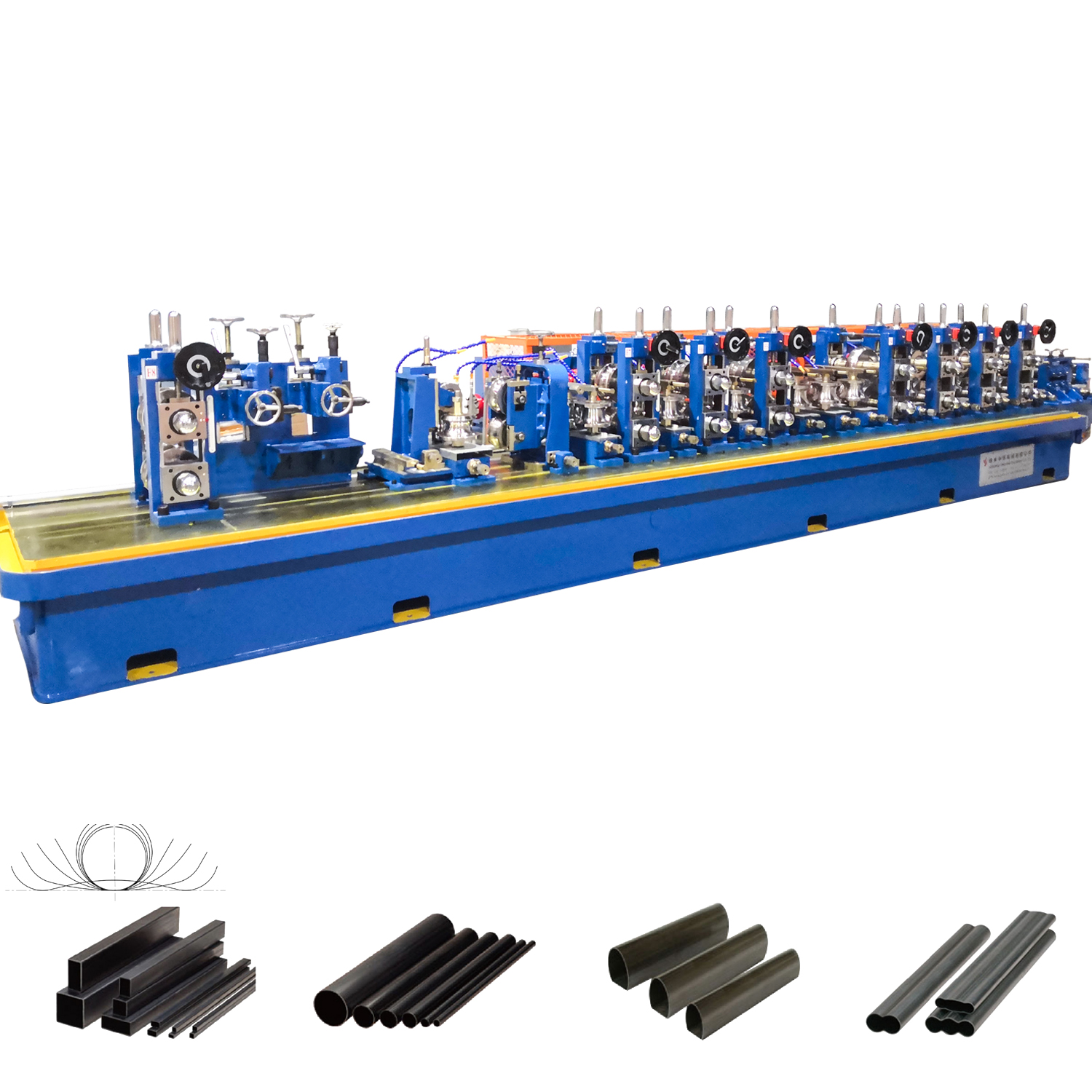 High Precision High-Frequency ERW Tube Mill line
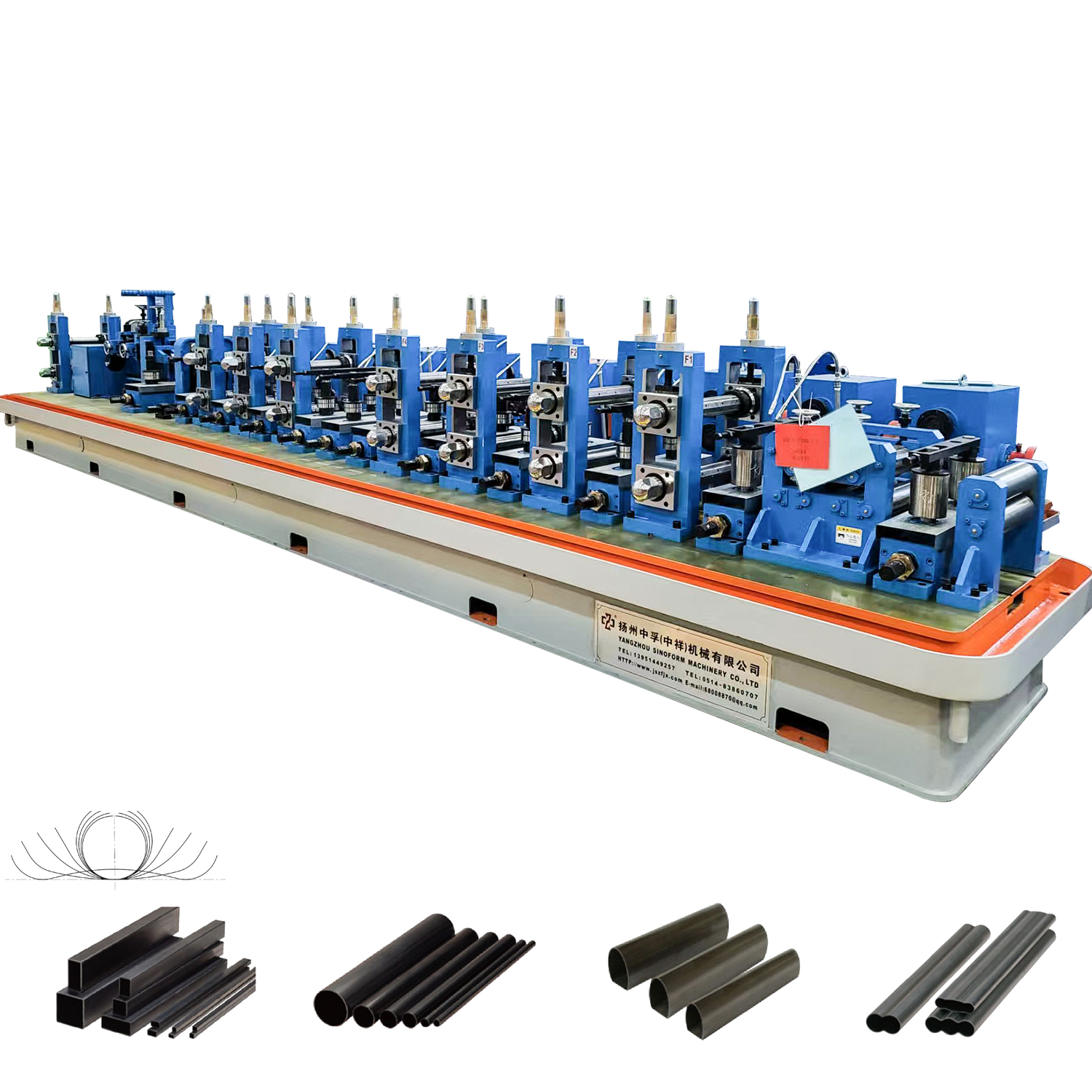 High Precision High-Frequency ERW Tube Mill line
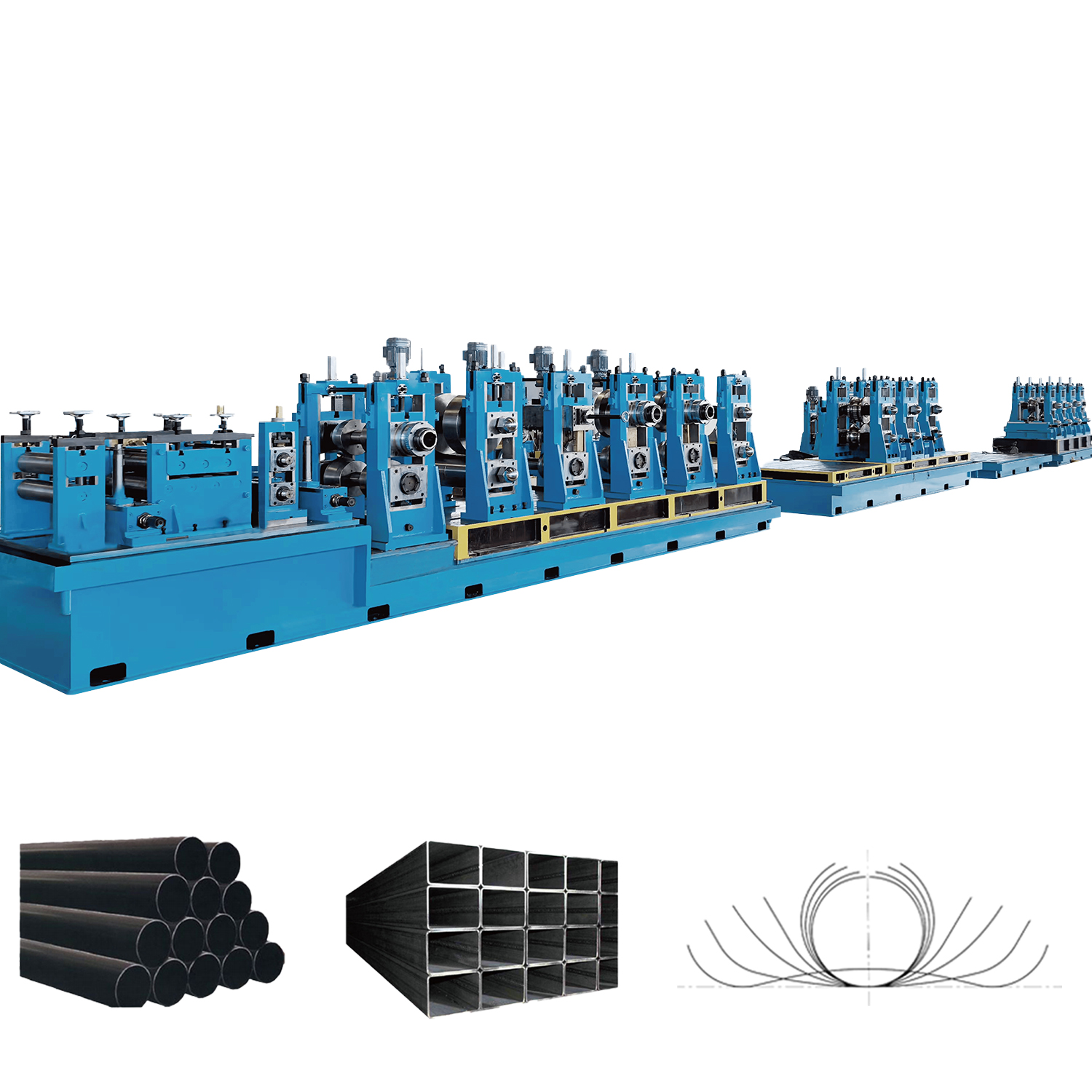 Large ERW tube mill line
Large ERW tube mill line
Large ERW tube mill line
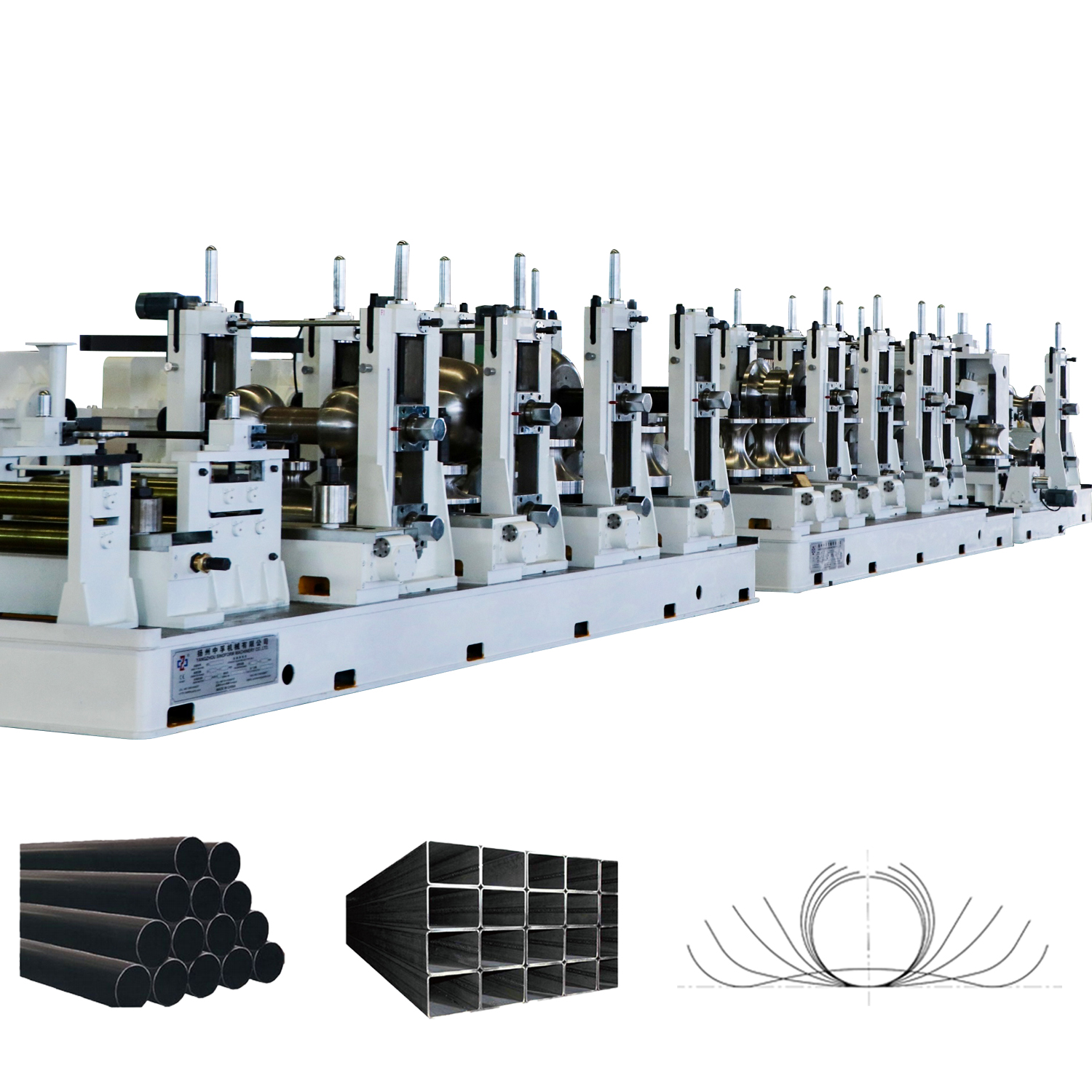 Large ERW tube mill line
Large ERW tube mill line
Large ERW tube mill line
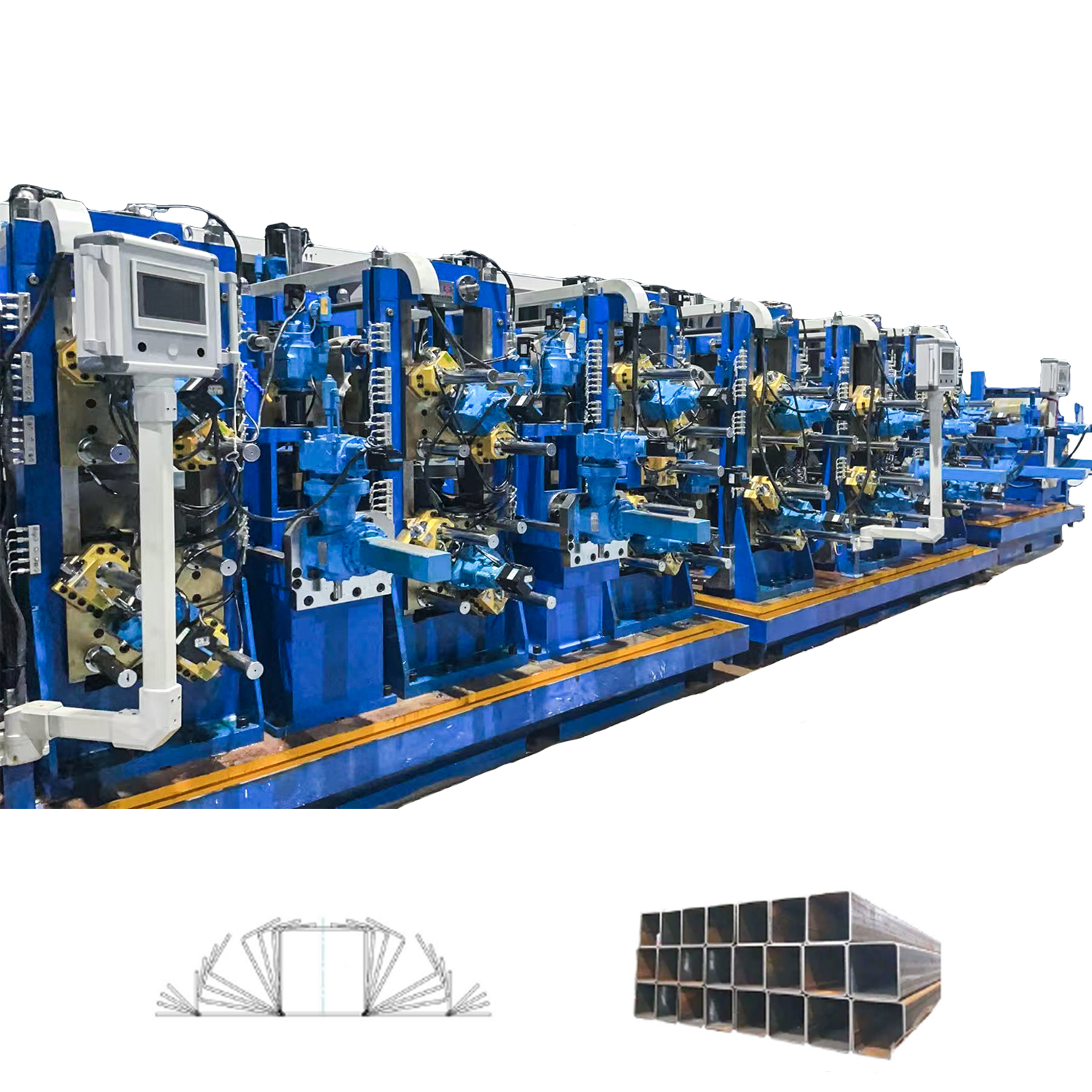 Direct To Square Welded Pipe Production Line
Direct To Square Welded Pipe Production Line
Direct To Square Welded Pipe Production Line
Direct To Square Welded Pipe Production Line
Direct To Square Welded Pipe Production Line

 No.1 Xiangjian Road, Northern
Suburbs Of Yangzhou City,
Jiangsu Province,China
No.1 Xiangjian Road, Northern
Suburbs Of Yangzhou City,
Jiangsu Province,China
 Phone: +86-0514-8363 8877
 E-mail: [email protected]
© Yangzhou SINOFORM Machinery Co., Ltd. Tube Mill Line Manufacturers
Pipe Making Machine Custom
Tube Making Machine Suppliers



 English
 Español
 عربى
عربى русский
 中文简体
中文简体