The primary difference between square and round tube mill processes lies in the forming sequence and the distribution of mechanical stress during the cold-rolling stage. While round tubes are formed by gradually curving the strip into a cylinder before welding, square tubes can be produced either by shaping a welded round tube into a square (indirect forming) or by folding the strip directly into a rectangular profile (direct-to-square forming). These differences significantly impact production efficiency, tooling costs, and the structural integrity of the final product.
Content
Round tube forming utilizes a "Flower Pattern" design to uniformly bend the metal strip, whereas square tube forming requires specialized corner-deformation control.
In a standard round tube mill, the process begins with the breakdown stage, where the flat steel strip is bent into a U-shape, then a closed O-shape. This process relies on high-precision rollers to ensure that the edges meet perfectly for High-Frequency (HF) welding. The stress is distributed evenly across the circumference, making it a highly stable process for thin-walled materials.
Conversely, square tube mills often employ two distinct techniques:
Tooling for round tubes is generally simpler and more standardized, while square tube production requires complex multi-axis rollers to prevent corner cracking.
For a round tube mill, the rollers are designed to handle a specific diameter. If a manufacturer wants to change the diameter from 25mm to 32mm, a complete set of rollers must be replaced. The contact area between the roller and the tube is constant, which minimizes surface scratching.
In square tube mills, particularly those using direct-forming technology, the "Common Use Roller" system is often employed. This allows the same set of rollers to produce various sizes of square and rectangular tubes by adjusting the horizontal and vertical positions of the rollers. This significantly reduces downtime during specification changes, often cutting changeover time from 8 hours down to 45 minutes.
The HF welding process in round tubes is more consistent due to the symmetrical shape, whereas square tubes face challenges with edge alignment at the corners.
During the production of round tubes, the induction coil surrounds the tube uniformly. The Heat Affected Zone (HAZ) is typically very narrow, usually between 0.5mm to 1.5mm, depending on the wall thickness. This symmetry allows for high-speed welding reaching up to 100 meters per minute.
For square tubes, if using the direct-to-square method, the welding point is usually located in the middle of one flat side. Maintaining the stability of this flat surface during high-speed induction is difficult. If the "V-angle" of the edges fluctuates, it can lead to "cold welds" or "splatter." Therefore, many heavy-duty structural square tubes are still made via the round-to-square process to ensure maximum weld integrity.
| Feature | Round Tube Mill Process | Square Tube Mill Process |
| Forming Complexity | Low (Uniform stress) | High (Corner stress concentration) |
| Tooling Cost | Moderate (Dedicated sets) | High (Adjustable or complex shapes) |
| Production Speed | Higher (Up to 120m/min) | Moderate (Typically 40-80m/min) |
| Material Utilization | Standard | Higher in Direct-to-Square (saves ~3%) |
| Surface Quality | Excellent | Risk of corner marking |
Round tubes offer superior internal pressure resistance, while square tubes provide better resistance to bending and torsion in construction.
In terms of metallurgy, the round tube mill process subjects the material to "work hardening" uniformly. This makes round tubes ideal for transporting fluids where internal pressure is a factor, such as in oil or gas pipelines.
The square tube process, specifically the sizing of corners, increases the yield strength of the steel at the radii. For example, a square tube made from Q235 carbon steel may show a 10-15% increase in yield strength at its corners compared to its flat faces. This makes square tubes the preferred choice for mechanical frames and architectural supports where rigidity is paramount.
Direct-to-square mills consume significantly less electricity than the indirect round-to-square conversion process.
When a machine produces a round tube and then reshapes it into a square, it essentially performs the "forming" work twice. This requires additional sizing stands and more powerful motors. Data suggests that a direct-forming square tube mill can save up to 25% in total power consumption because it avoids the friction and heat generation associated with secondary reshaping.
Choosing between these processes depends on your target market:
Q1: Can a round tube mill be converted to make square tubes?
Yes, by adding a sizing section or a Turks Head at the end of the mill, you can produce square tubes from round welded pipes. This is the "Indirect Forming" method.
Q2: Why is the corner of a square tube more likely to crack?
Cracking occurs due to excessive cold-work hardening. If the radius of the corner is too sharp (less than 2 times the wall thickness), the material exceeds its elongation limit.
Q3: Which method provides better dimensional accuracy?
The round-to-square process generally offers better tolerance control on the flat sides, while direct-forming is excellent for maintaining consistent corner radii.
Q4: Is the strip width the same for round and square tubes of the same perimeter?
Not exactly. The strip width calculation for square tubes must account for the "neutral axis" shift during corner bending. Typically, a square tube requires slightly more material than a round tube of the same circumference due to corner deformation.
In summary, the square and round tube mill machine processes are distinct paths tailored to different engineering needs. Round tube processes focus on speed and fluid dynamics, while square tube processes emphasize structural strength and efficient material use. Modern advancements in High-Frequency welding and automated roller adjustments have bridged the gap, allowing manufacturers to switch between profiles with unprecedented ease. When selecting your machinery, always consider the balance between initial investment in tooling and long-term energy savings.
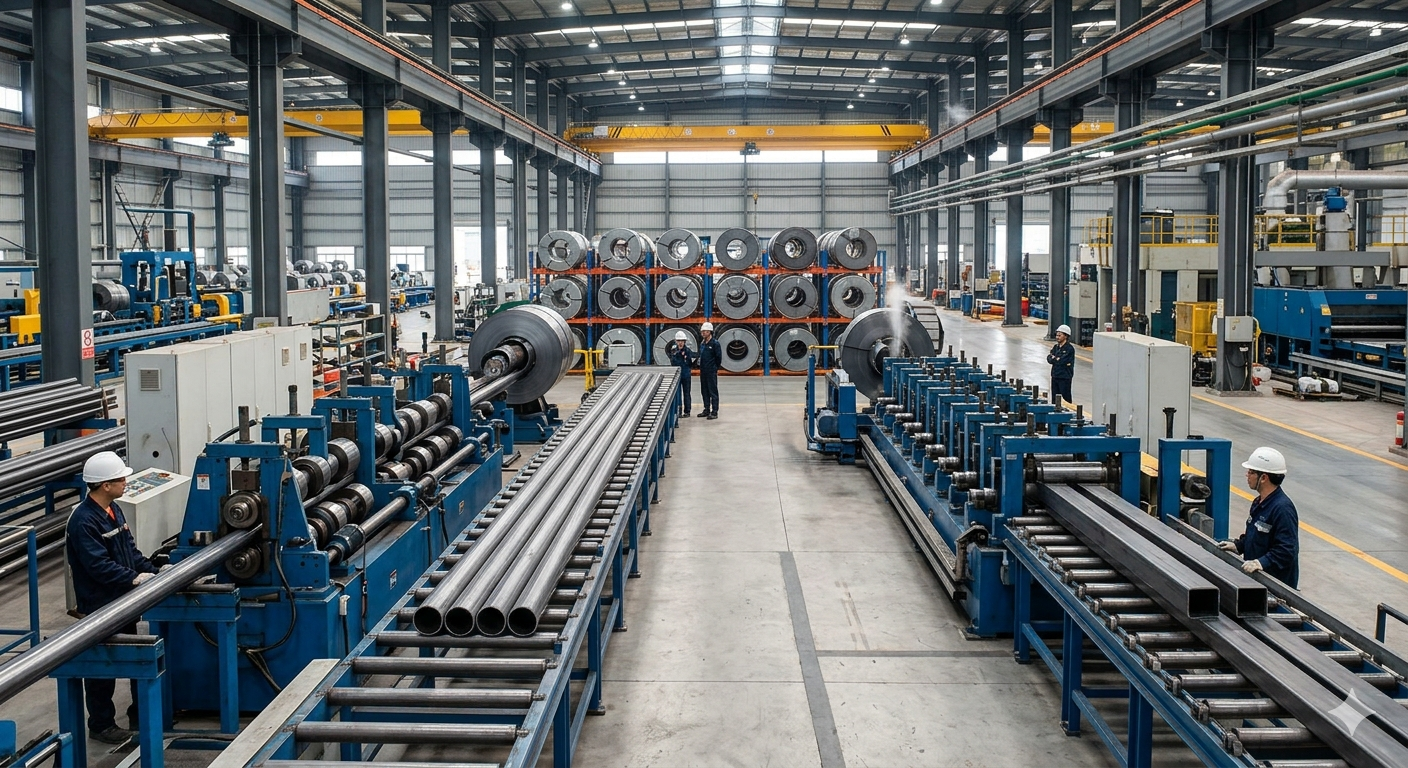
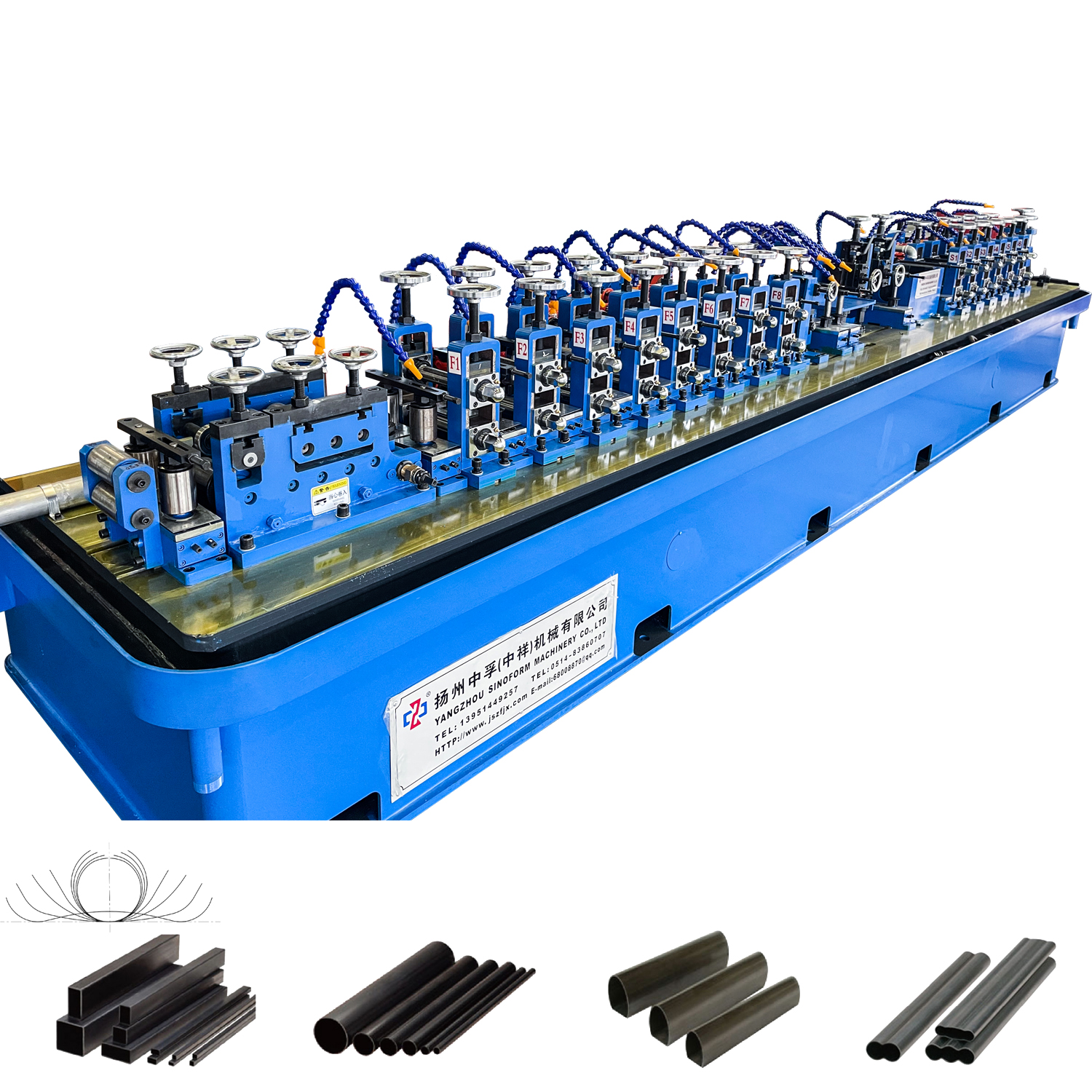 High Precision High-Frequency ERW Tube Mill line
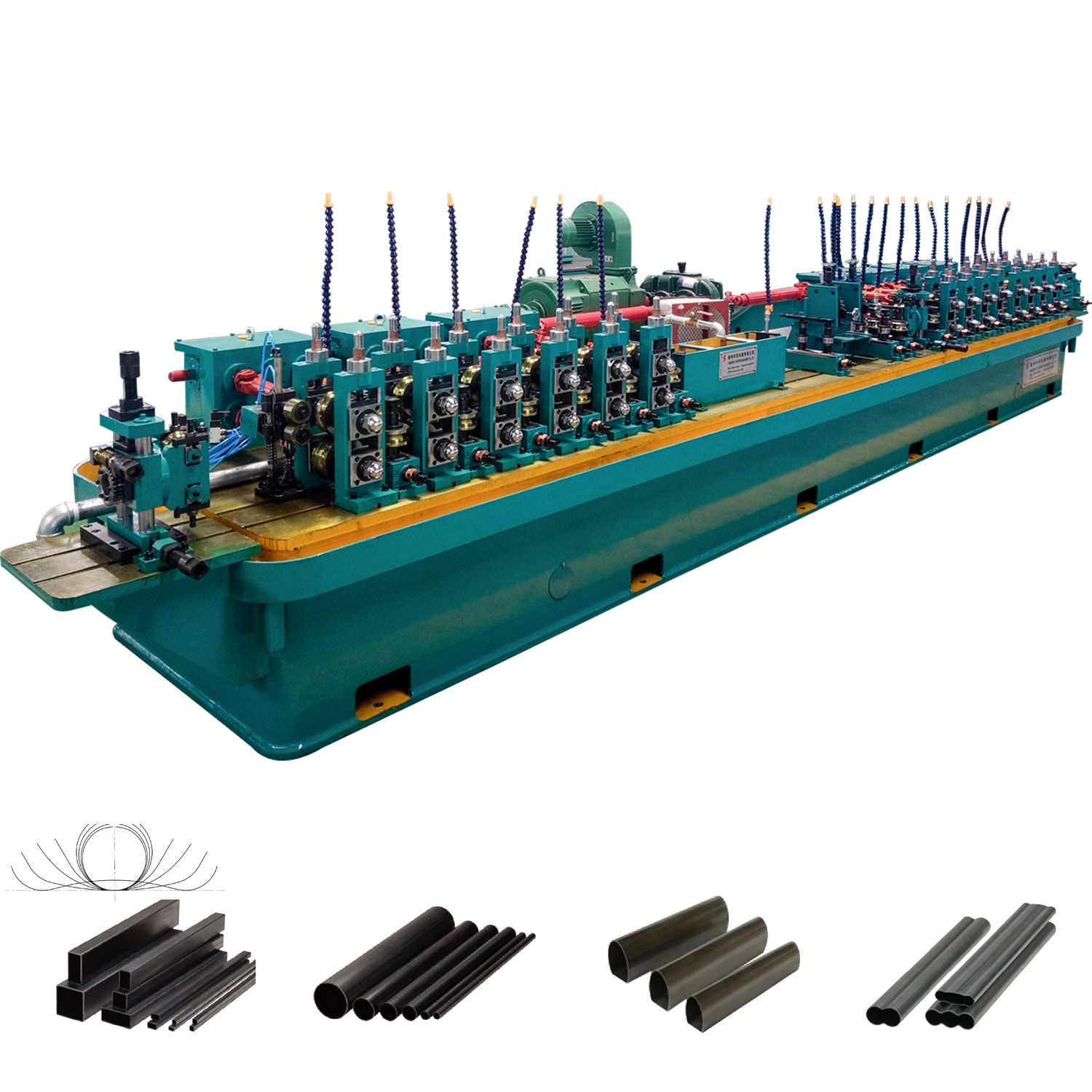 High Precision High-Frequency ERW Tube Mill line
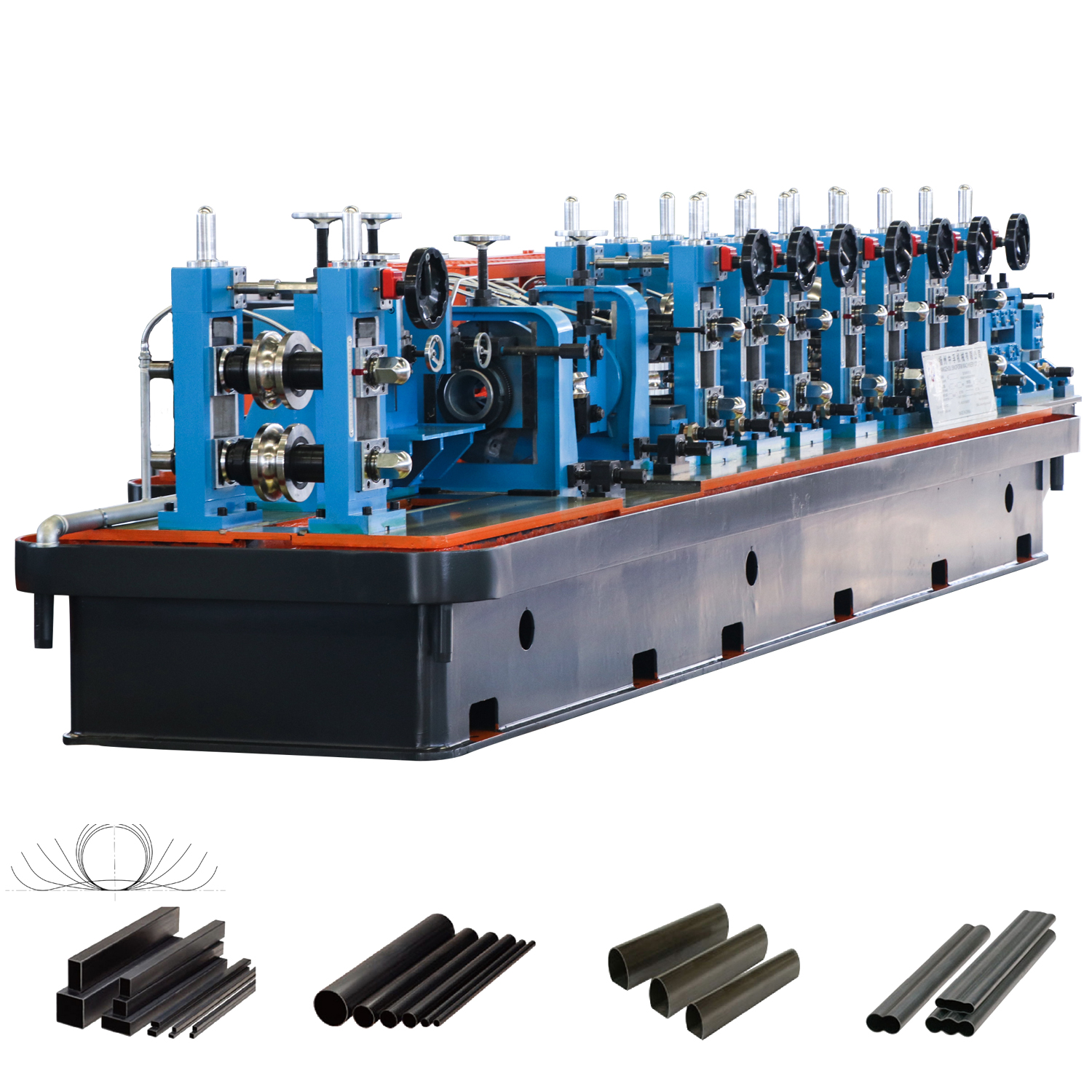 High Precision High-Frequency ERW Tube Mill line
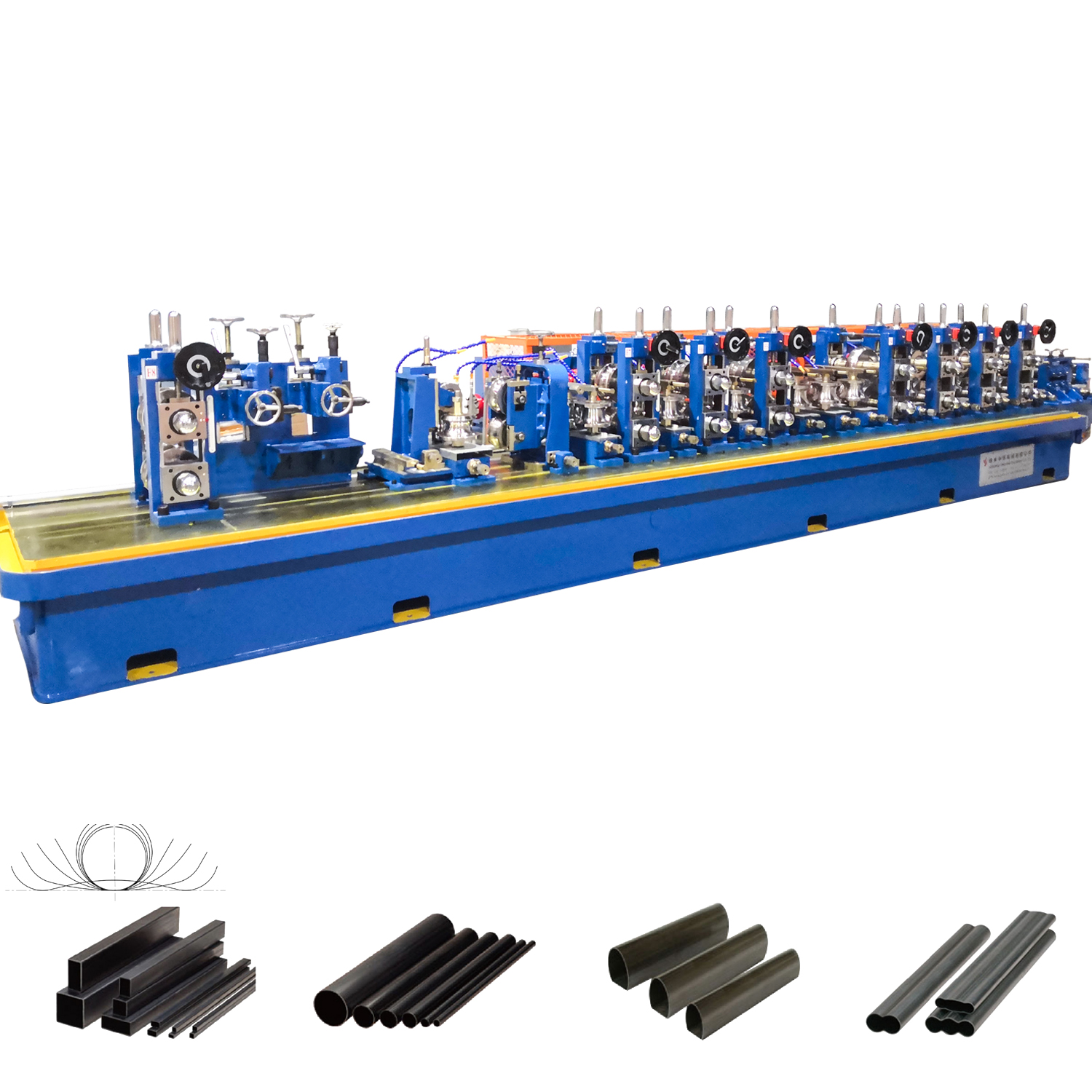 High Precision High-Frequency ERW Tube Mill line
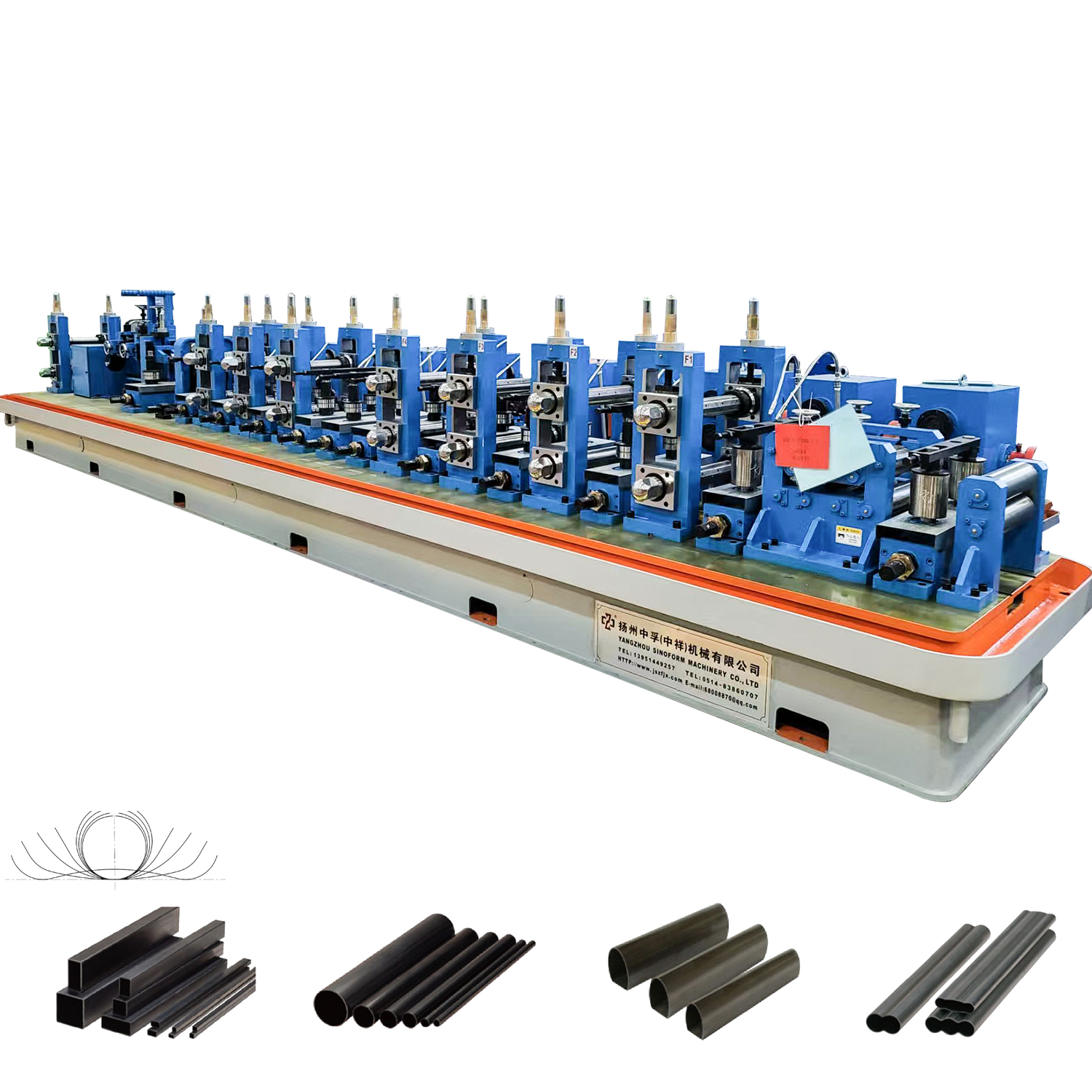 High Precision High-Frequency ERW Tube Mill line
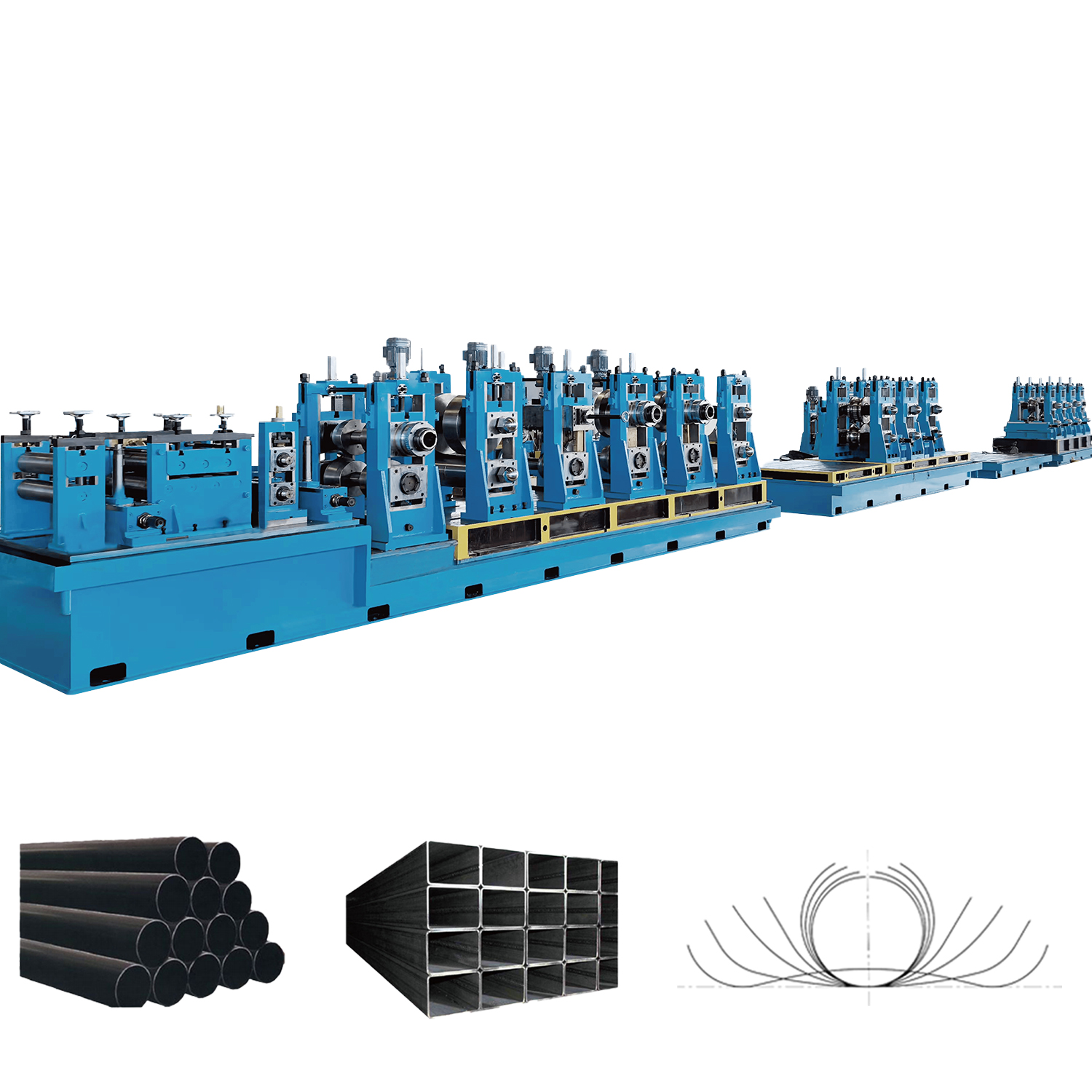 Large ERW tube mill line
Large ERW tube mill line
Large ERW tube mill line
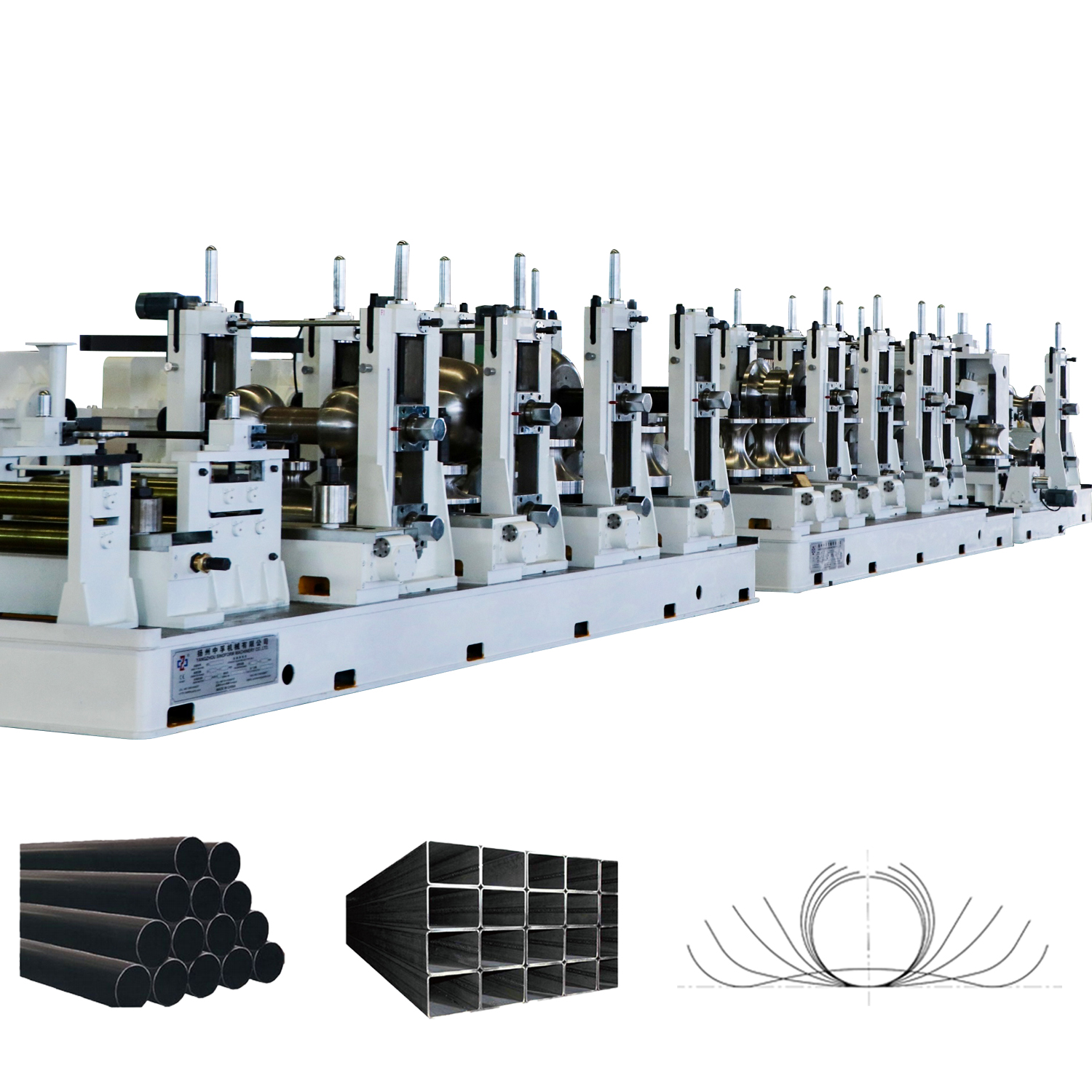 Large ERW tube mill line
Large ERW tube mill line
Large ERW tube mill line
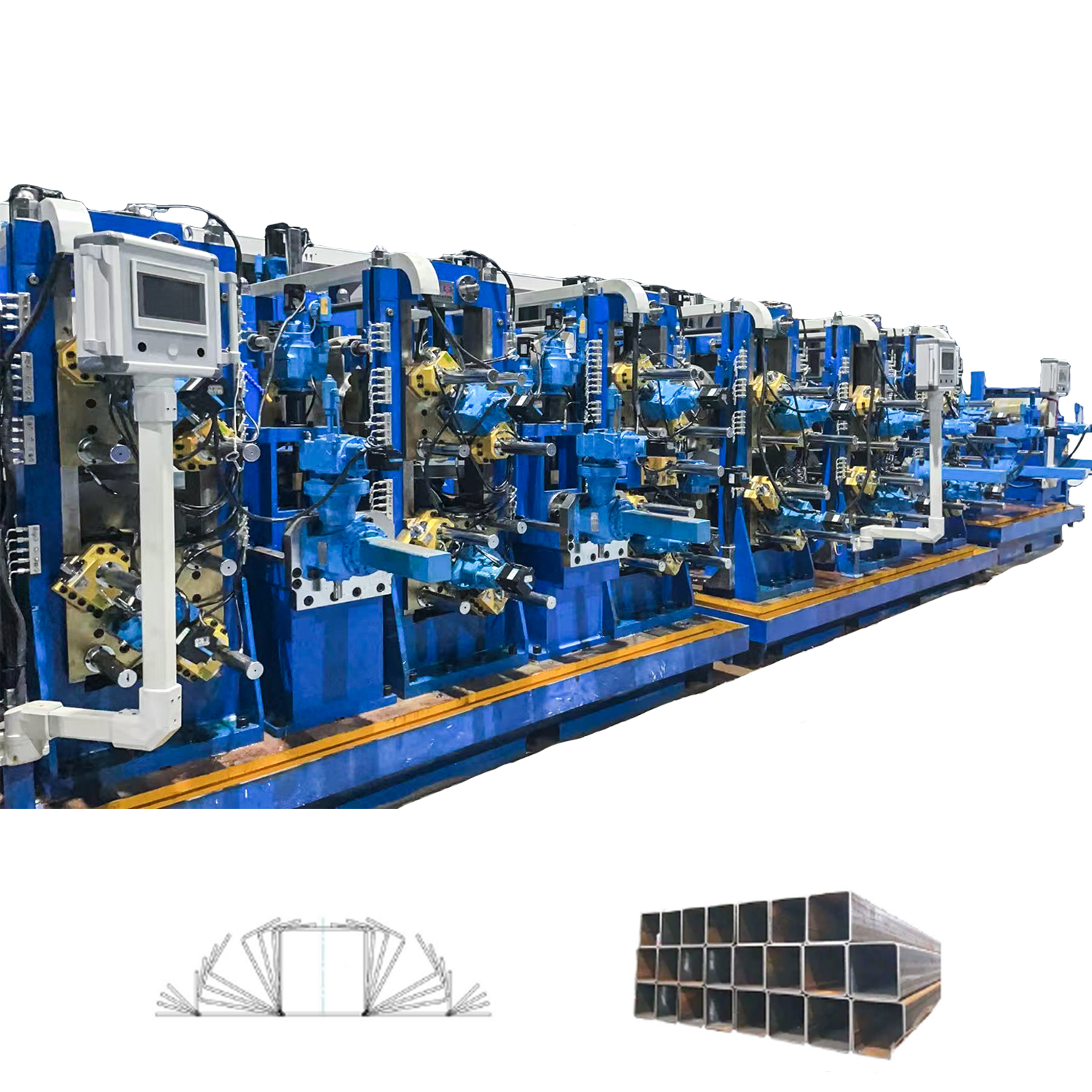 Direct To Square Welded Pipe Production Line
Direct To Square Welded Pipe Production Line
Direct To Square Welded Pipe Production Line
Direct To Square Welded Pipe Production Line
Direct To Square Welded Pipe Production Line

 No.1 Xiangjian Road, Northern
Suburbs Of Yangzhou City,
Jiangsu Province,China
No.1 Xiangjian Road, Northern
Suburbs Of Yangzhou City,
Jiangsu Province,China
 Phone: +86-0514-8363 8877
 E-mail: [email protected]
© Yangzhou SINOFORM Machinery Co., Ltd. Tube Mill Line Manufacturers
Pipe Making Machine Custom
Tube Making Machine Suppliers



 English
 Español
 عربى
عربى русский
 中文简体
中文简体